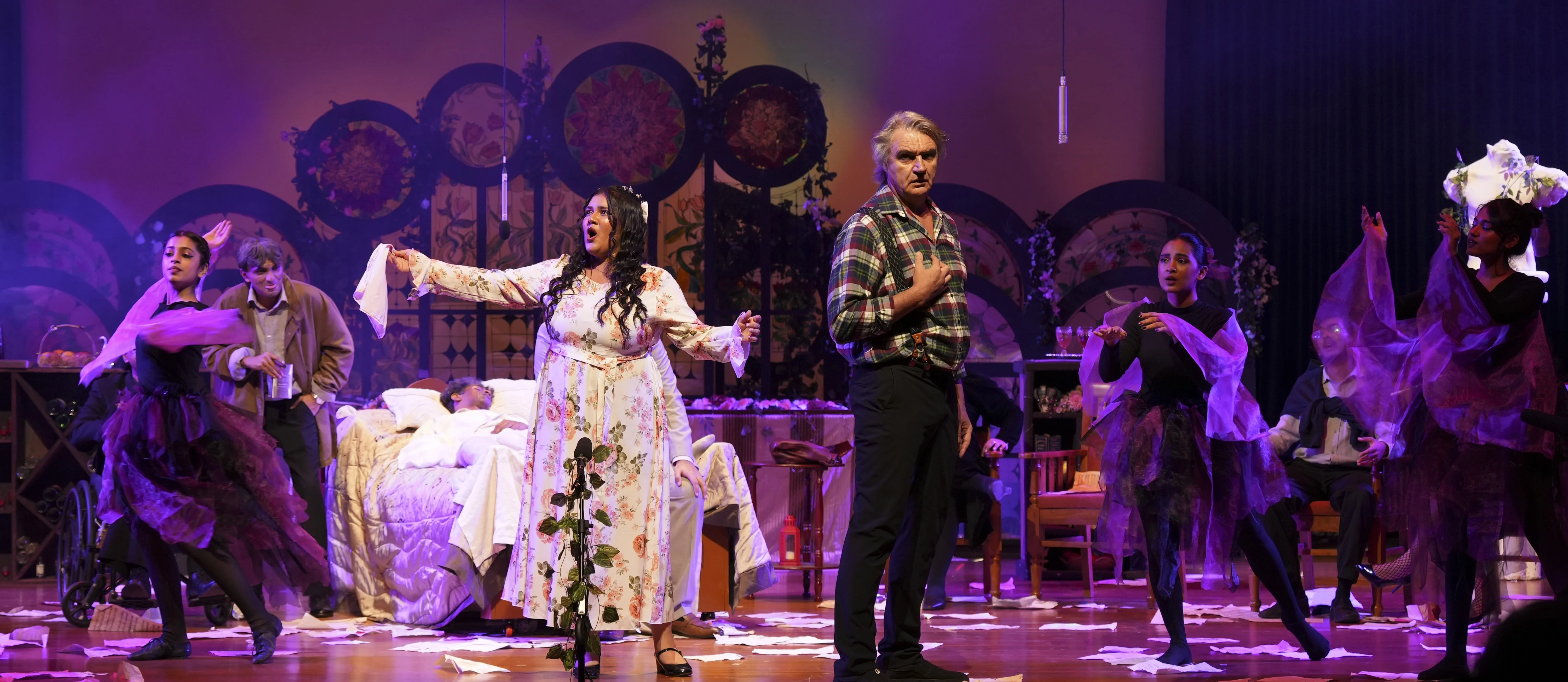
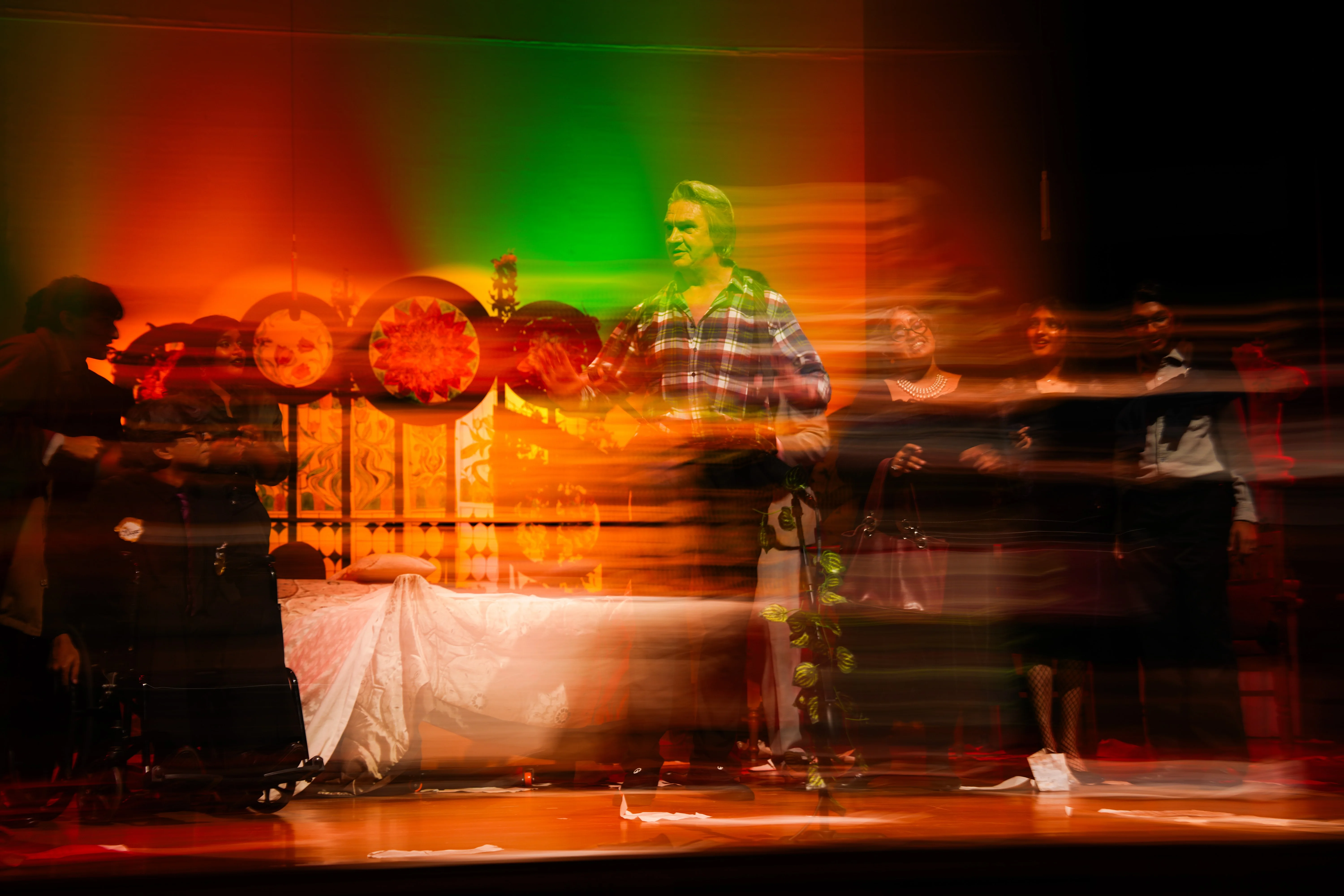
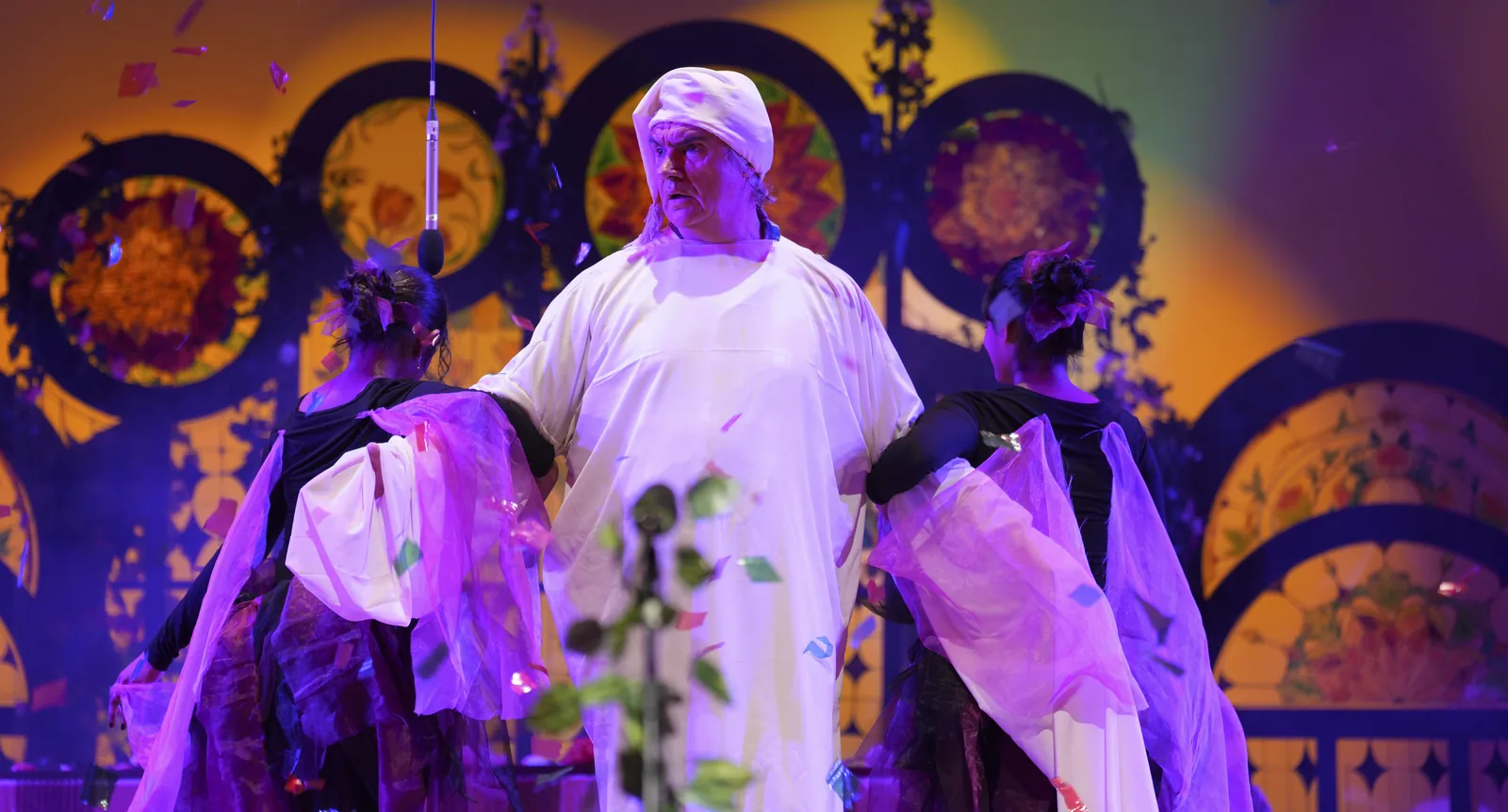
The last thing our audience saw was a man being led into fire.
The young lovers had just finished their duet, the highest and most radiant music in the score, and walked off arm in arm without once looking back. Lauretta’s father took a step after them. He did not get a second one. Figures that nobody else on stage could see took him by the arms and walked him, slowly, towards a red glow at the back of the stage. A child turned to the audience and asked them to decide whether he deserved it. Then the orchestra rattled off its last few bars, bright and cheerful, as if someone had just told a good joke, and the curtain came down.
People laughed. They were supposed to. It is, after all, Puccini’s only comedy.
Isn’t it?
Who was he, really?
Gianni Schicchi was a real man. He lived in Florence in the thirteenth century, and he would be completely forgotten if Dante had not found him a place in Hell.
Not a comfortable place, either. In Canto XXX of the Inferno, in the tenth ditch of the eighth circle, among the falsifiers, Dante watches one soul sink its teeth into another’s neck and drag him across the floor of the pit like a dog with a rag. A trembling neighbour explains who the biter is. In Longfellow’s translation:
And the Aretine, who trembling had remained,
Said to me: "That mad sprite is Gianni Schicchi,
And raving goes thus harrying other people."
And a few lines later, the charge sheet:
As he who goeth yonder undertook,
That he might gain the lady of the herd,
To counterfeit in himself Buoso Donati,
Making a will and giving it due form.
That is the whole biography. Seven lines. One forged will. And a motive: “the lady of the herd”, the finest animal in the stable.
Before we accept the verdict, a word about the judge. Dante’s wife, Gemma, was a Donati, from the family Schicchi swindled. The man who hired Schicchi, Simone Donati, was the father of Dante’s friend Forese. And Dante had no love for what he called gente nova, the newcomers with fast money who were taking over his Florence. Schicchi was, in other words, family business. If your in-laws had been cheated out of an inheritance, you might also be tempted to reserve the cheat a seat in the eighth circle.
How do seven lines become an opera?
The details everyone knows now (the mule, the notary, the corpse hidden while a living man dictates from the deathbed) come from an anonymous Florentine who wrote a commentary on Dante about a century later. It was published in 1866. In his version there is no daughter at all. Schicchi helps Simone forge the will and, while he is at it, leaves the mule and a tidy sum to himself. A few of the old commentators go further and suggest the pair helped the old man die. The story was darker than its reputation long before Puccini touched it.
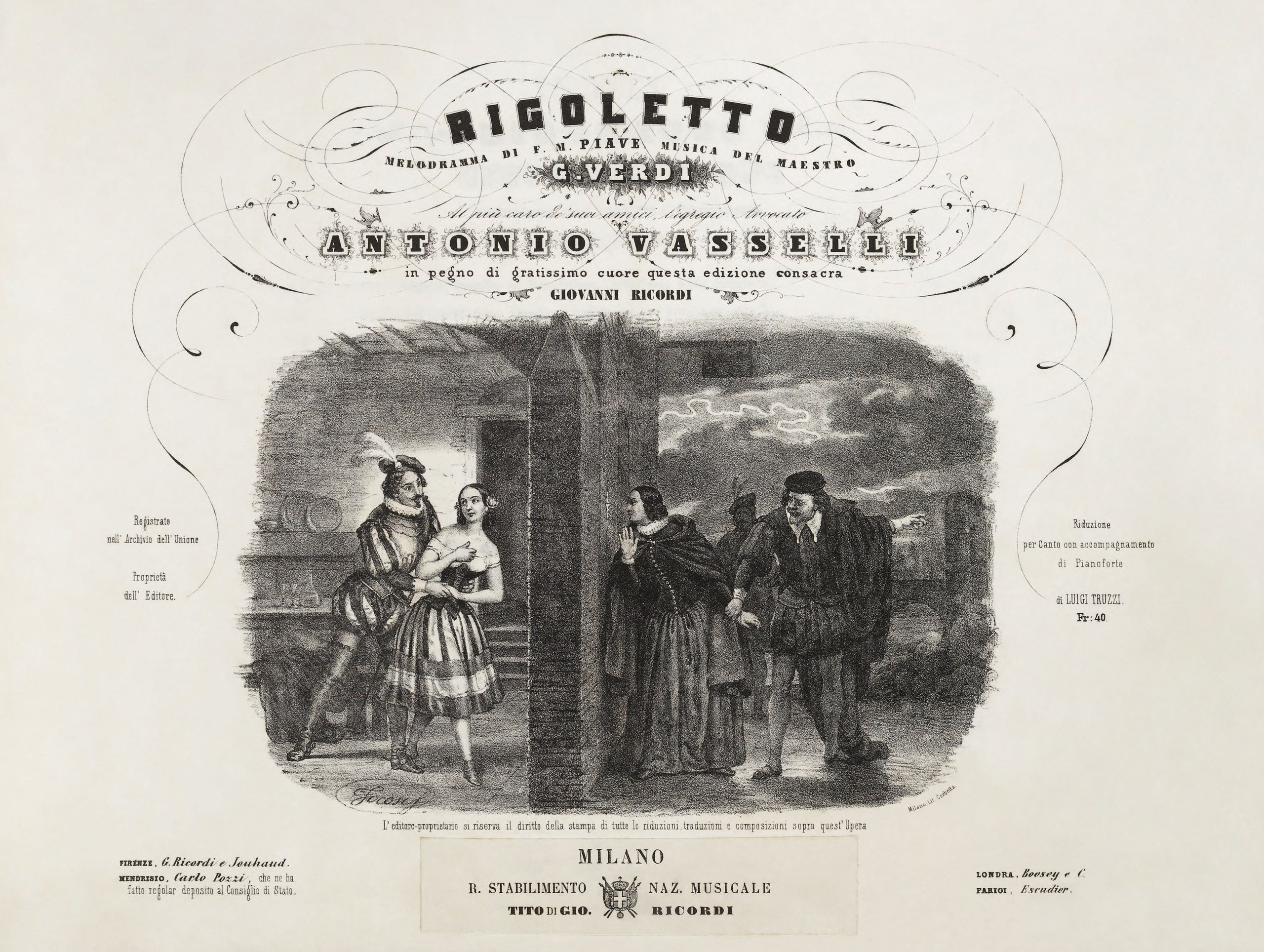
In 1917 the librettist Giovacchino Forzano brought this material to Puccini, and it became the third panel of Il trittico, three one-act operas first performed at the Metropolitan Opera in New York on 14 December 1918. The first is a murder on a Paris barge, the second a nun’s death in a convent, and then, to send everyone home happy, Schicchi.
Puccini had first dreamed of three operas after Dante, one each for Hell, Purgatory and Paradise. Only Schicchi kept the connection. Later the Puccini biographer Mosco Carner proposed reading the triptych exactly that way, as a climb from darkness to light. Which makes Gianni Schicchi the Paradise.
Remember that. The Paradise is the only one of the three whose hero Dante sent, by name, to Hell.
And Forzano made one small change that turns the whole thing over. He gave Schicchi a daughter.
The Schicchi you usually meet
On most stages he is a lovable rogue: Harlequin in a Florentine robe, the clever outsider who beats a family of snobs at their own game. The relatives are greedy, he is greedier and quicker, the lovers get married, and at the end he steps forward, tips his hat to “the great father Dante”, and asks the audience to grant him extenuating circumstances by applauding. Everyone applauds. Some productions finish with a warm hug between father and daughter, in case anyone in the back row missed the happy ending.
There is real truth in that reading, and I am not going to pretend otherwise. He does forge a will. He does leave the best things to himself. One Puccini society describes him as passing off greed as generosity, and you can play the part that way from the first bar to the last. The music will not complain.
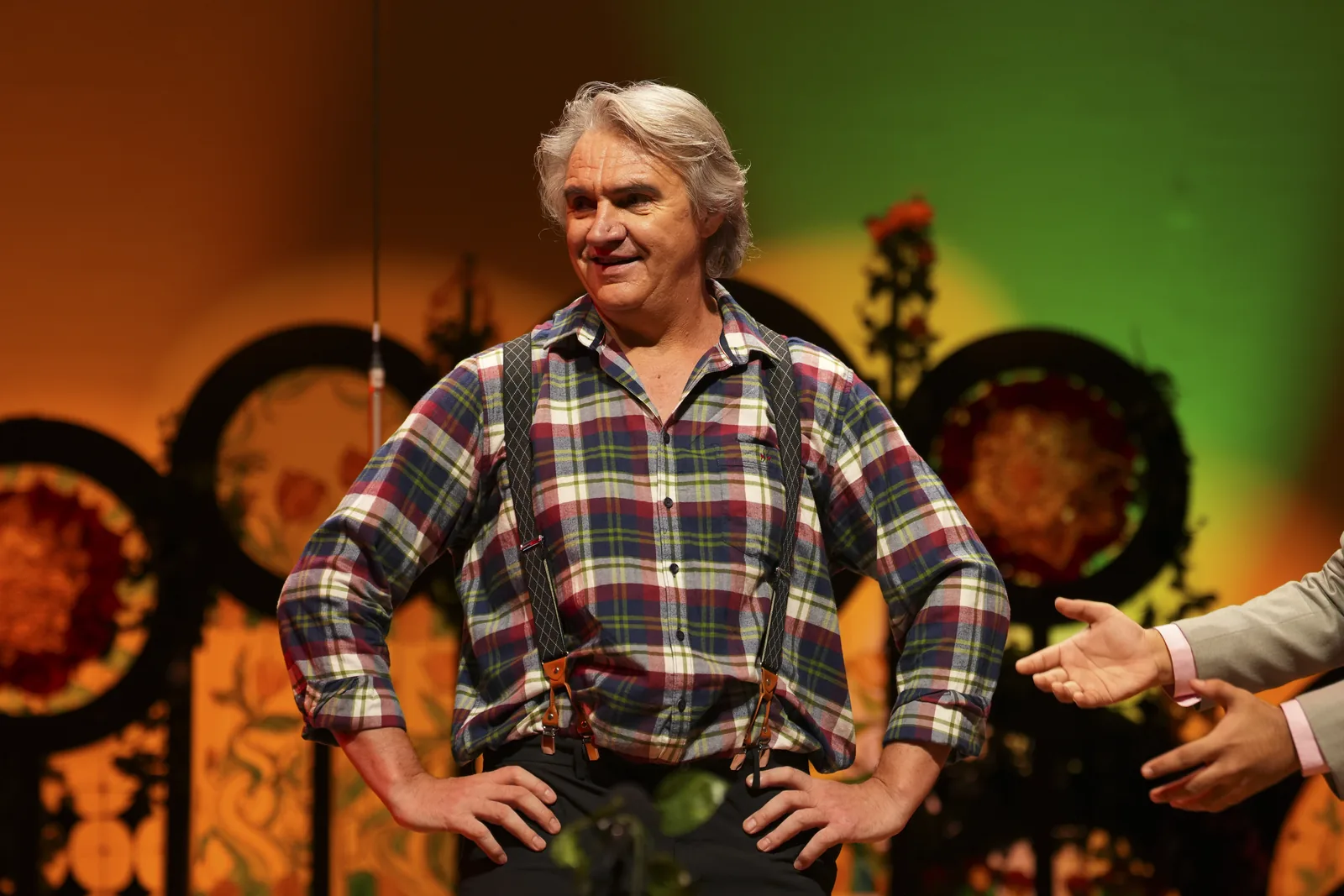
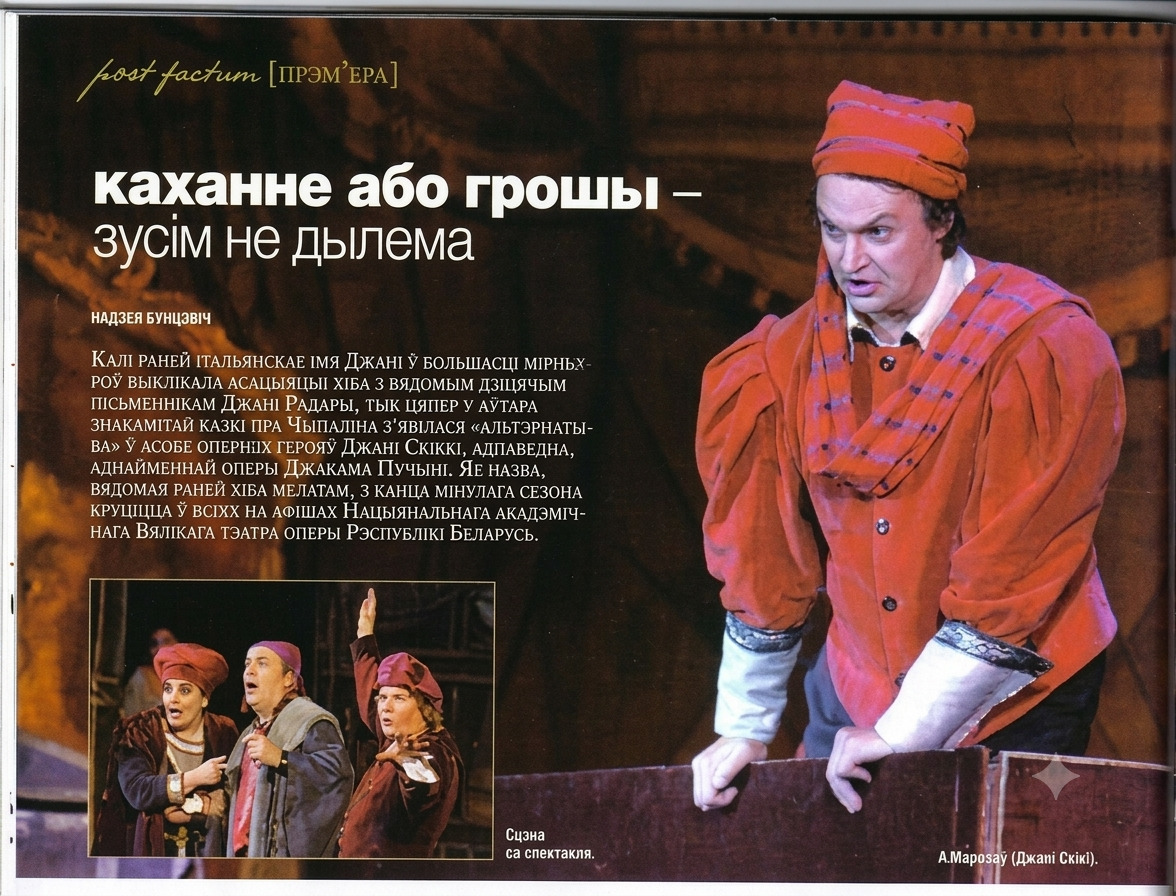
I know that Schicchi well. This is not my first time in his shoes. In 2006 I sang the title role in a new production at the National Academic Bolshoi Opera of Belarus, in Russian, in a red Florentine cap and all the trimmings of 1299. The Minsk arts magazine Mastatstva reviewed the premiere under a headline I have never quite forgotten: Love or Money — Not a Dilemma at All. At the time it read like a neat joke about the plot. It took me twenty years, and a second production, to see that the headline was right, though not in the way it meant. For Schicchi it really is no dilemma. He chooses love without blinking, pays for it with money that is not his, and then with something that is.
The difference was the chair I was sitting in. A singer receives a role with its answers attached: the director decides what the character wants, and the singer’s job is to deliver it. When you direct the whole production, and conduct its rehearsals, and sing the title role as well, nobody hands you any answers. You have to ask why about everyone on stage, every evening, and the answers do not always take you where you expected to go.
So why does he do it?
Let us put him on trial properly, with the evidence the libretto actually gives us.
Exhibit one: he does not want the job. Schicchi comes to the house only because Rinuccio, the young man in love with his daughter, sends for him. Within minutes Zita, the clan’s matriarch, is calling him a peasant and a nobody. His response is not a scheme. It is the door. Again and again he tries to take his daughter and leave: where is your pride, forget these people, we can do without them, we’re going. And again and again Lauretta answers with the only argument she has: but, Papa, I love him. Rinuccio, notably, is the one begging him to stay and help. Remember that too.
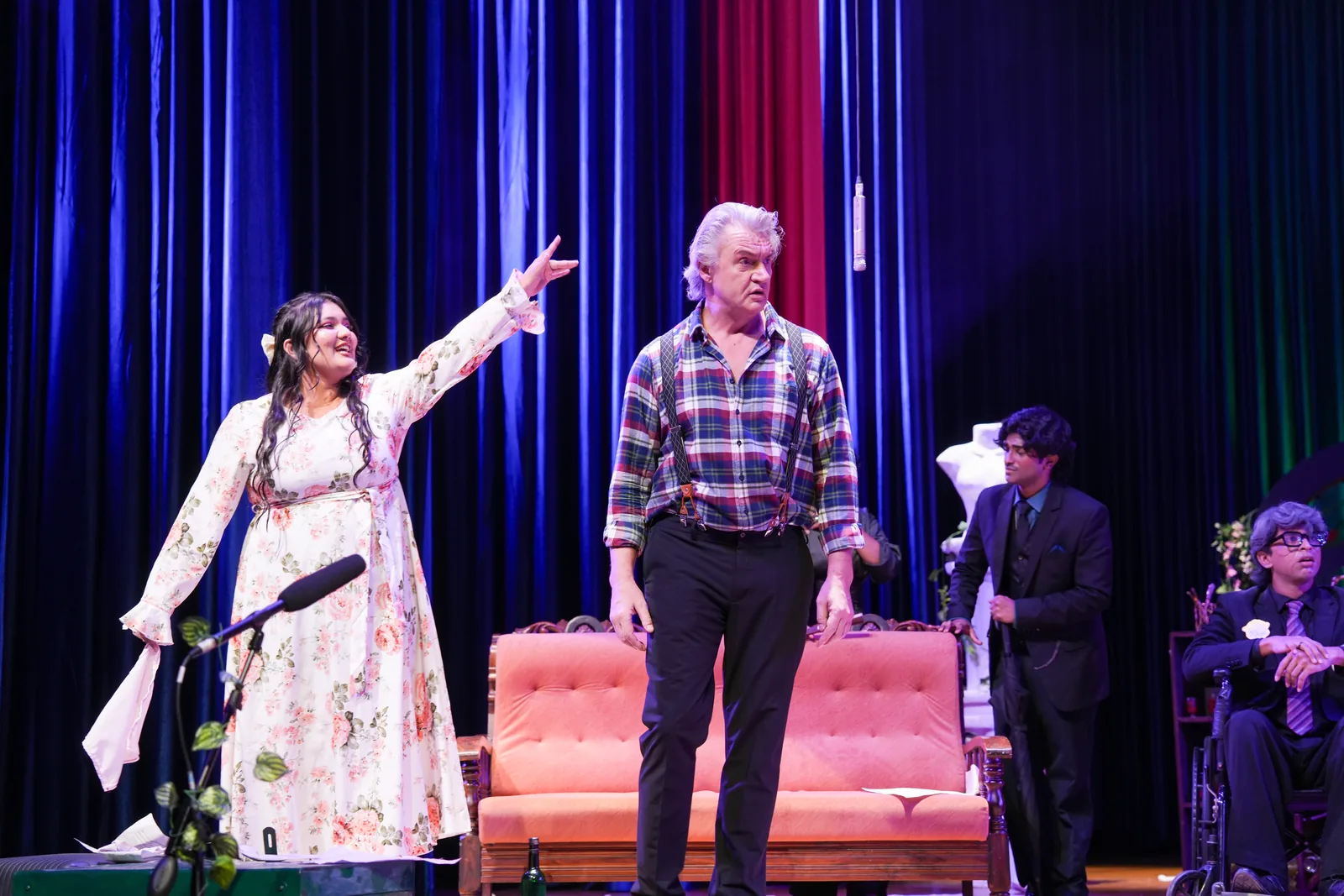
Exhibit two: he decides only after “O mio babbino caro”. The most famous aria in the opera, and one of the most famous in the world, is a daughter’s ultimatum. Let me marry him, she sings, or I will throw myself into the Arno. Strip away Puccini’s melody and you have a sentence every parent has heard in some version: give me this one thing and I will be happy forever. In 1299 it was a husband. Today it would be the new phone. Only after the aria does Schicchi ask to see the will. The whole plot turns on one man changing his mind, and the only thing that changes it is his child.
Exhibit three: he gets her out of the room. Before he explains the plan, Schicchi sends Lauretta out onto the terrace to feed the bird. She goes, reluctantly. Later, at the most dangerous moment of the conspiracy, the church bell starts tolling, and the whole family freezes, sure the news of Buoso’s death has already reached the town. In wanders Lauretta, all innocence: the bird won’t eat. Then give it some water, her father snaps, and sends her straight back out. The audience laughs. But look at what he is doing. He is making sure his daughter hears nothing, sees nothing and can never be called a witness.
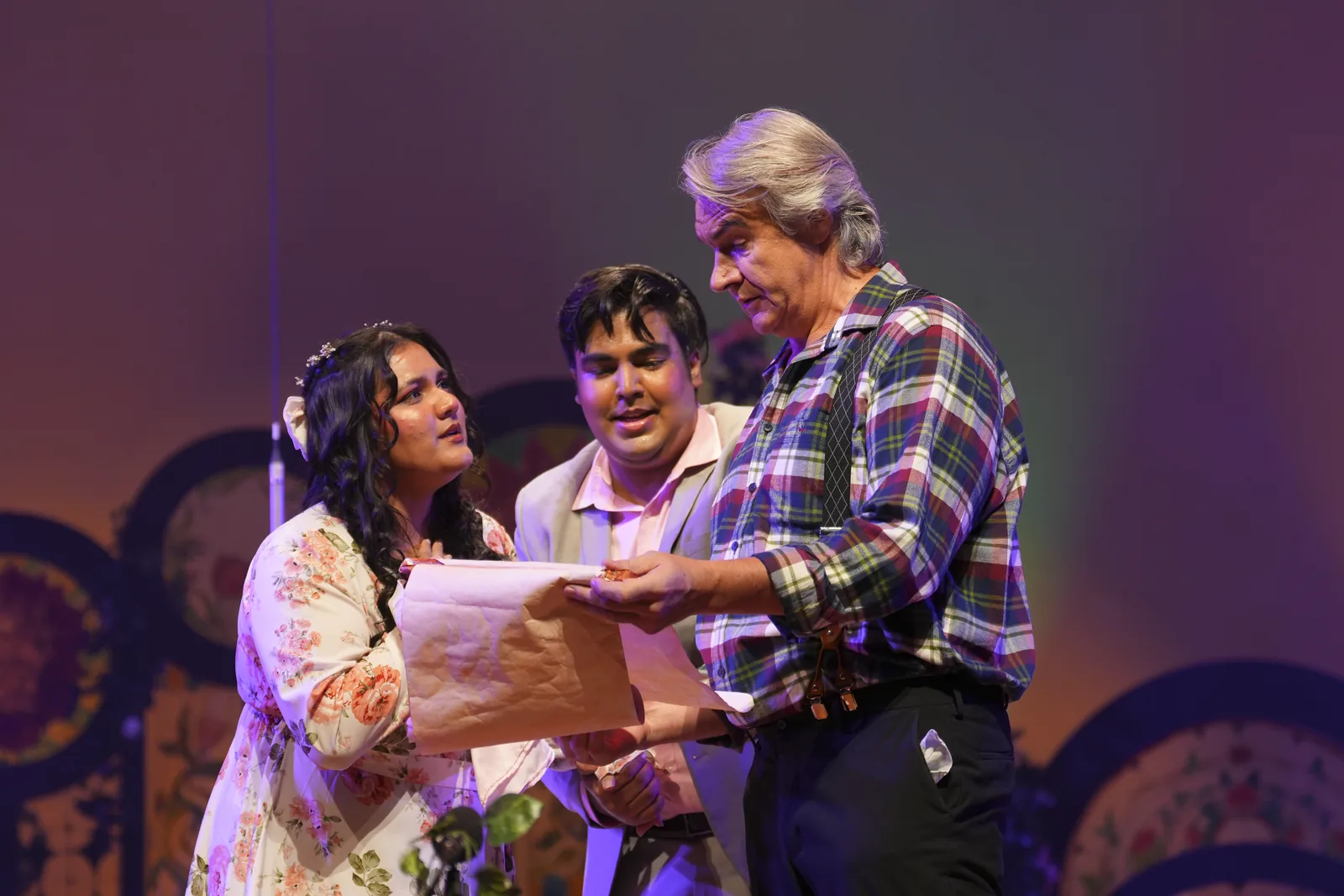
Exhibit four: he signs everything in his own name. Before the notary arrives, Schicchi reminds the relatives of the penalty for anyone who helps falsify a will: the hand cut off, then exile. It is a threat, and it is also a padlock. From now on nobody in that room can expose him without condemning themselves. And the prizes go to “my devoted friend Gianni Schicchi”, not to Lauretta. Legally, and in the eyes of God, the forgery is his and his alone. His daughter’s hands stay clean. All she acquires is what she lacked at the start of the evening: a dowry. Without one, Zita would not hear of the marriage. With one, she has nothing left to object to.
Exhibit five: he knows when to stop. Before Schicchi climbs into the dead man’s bed, the relatives have already carved up the estate between them: the cash split equally, the farms at Fucecchio, Figline, Prato, Empoli and Quintole parcelled out branch by branch. Only the three real prizes, the mule (in our production, a Porsche, but more on that later), the house and the mills at Signa, they agree to leave “to Schicchi’s judgement”. Then each of them takes him aside, one by one, to whisper a bribe. And to each of them, one by one, he says yes.
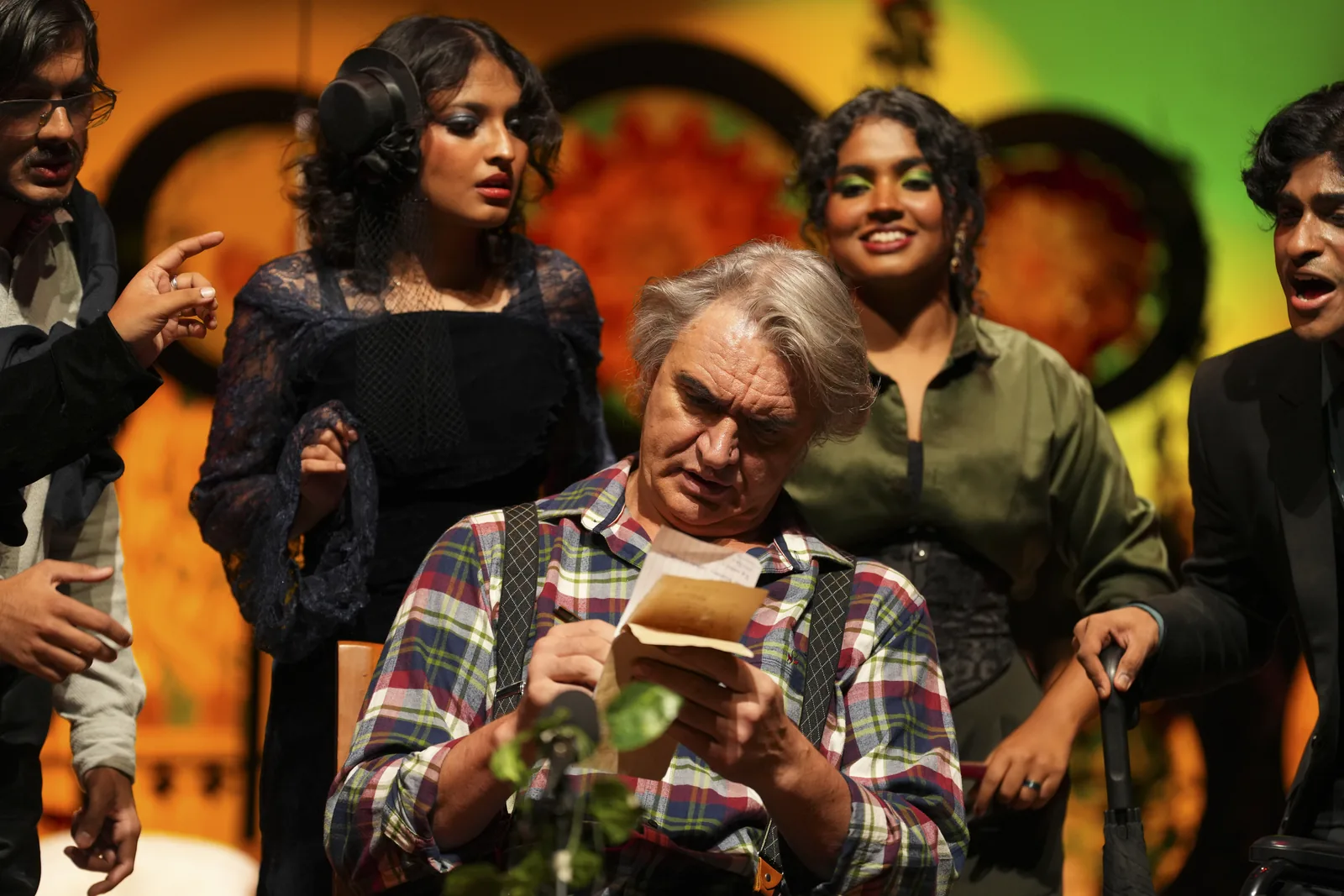
He keeps his word to none of them, which is the joke. But look at what he does not do, which is the point. At that moment he holds absolute power. Nobody can denounce him. He could take everything, down to the spoons. Instead he honours every share the family agreed among themselves, collects none of their bribes, and takes the three things they themselves put in his hands. A crook with a sense of proportion is a rarer creature than an honest man. The real loser is the monastery, which ends up with almost nothing. That is worth saying plainly, because it explains why the Hell in this story is not a joke.
“A crook with a sense of proportion is a rarer creature than an honest man.”
Exhibit six: his last words are about her. Could Buoso’s money, he asks, have found a better use? He says it while watching his daughter in Rinuccio’s arms.
None of this needs a single note changed. It only needs you to watch where the man is looking.
Is anyone in this house innocent?
Once you stop casting Schicchi as the villain, you notice how short the list of heroes becomes.
Start with the dead man. Buoso Donati, in our production played by a living actor who lies on the bed for the entire opera without a note to sing, while people roll him over, drag him about and stuff him in a cupboard, has left every penny to the friars. Perhaps he loved them dearly. Perhaps, in the time-honoured way, he was trying to buy himself a ticket to heaven. The old commentator says the real Buoso wanted to make his will because he had a great deal to give back that belonged to other people. Either way, a man who disinherits every single relative has lost his sense of measure too. Buoso tries to buy Paradise. Within the hour, Schicchi will sell his own.
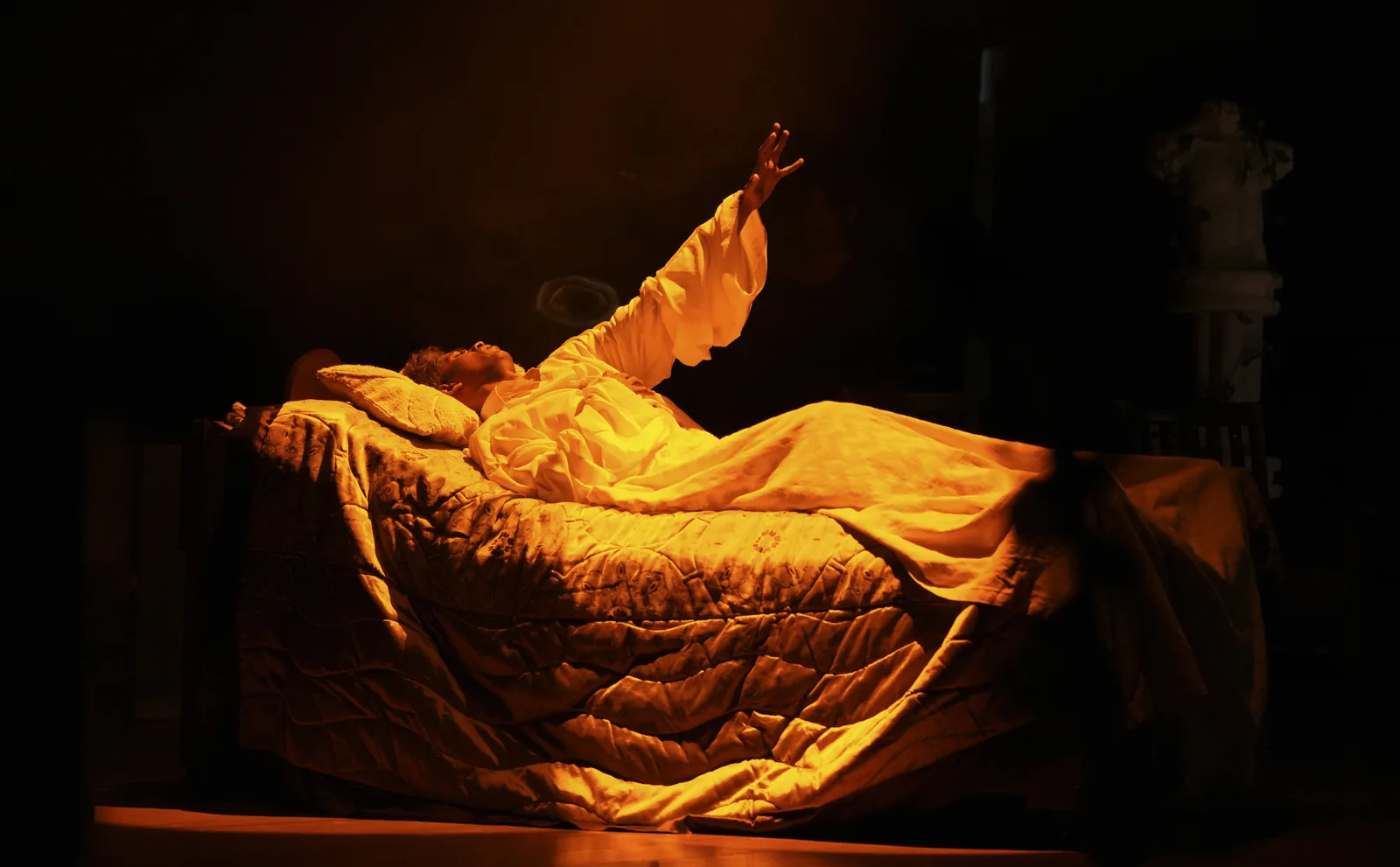
The relatives behave like a pack of jackals that has found an unlocked kitchen. Zita runs them like a lioness. Simone, a former mayor (played by Ray Paul Manoj), brings the full weight of his office to searching the drawers. Betto carries gossip from room to room. Two married couples fight over the linen. And Rinuccio, our romantic lead, searches for the will as frantically as anyone, because the will is his wedding. His uncle, it turns out, left him nothing either. A rich uncle who leaves his favourite nephew not one coin: that tells us something about the nephew, too.
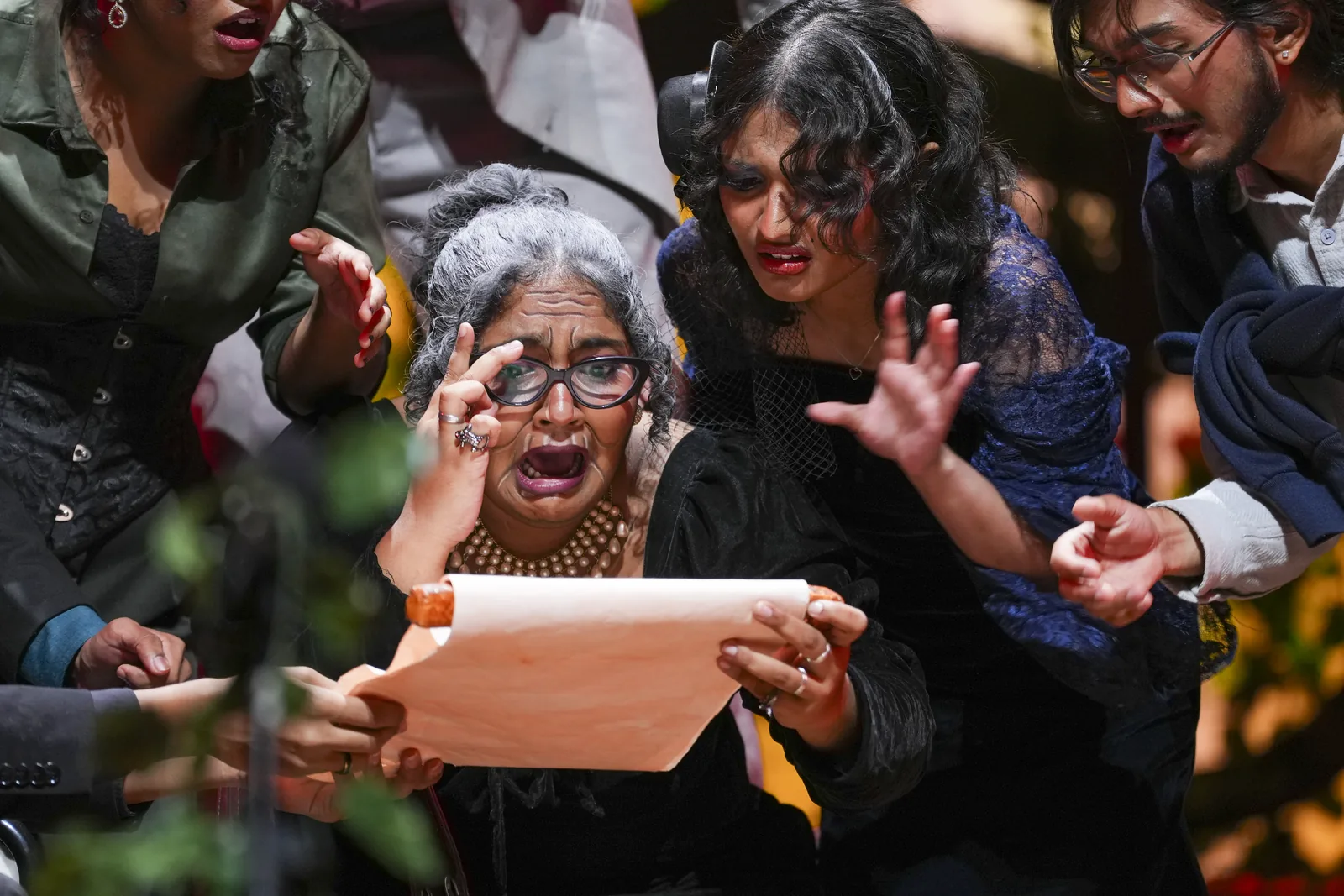
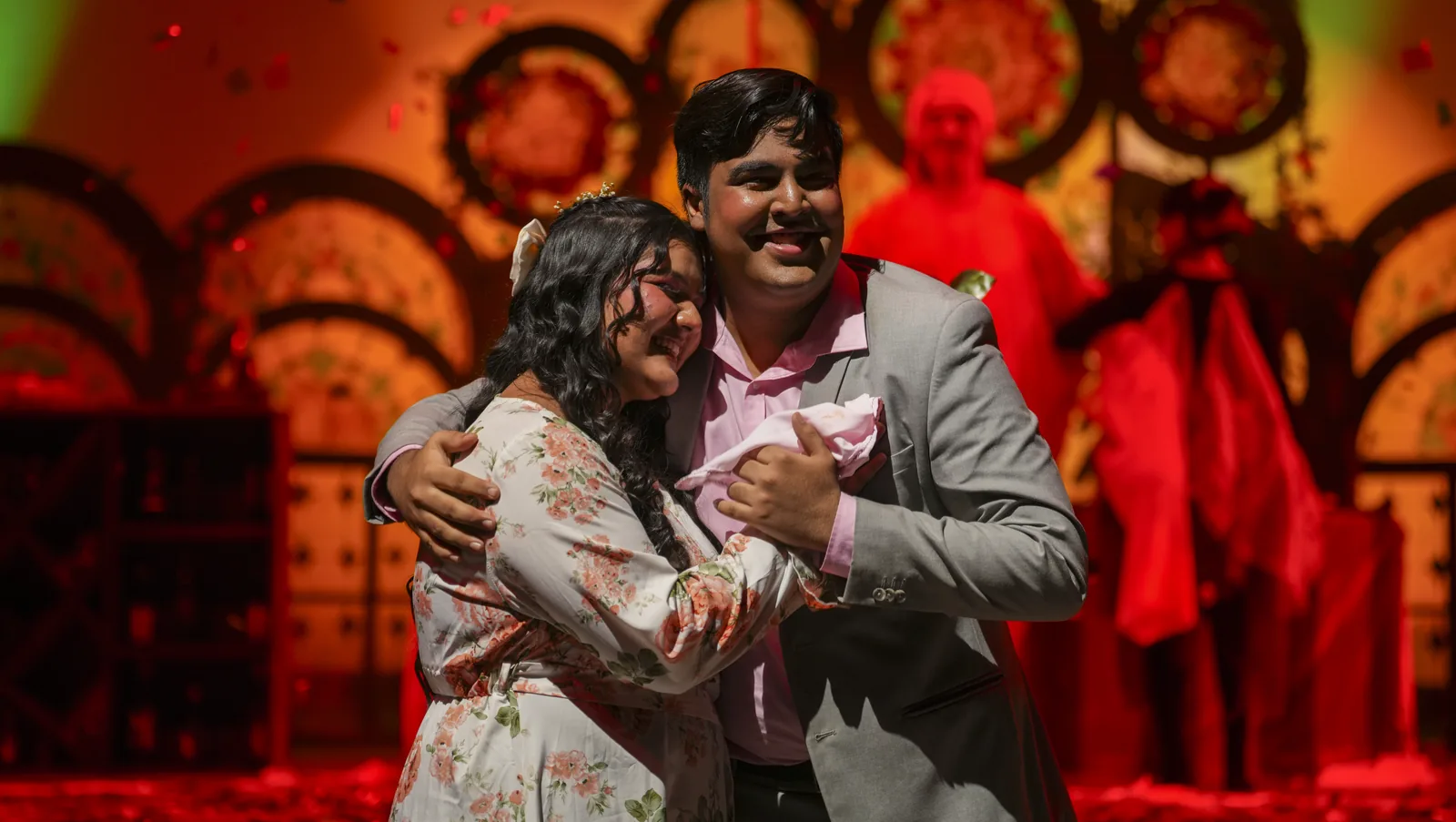
Rinuccio’s big aria, sung in our production by Sparshan Ganguli, praises Florence as a tree in full blossom and celebrates the new men who make it great. It is the anthem of a young man who wants to live in Paradise. And he gets there. So does Lauretta. They walk into it on the strength of Schicchi’s damnation. So the triptych’s Paradise does exist. It is on earth, it belongs to the young, and Lauretta’s father pays for it.
And Lauretta? In the whole opera she makes one request and one threat. We never see her do a single thing for anyone else. Perhaps she is playing the innocent. Perhaps she really is one. The libretto never mentions a mother; she arrives with her father, and in our reading he has raised her alone. She knows perfectly well that she is the apple of his eye, and she uses the only weapon a child has. When the lovers finally have everything, Puccini gives them the most beautiful music in the score. He does not give them one word of thanks to sing. Did he mean it? We cannot know. We only know it is not there.
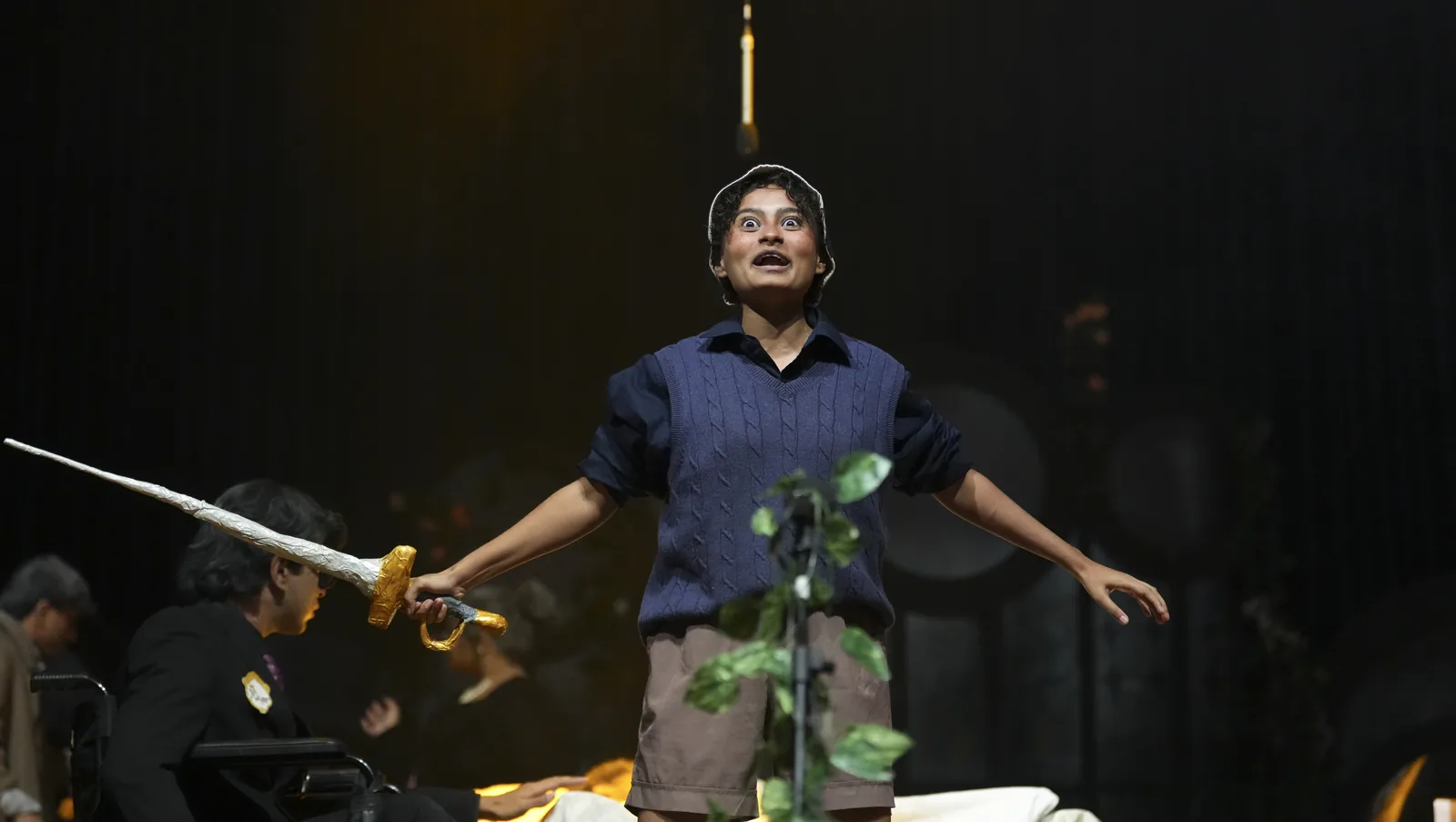
There is exactly one person in the house who has done nothing wrong, and he is the smallest: Gherardino, a seven-year-old boy who plays on the floor while the grown-ups hide a corpse. I gave him far more to do than Puccini did. More about that below.
Comedy or tragedy?
So is Gianni Schicchi a comedy?
Here is the medieval answer, the one usually linked to the title of Dante’s own poem. It comes from a letter traditionally attributed to him, although scholars are still arguing over whether he wrote it. A comedy begins in misfortune and ends in happiness. A tragedy does the reverse.
Apply that to our opera, and it is both at once, in the very same final minute. Lauretta and Rinuccio begin the evening with no dowry and no permission, and end it married and rich: comedy. Lauretta’s father begins the evening alive, free and with his self-respect intact, and ends it, by the sentence of the Dante he himself invokes, in the tenth ditch of Hell: tragedy. One plot, two genres. Which one you saw depends on whose face you were watching.
“One plot, two genres. Which one you saw depends on whose face you were watching.”
The rogue reading cannot answer one simple question. Why would a man who knows the price (and Dante’s Florence knew exactly what forging a will cost, on earth and after it) do this at all? The score’s answer is: because his daughter asked. That is not the motive of a trickster. It is the motive of a father. And it has a price.
And he does not take it back. In Dante’s Hell, what finally damns a soul is not the sin. It is the refusal to repent. Schicchi’s last words to the audience are not an apology. They are a defence. He would do it again tomorrow.
What did we change, and why should you trust us?
A director who asks an audience to see an old opera differently owes them an honest confession. Here is mine.
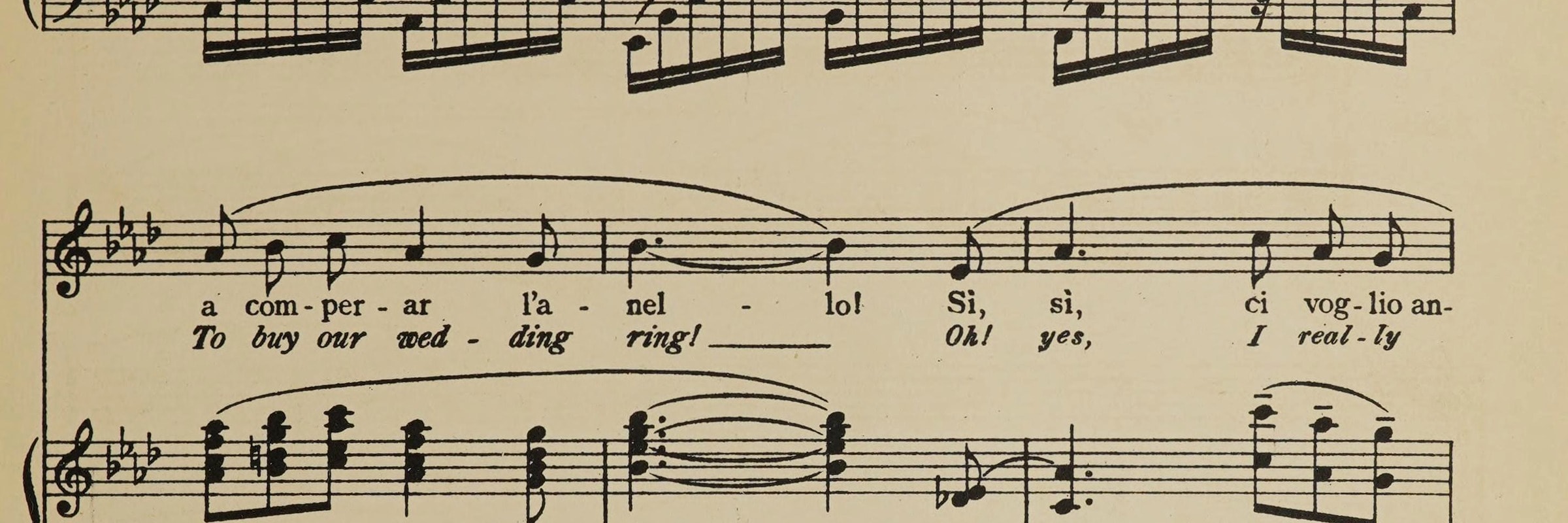
What we did not touch: the music, and almost all of the words. Puccini’s score was sung as written, in the English version by Anne and Herbert Grossman that Ricordi prints in its vocal score. Two nouns are the exception, and I will come to them.
What we did change:
We moved the action out of Florence in 1299 and into the present day: an English-speaking country we never name, in the apartment of a man who made his fortune in the film business. That seemed the right address for a story whose central event is a performance, in which a living man plays a dead one so convincingly that a doctor and a notary believe him. The names, and the Italian places, Fucecchio, Signa and the rest, all stayed. So it is not Italy, but its map is Italian: a country that exists only on our stage, which, when you think about it, is where all opera countries are.
Then there was the mule. In 1299 Buoso’s mule was the finest in Tuscany, the medieval equivalent of a supercar, and a family could plausibly come to blows over it. In 2026 a family coming to blows over a mule needs more explaining than we had time for. So, with apologies to Forzano, our singers sang “Porsche” where he wrote “mule”: a Porsche worth a million dollars. I checked. Customised ones can cost more. And the florins became dollars, a currency used by enough countries that it gives nothing away. Those are the two nouns. Dante’s motive, you will remember, was “the lady of the herd”, the finest animal in the stable. We simply updated the stable.
We made Doctor Spinelloccio a woman: a polished private physician to wealthy elderly clients, with two assistants to help her into her gloves.
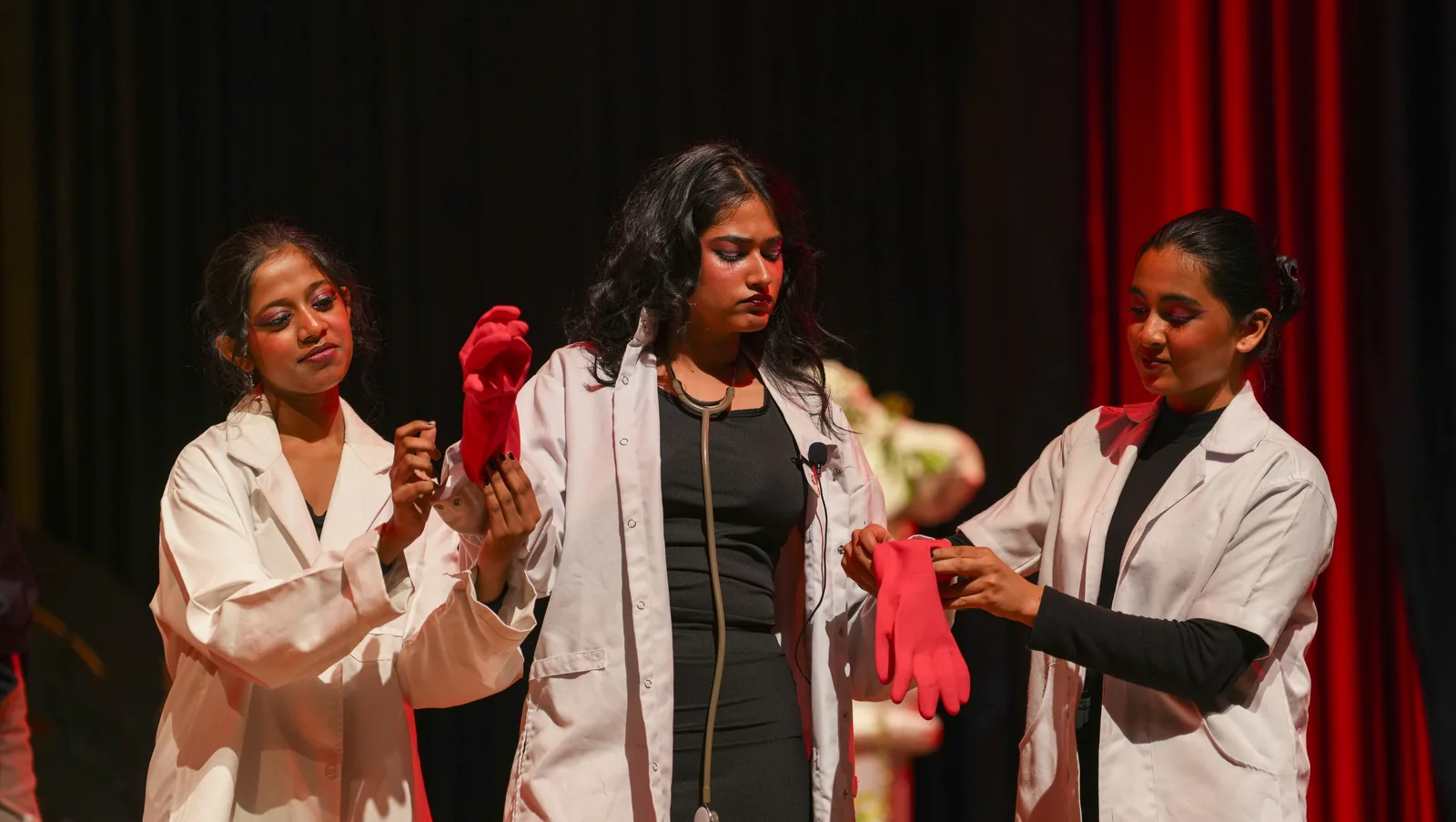
We gave Gherardino a prologue, a monologue written for the production, in which the boy welcomes the audience to the house and introduces his family one by one: the great-uncle who started as a janitor in “Dollywood” and rose to be a big-time producer, the grandmother whose eyes you do not argue with. For an audience meeting opera for the first time, it is a hand to hold on the way in. Dollywood, for the record, is not Hollywood and not Bollywood. It is a film capital that exists only on our stage, which means nobody anywhere can feel insulted by what goes on in it.
We gave Gherardino the final words to the audience, which Puccini wrote for Schicchi.
And we added the Unseen.
More than 1,200 people saw it over three performances. Afterwards, some of them wrote to us with exactly the questions we had hoped for. Why isn’t it Florence? Why is the doctor a woman? Who were those figures in the dark? A director cannot repaint the picture. He can change the angle you look at it from. And an old, familiar picture seen from a new angle starts asking questions of its own.
In the room
An opera that runs under an hour took more than a year and a great many people. Some of them:
On stage — Helen Elizabeth Samuel (Lauretta) · Sparshan Ganguli (Rinuccio) · Sahana Shajitha Begum (Zita) · Ray Paul Manoj (Simone) · Pragyaan Jain (Marco) · W. Sahithi (La Ciesca) · Meghna Bindu (Nella) · Aishwarya Mahalanobis (Gherardino) · Sudhansh Shrish Lal (Guccio)
Behind the scenes — Malvika Nair (assistant director) · Mayurika B Ambastha (stage manager) · Joyciline Rose S (administrative stage manager) · Dhriti Dhulipudi and Joanna Mary Mathew (sets) · Anaga S Athreya (sets and props) · Jai Rishwanth (media)
The full cast and creative team, the dancers, the lighting and sound crew, photographs and audience reviews are in the production archive →
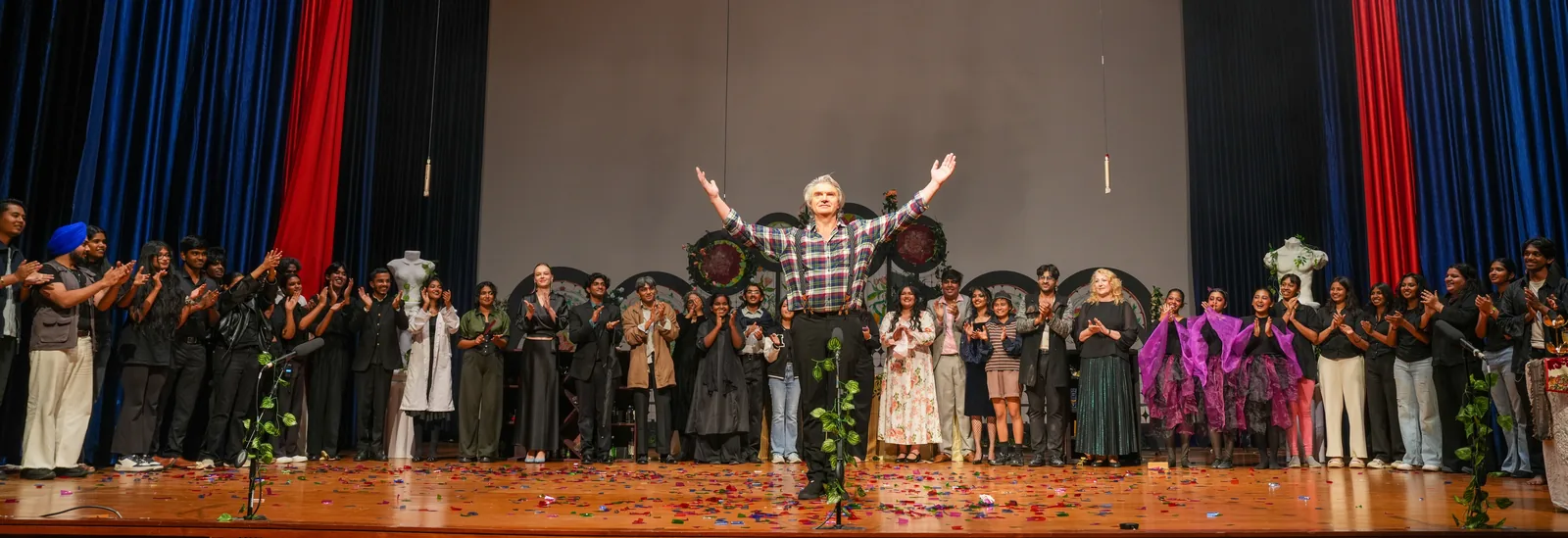
Who were those figures in the dark?
Puccini wrote no dancing into Gianni Schicchi. We had four dancers, choreographed by one of them, Ambika V. Talreja, and they became the backbone of the production. Another, Ananyaa Singh, doubled as Doctor Spinelloccio, which means the physician who examines Buoso’s “body” was, in a sense, one of the Unseen in a white coat.
In rehearsal we never found a better name for them than “the forces” or “the ghosts”. The idea was simple. They are presences the grown-ups on stage cannot see. Only the audience can, and one other person. In his prologue, Gherardino confides: “Sometimes I see those strange creatures near his bed. I think the house is haunted.” Children notice things.
They appear in the very first bars. A shaft of light falls on Buoso’s body, and they rise out of the darkness to perform a kind of rite over the dead man, their hands guiding the light upward: the soul leaving the body for wherever souls go.
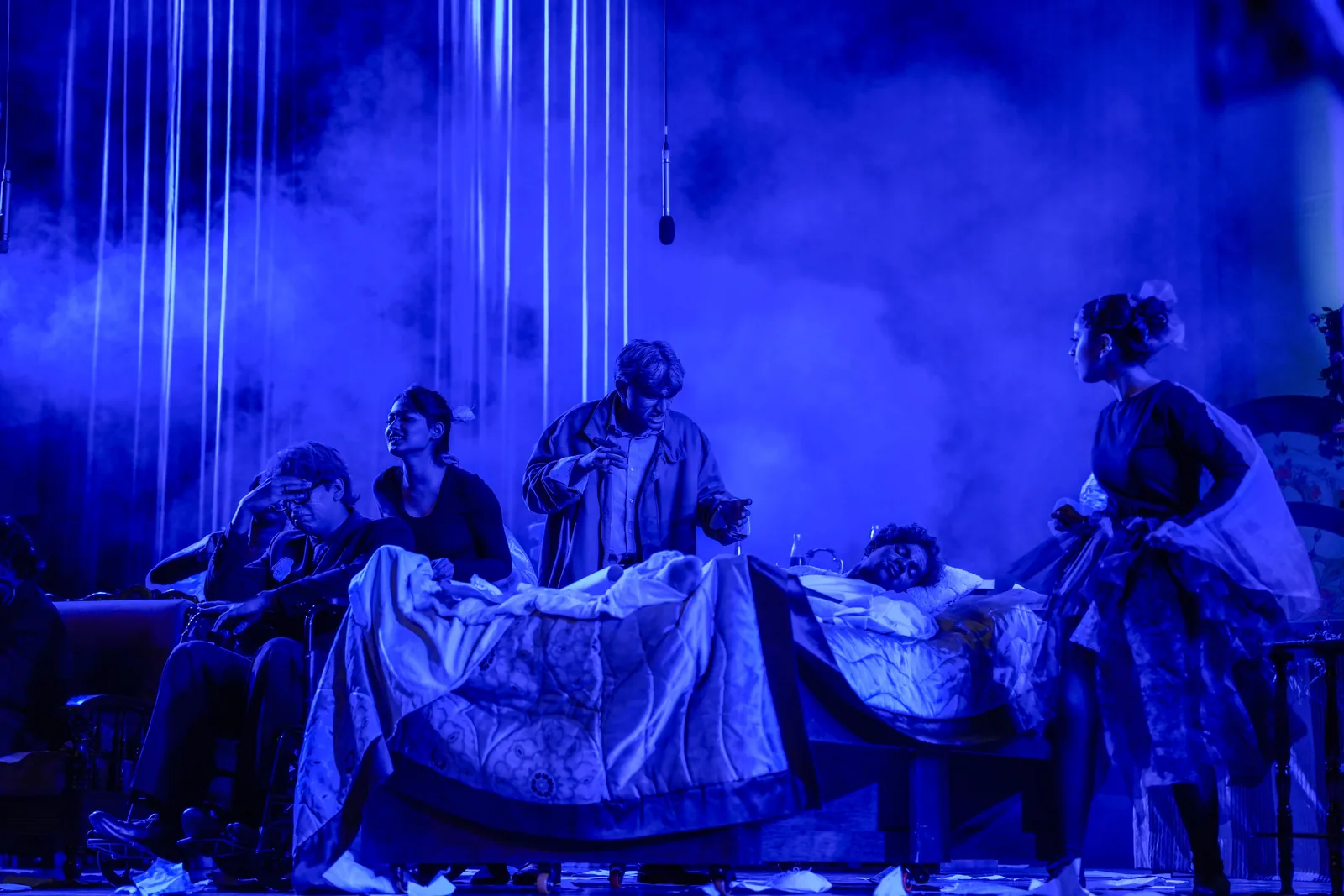
They come back when the relatives discover the will. As the family’s grief curdles into fury and they start grabbing and gobbling everything in the apartment, the Unseen slip among them and feed the chaos.
They come back during “O mio babbino caro”. While Lauretta, sung by Helen Elizabeth Samuel, pours out her aria, they work on her father, turning him, nudging him, pushing him, until they throw him into his daughter’s arms.
That is the only embrace between father and daughter in our production. It happens before the crime, and the Unseen arrange it.
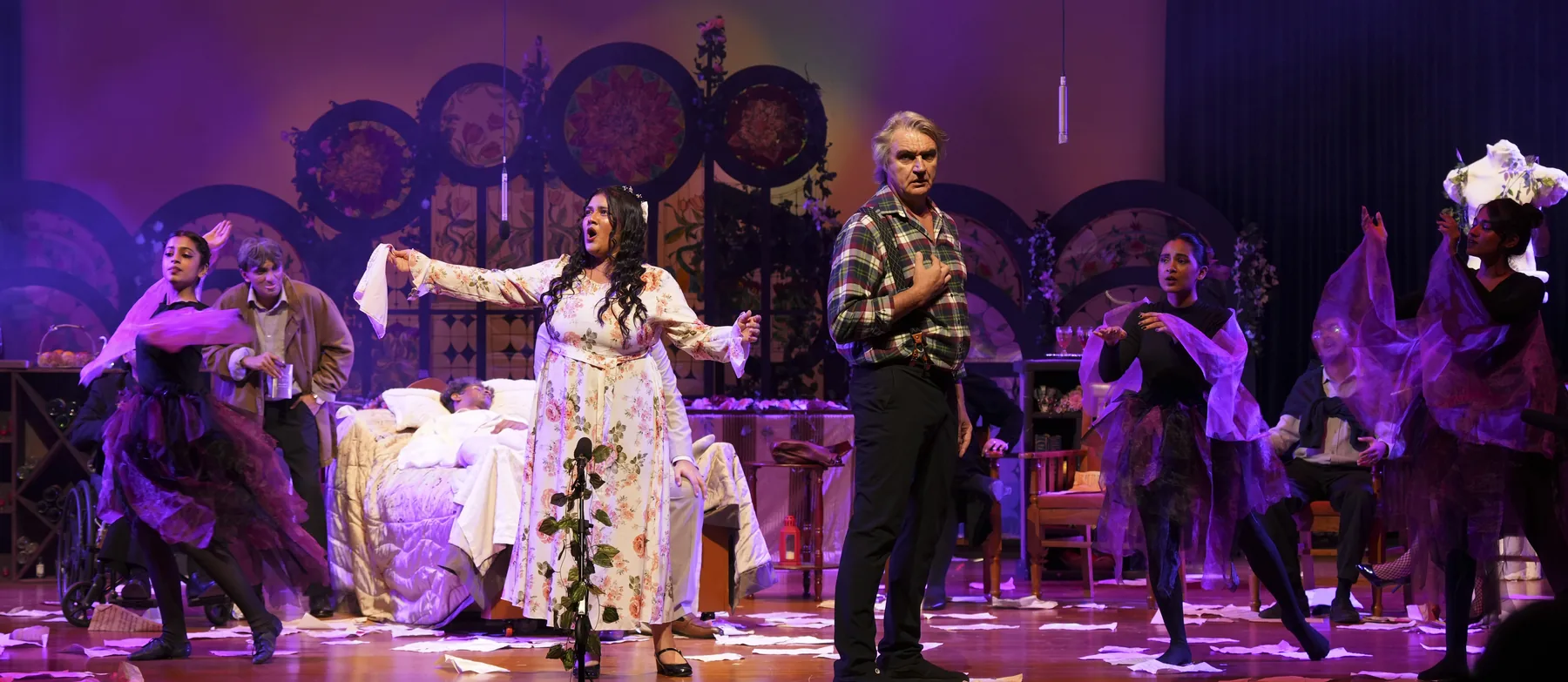
And at the end they come for him. Until this moment they have been weightless and invisible. Now, for the first time, they are solid enough to hold a man. As the lovers walk off into their bright new life, Schicchi tries to follow, and cannot. The same forces that pushed him towards his decision now collect the payment. Call it fate, call it karma, call it consequence. In trouble, father and daughter stood side by side. In happiness, their roads divide: hers towards a married life with a dowry, his towards the fire.
Some directors end with father and daughter in each other’s arms. I looked for that embrace in the music and in the libretto, and I did not find it. So we did not stage it.
Why does a child get the last word?
Puccini gives the last word to Schicchi. We gave it to the child.
Schicchi pleading for himself is a defendant, and defendants are expected to plead. Gherardino asking on his behalf is something else entirely: the one person on stage with nothing to hide, turning to the audience and asking whether the man they have just watched deserves what Dante gave him. The opera opens with this boy explaining the house to us and closes with him asking us to judge it. He was played by Aishwarya Mahalanobis, an actress who has played grandmothers and young women on our stage, and here, with complete conviction, a boy of seven.
Then come the bright final bars, and the applause, which in this production is no longer just applause. It is the verdict.
The question he would rather not answer
Imagine a journalist making the trip down to the tenth ditch, notebook in hand, to ask Gianni Schicchi how on earth he ended up here. It would be a short interview. He forged a will, and he does not deny it. Dante’s sentence is not unjust. It is simply incomplete.
It took us more than a year to bring this opera to the stage, and it was not a year of one man learning one part. We worked through the score with every singer in the cast, with Anastasiya Yafimava at the piano and Natalla Marozava working on every voice, and with each of them we began in the same place: not with what the character ought to be, but with what this particular person could bring to it. Their build, their temperament, the way they stand when nobody is telling them how. Our Zita became a lioness because Sahana Shajitha Begum, who sang her, had a lioness in her. Then came the question for every character in turn. What do you want, and what are you prepared to do to get it? Ask it of everyone in that room, and you notice something. Only one of them wants something that is not for himself.
So the real question for Schicchi is not whether he is guilty. It is whether it was worth it. And he would answer yes without a moment’s hesitation. That is what makes it a tragedy.
Who is to blame?
Russian literature has been asking that question since Herzen put it on the cover of a novel in 1846, and an opera house is a good place to keep asking it. I would only add one rule: be careful judging people by the standards of a world they did not live in.
My own family lived through a tsar, a revolution, wars, Soviet shortages and the collapse of a country in the 1990s. In each of those worlds the rules were different, and in each of them, I suspect, someone in my family broke a rule or two so that their children would eat, study and get a little further than they had. I cannot judge them by laws they never lived under. I can only notice what stayed the same through all of it: parents giving up something of their own so that their children would have more.
My parents are both long gone now. They gave up a great deal so that we could have a different future, as their parents did before them, and theirs before that, back through generations I will never be able to name. If any one of those people had chosen differently, someone else would be writing this article. Probably someone with a better ear for comedy. Children rarely say thank you for that kind of thing, whether they are seven or seventy. Teachers, by the way, rarely hear it either.
So, if you saw our Gianni Schicchi and disagreed with every word of this, good. Next time you watch it, or any opera, ask the same two questions about everyone on stage. Why does this person do what they do? And who pays for it?
Lauretta never thanks her father. Puccini did not write her the words. I think this production was my attempt to say them for her, to my own.
Gianni Schicchi was performed three times at KE Auditorium, CHRIST University, Bengaluru: on 25 September 2026 for the university’s students and faculty, and on 26 and 27 September for ticket-holders. Sung in English.
Production archive · Introducing Gianni Schicchi · Bringing Puccini’s Orchestra into Our Rehearsal Room · Andrey Morozov