A rich man has died. His relatives gather around the bed, weeping loudly and looking sideways at one another. Then the will is found — and every one of them discovers they have inherited almost nothing.
This is how Gianni Schicchi begins: with grief that lasts about ninety seconds, and greed that lasts the rest of the opera.
Every platform begins with a first story. This is ours.
Giacomo Puccini’s comic masterpiece opens the new performing arts season at CHRIST (Deemed to be University). It is performed entirely in English, it runs for about an hour without an interval, and if you have never seen an opera before, there is no better place to start.
A Few Lines from Dante
The most remarkable thing about Gianni Schicchi is how little its composer had to work with.
The character appears in Dante Alighieri’s Divine Comedy for only a handful of lines. In Canto XXX of the Inferno, Dante places him deep in the Eighth Circle of Hell, among the falsifiers — those punished for impersonating others. His crime: disguising himself as a dead man in order to dictate a false will.
Dante gives him no defence, no speech, no explanation. Just a name, a sin, and eternity.
“Just a name, a sin, and eternity.”
Gianni Schicchi was a real Florentine, remembered as a man with an extraordinary gift for imitating other people’s voices and manners. The dead man he is said to have impersonated, Buoso Donati, belonged to one of the most powerful families in Florence — and Dante himself had married into that family. The poet was writing about people his readers knew, in a city where everyone knew everyone, and he did not write kindly.
For most composers, four or five lines in a medieval poem would be a footnote. For Puccini, it was enough to build an opera on. Working with the librettist Giovacchino Forzano, he expanded Dante’s brief condemnation into a comedy of astonishing precision: Florence, 1299, a house full of scheming relatives, and one outsider sharp enough to beat all of them at once.
Puccini’s Only Comedy
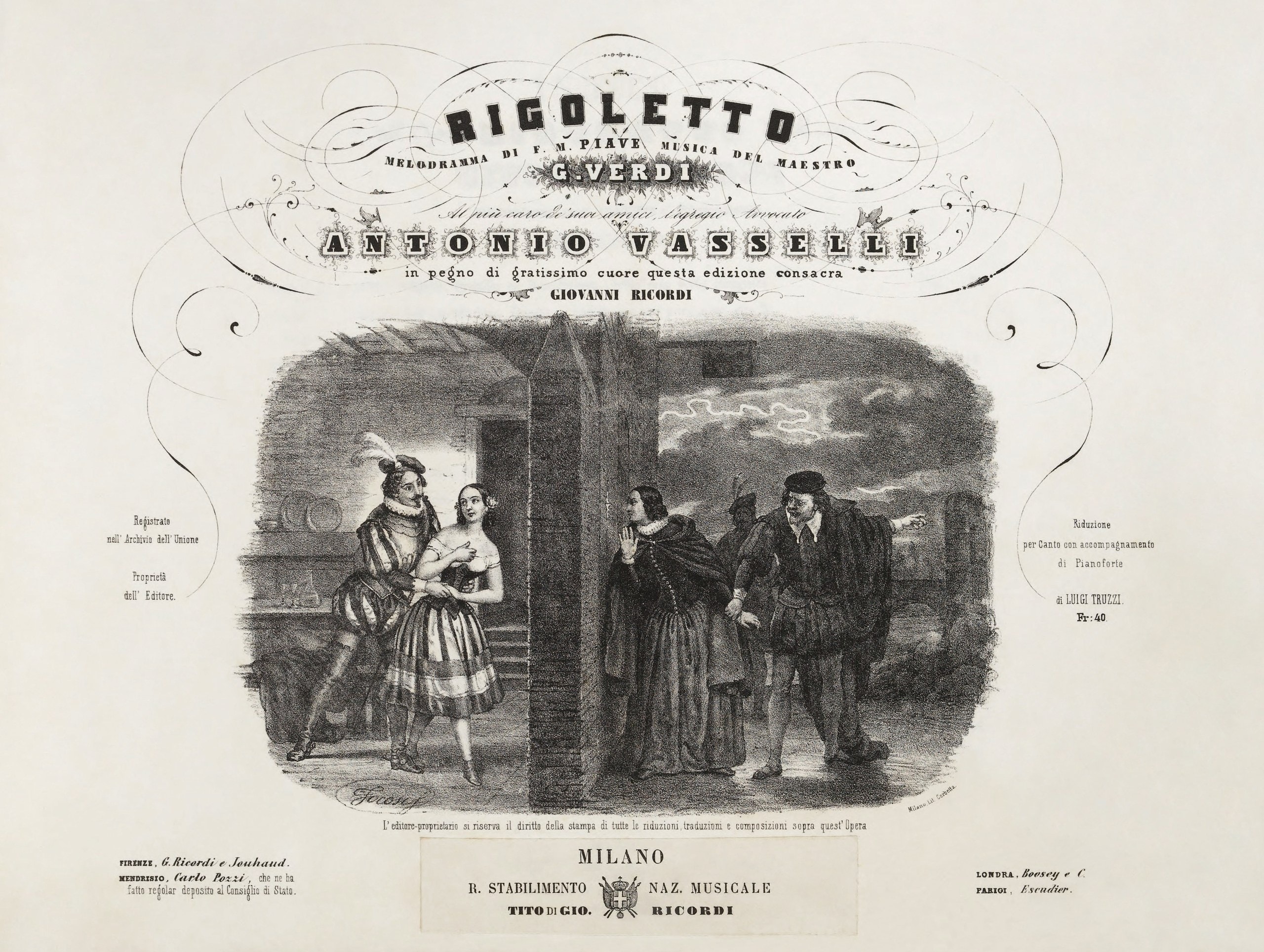
Gianni Schicchi is the third and final panel of Il Trittico — three one-act operas that Puccini wrote to be performed together in a single evening. The other two, Il Tabarro and Suor Angelica, are dark, tragic and slow-burning. Gianni Schicchi arrives last, like sunlight after a storm.
The triptych premiered at the Metropolitan Opera in New York in December 1918, weeks after the end of the First World War; travel across the Atlantic was still difficult, and Puccini was not there to hear it. Of the three, the comedy was the immediate success — and it remains the one most often performed on its own, more than a century later.
It is also, remarkably, the only comedy Puccini ever wrote. The composer of La Bohème, Tosca and Madama Butterfly — a man whose reputation rests on heroines who die beautifully in the final act — turned in his last completed opera to a story where nobody dies except the man who is already dead before the curtain rises.
The three panels are still often staged as Puccini intended. At CHRIST University we present Gianni Schicchi on its own: a complete, self-contained evening of theatre. Its compact length and non-stop comic energy make it an ideal first opera for audiences who have never set foot in one.
Why It Still Feels Modern
The story takes place in Florence in 1299, and almost nothing about it has aged.
Families still argue over inheritance. Parents still want more for their children than they had themselves. And people still become noticeably kinder, more devout and more sentimental the moment money is on the table.
Puccini and Forzano understood all of this perfectly. That is why an audience in Bengaluru in 2026 laughs in the same places as an audience in New York in 1918 — not because the opera is a museum piece that has been carefully preserved, but because it was accurate about human beings in the first place.
What Actually Happens
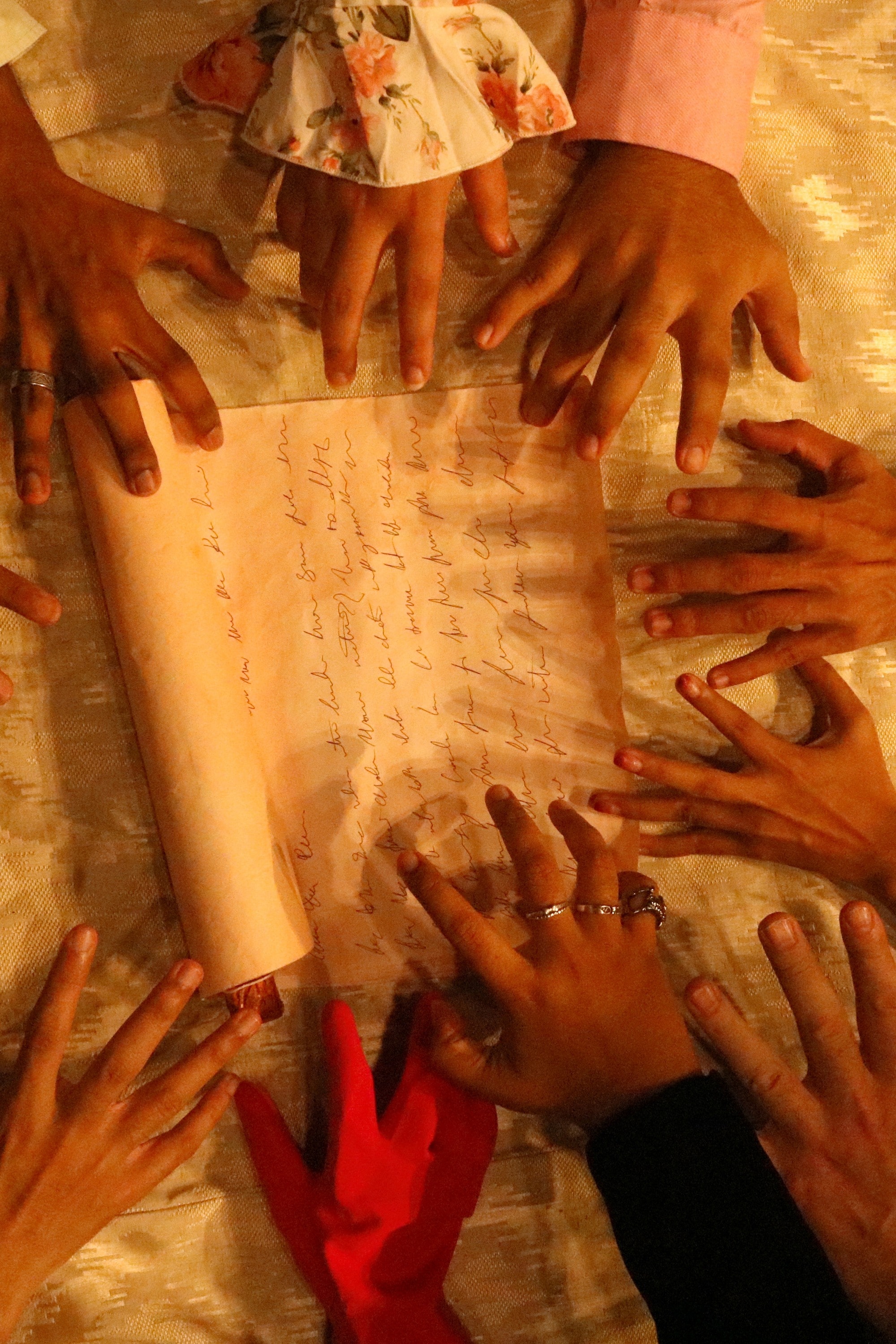
Buoso Donati is dead. His relatives arrive to mourn — and, more urgently, to find the will. When they find it, the news is catastrophic: the old man has left the entire fortune to a monastery. The house, the mills, the money. Everything.
Panic sets in. Then Rinuccio, the youngest of them, makes a suggestion nobody wants to hear. There is one man in Florence clever enough to find a way out of this. He is not of their class, they have always looked down on him, and — inconveniently — Rinuccio happens to be in love with his daughter.
His name is Gianni Schicchi.
What follows is one of the tightest comic mechanisms ever written for the stage. A plan is formed. A doctor arrives at the worst possible moment. A notary is summoned. And the relatives, one by one, discover exactly how expensive it is to make a deal with a man smarter than you are.
The Sacrifice Beneath the Comedy
Gianni Schicchi is usually played as pure farce, and the material invites it. The relatives bargain, panic, flatter and betray each other, and Schicchi outwits the entire family in a single afternoon. The laughter is real and it is constant.
Our production looks underneath it.
Schicchi knows exactly what he is doing. Faking a dead man’s testament is not mischief — in the Florence of the opera, the penalty is the loss of a hand and permanent exile from the city. He states that risk out loud, to the family and to himself, and then he does it anyway.
And beyond the walls of that house, a larger sentence is already waiting. Dante has condemned him to Hell for this exact act. In the final moments of the opera, Schicchi turns to the audience and says so himself, before asking us to consider the extenuating circumstances.
So: why does he do it?
Because his daughter Lauretta loves Rinuccio, and without money and social standing that marriage will not happen. Schicchi takes the mule, the house in Florence and the mills at Signa into his own name — the three most valuable things in the estate — and the last image of the opera tells us what they were for. Two young people now have a future.
This is the reading our production is built on. A father accepts a permanent stain on his soul so that his daughter can have a life. His method is criminal. His motive is love.
“His method is criminal. His motive is love.”
For many parents — and this will be recognisable to many families here in India — that logic needs no translation. Parents endure, forgive and sacrifice far more than anyone expects when their children’s happiness is at stake.
The relatives see a thief. Dante sees a sinner. But another father may see something else entirely.
We have not removed the laughter. We are asking the audience to hear what is underneath it.
“The relatives see a thief. Dante sees a sinner. But another father may see something else entirely.”
Why This Opera, at This University
Choosing a production for a university season is not only an artistic decision. It is also a question of what the work will teach the people performing it.
Gianni Schicchi is unusually generous in that respect. It is short enough to be rehearsed to a professional standard within an academic calendar. It has no small parts — a dozen characters are on stage almost continuously, each with a distinct personality to build and defend. It demands comic timing, which is the hardest discipline in theatre and the one least often taught. And it requires singers to act while singing complicated ensemble music, which is precisely the skill that separates a good voice from an opera singer.
For the audience, the calculation is just as simple. One hour. No interval. In English. Funny from the first minute. Whatever you may believe opera is, this is not it.
“Whatever you may believe opera is, this is not it.”
Gianni Schicchi — 26 and 27 September 2026, KE Auditorium, CHRIST (Deemed to be University). One hour, no interval, in English. See dates, seating and booking →
Opera Without the Language Barrier
Many people hear the word “opera” and immediately think: I won’t understand a word.
You will.
Our production is performed entirely in English, using a professional singing translation chosen specifically for its clarity and its wit. Nothing has been simplified — Puccini’s music is exactly as he wrote it. Only the language has changed, so that the jokes land when they are supposed to land, in a room where everybody gets them at the same moment.
You do not need Italian. You do not need any previous experience of opera. You need a seat and a sense of humour.
“You need a seat and a sense of humour.”
The Hardest Kind of Comedy
Comedy is harder than tragedy, and this score proves it.
Nearly a dozen characters remain on stage for almost the entire opera. They interrupt each other, talk over each other, conspire in pairs and dissolve into ensembles where every entrance has to land on the exact beat Puccini wrote for it. There is nowhere to hide and almost nothing to hide behind.
In a tragic opera, a singer can often stand still and pour everything into the voice. Here, that is not an option. A character is arguing, calculating, lying and physically moving through a crowded room, all while executing music of considerable difficulty at speed. Timing is the whole game — every entrance, every reaction, every glance, every silence.
The Voices
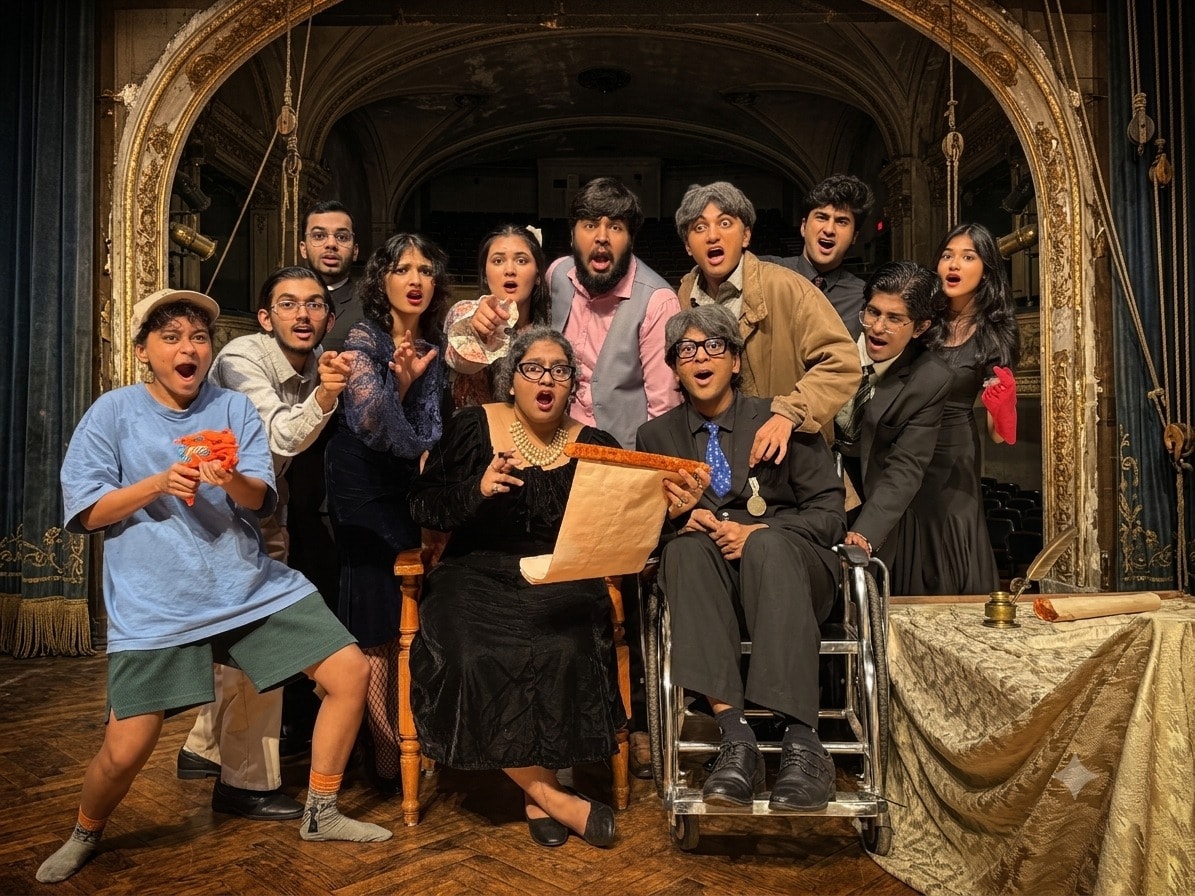
Opera begins with voices, and this production brings together students and faculty of CHRIST University.
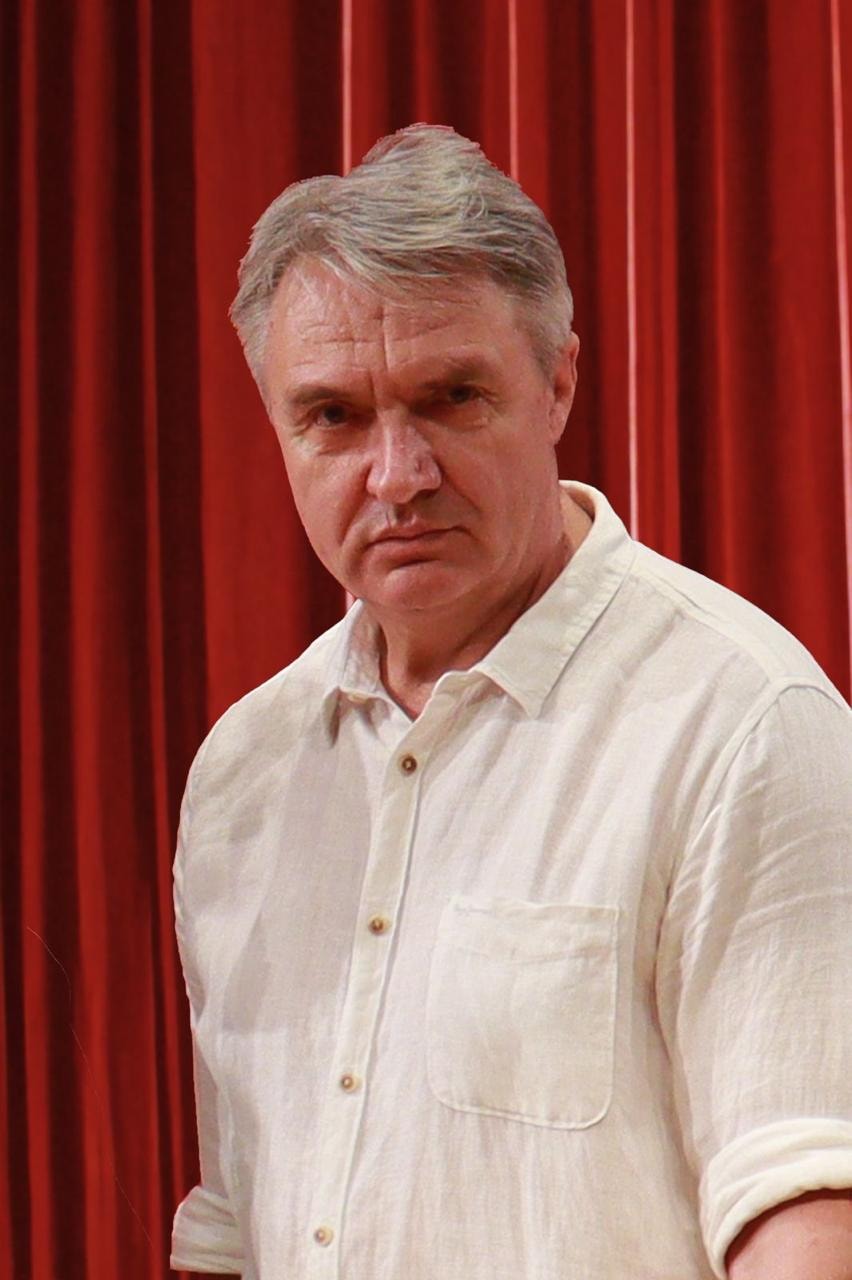
I sing the title role myself, and I am also the stage director of this production. Before coming to Bengaluru I spent more than twenty years as a leading baritone at the National Academic Bolshoi Opera and Ballet Theatre of Belarus. I have sung Schicchi before, in another language and for another audience. I return to him now in English, on the other side of the world, with a cast of students I have trained myself — which is a different thing entirely, and a better one.
Sparshan sings Rinuccio — a role Puccini wrote for a bright, fearless tenor with the range to match the young man’s optimism. Rinuccio also carries one of the opera’s great lyrical moments, a soaring declaration of love for Florence itself, which arrives as a sudden burst of beauty in the middle of the family’s scheming.
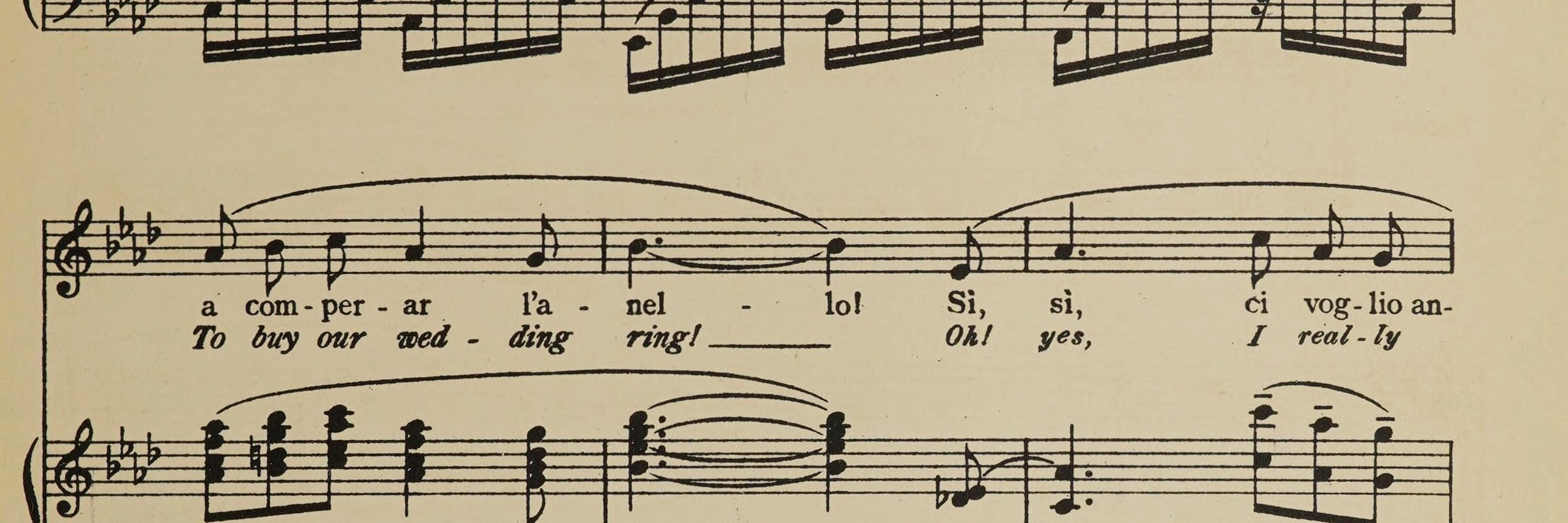
Lauretta is sung by Helen, who performs one of the most famous melodies ever written for the human voice: O mio babbino caro. Almost everyone has heard it — in films, in advertisements, at weddings — often without knowing where it comes from. In context, it is not a concert piece at all. It is a daughter’s plea to her father, and everything that follows in the opera happens because of it.
The remaining roles — the aunt, the cousins, the in-laws, the nephew, the doctor, the notary — form the family that Schicchi is about to dismantle. Each of them is a complete comic portrait, and casting them well matters as much as casting the leads.
For our students, this production is far more than a university performance. For most of them it is the first time they will carry a principal operatic role in front of a paying public. Behind every minute you will hear on stage stand months of vocal work, language coaching, dramatic rehearsal and ensemble preparation — hundreds of hours, most of them in rooms with no audience at all.
When the curtain rises, what you will be watching is not only a performance. It is the result of everything that happened before it.
“For most of them it is the first time they will carry a principal operatic role in front of a paying public.”
The Team Behind the Singers
Most of the work of an opera happens in rooms nobody ever sees.
Vocal preparation is led by Natalla Marozava, Voice Coach, who works with the singers on technique, stamina and the specific demands of Puccini’s writing. Building a role over months of rehearsal without damaging the instrument is a craft in itself, and it is the foundation everything else rests on.
Anastasiya Yafimava is our répétiteur — the rehearsal pianist who, in practice, holds the entire musical structure together. Every ensemble, every entrance, every tempo relationship is established at the piano long before anyone hears an orchestra. Her work shapes ensemble precision, diction and style throughout the rehearsal process.
The production uses a computer-realised orchestral track prepared from Puccini’s original score, giving our singers the complete orchestral texture the composer wrote.
One Secret We Are Keeping
If you have noticed dancers listed alongside the singers, you may be wondering what they are doing there.
They are not decoration. They are not there to fill the space between numbers. Alongside the singers we have introduced a ballet ensemble, appearing in specific scenes, behind and around the action — and they have a job.
The answer belongs in the theatre, not on this page.
We will say more closer to the performance. Not today.
If This Is Your First Opera
A few practical things, for anyone who has never been.
It lasts about an hour, with no interval. There is no dress code — come as you are. Nothing is expected of you: you do not need to know when to applaud, and you certainly do not need to know anything about Puccini. Laugh when it is funny. It will be funny often.
You will not need to read subtitles, follow a translation, or study a synopsis in advance. The story is told in English, on stage, in front of you, the way a play is.
An Art for Everyone
Opera has often been described as an art for everyone. Sometimes the opera world itself forgets that.
We have not. This production was not built to impress specialists. It was built to welcome people who have never been.
If Gianni Schicchi turns out to be your first opera, we will count that among the greatest successes of this production.
Opening a Season
Gianni Schicchi opens our musical season — and it is only the beginning. This season CHRIST University also welcomes Little Women, the Theatre Department’s new production, directed by playwright and theatre director Elena Dolova.
Together, these productions mark the opening of a new artistic season at CHRIST (Deemed to be University).
| Performances | 26 and 27 September 2026 |
| Venue | St. Kuriakose Elias Auditorium (KE Auditorium), CHRIST (Deemed to be University), Bengaluru |
| Duration | About one hour, no interval |
| Language | English |
Behind the Curtain
The performance is only the end of the story. Over the coming weeks we will take you into the rehearsal room: meet the cast, follow how opera singers actually build a role, look at how staging, choreography and musical coaching come together, and read rehearsal diaries as the production takes shape.
We will also, eventually, tell you what the dancers are doing there.
Where the Story Begins
Perhaps you will come for Puccini. Perhaps you will come because a friend of yours is singing. Perhaps because somebody simply told you it would be funny.
The reason does not matter.
What matters is that for a little over an hour, a room full of strangers will laugh together, hold their breath together, and walk out thinking about one father’s impossible choice.
That is what theatre has always done. And it is how we would like to begin.
Years from now, when someone looks back at the history of this platform, this production will be where the story started.
The curtain is going up.
Welcome.
Follow the Journal
This is the first of many. We are opening our journal to longer conversations about the work we stage — the history behind a score, the choices a director makes, the people who bring it to life.
Follow the journal for what comes next, and subscribe to our updates so you hear about each new piece and each new production first. Tickets and dates for this production are on the production page.