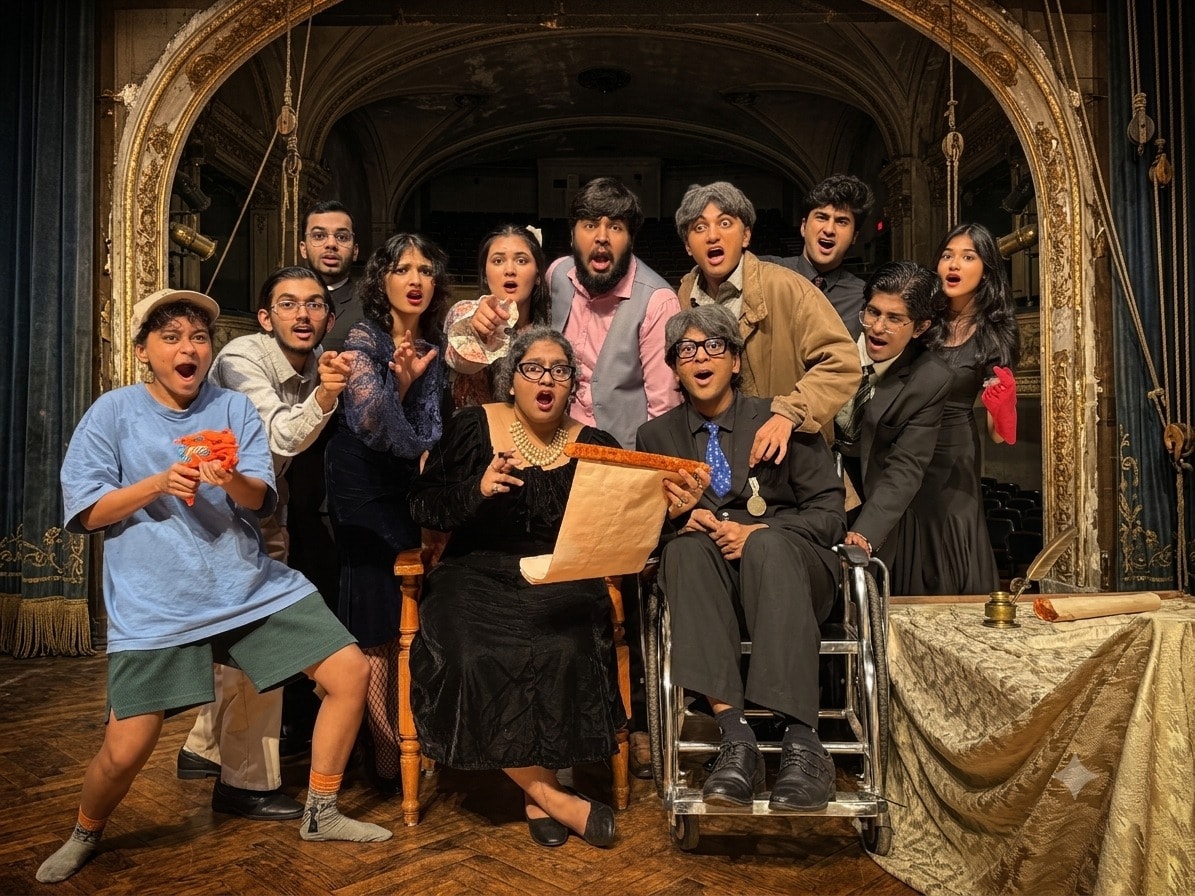
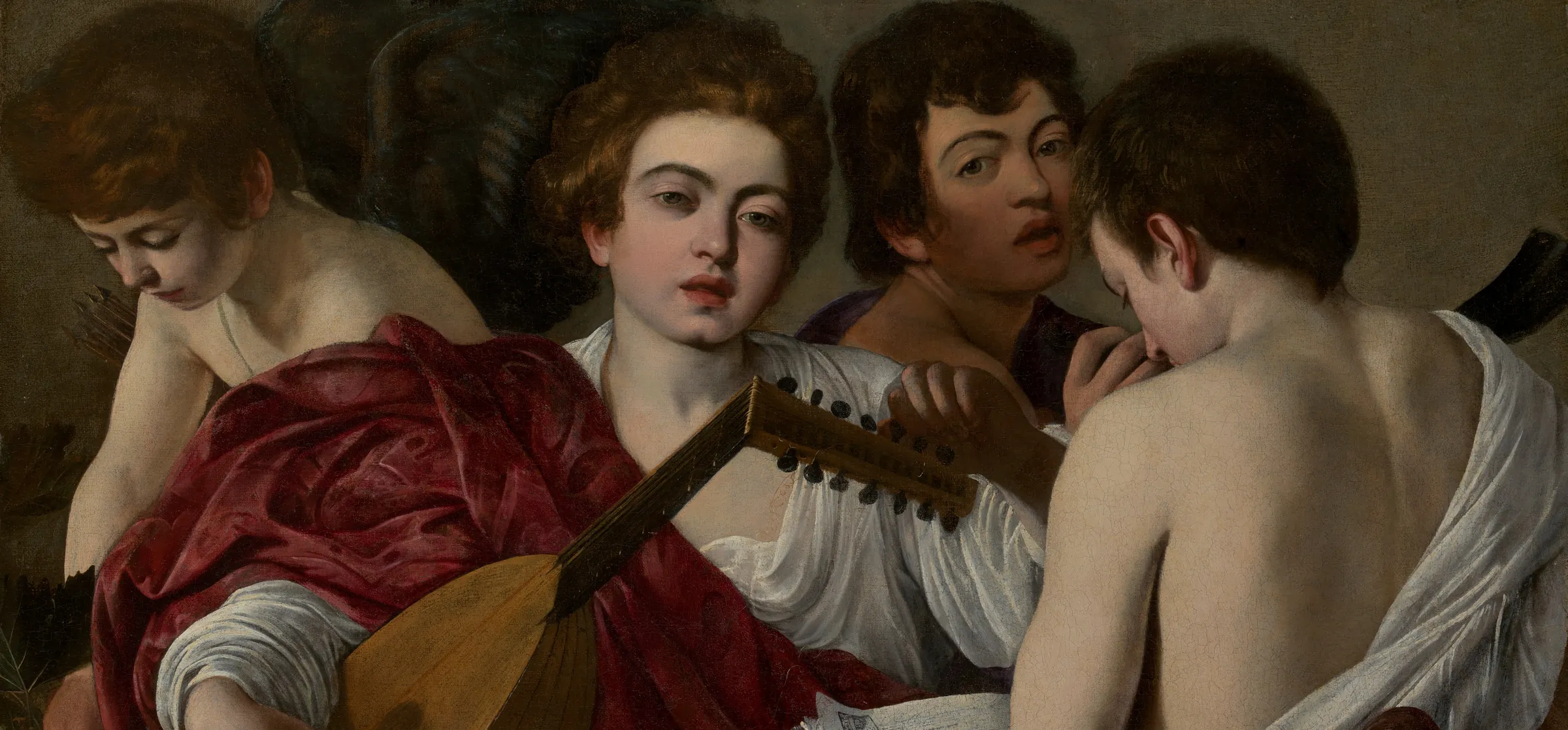
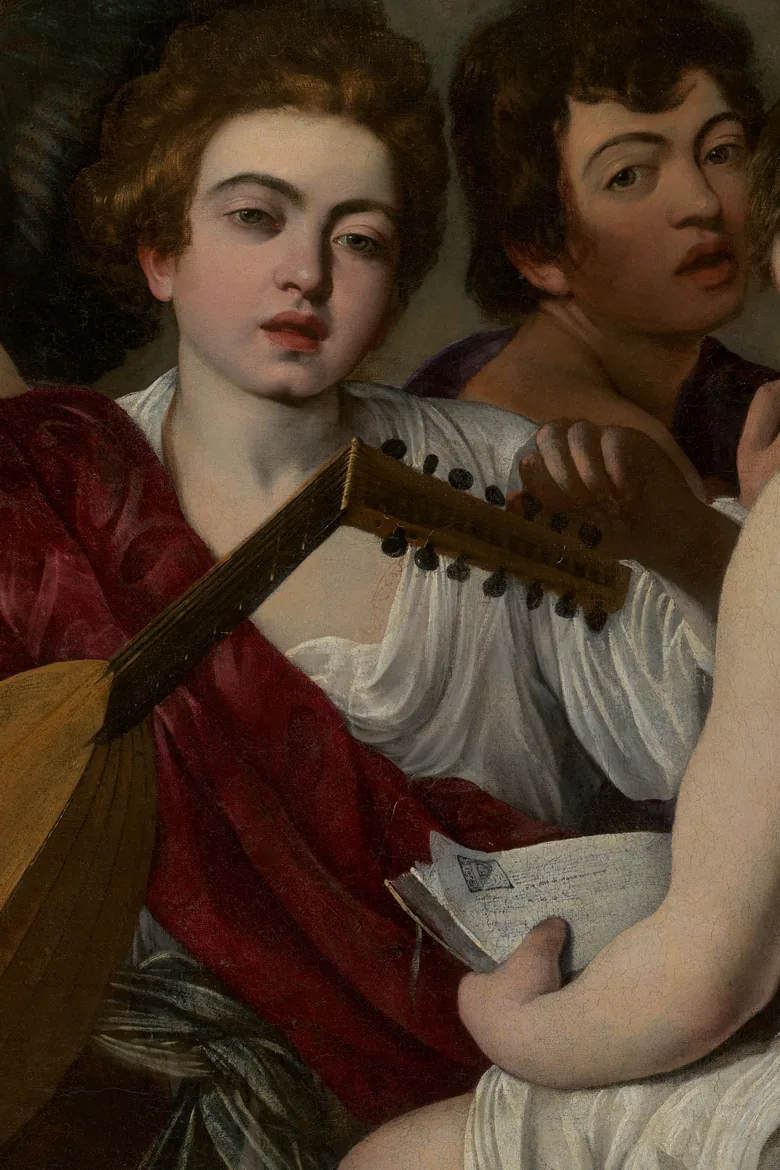
I have watched a great many productions in my life, professional and student, and I have walked out of most of them with the same question. Not whether the acting was good. Who chose the music, and what did they mean by it? I ask it of my own productions first.
An actor is carrying a tragic scene, and underneath it a guitar is idly turning over three chords. The text speaks of loss; the music speaks of a pleasant evening. The audience hears both. I know which one I believe.
I am not writing as a theorist. I have been in music since the age of seven. I have played at weddings and at funerals, in parades on Red Square and at church services, in opera and symphony orchestras. I have worked in an opera house and in a music theatre whose playbill carried drama, opera, operetta and musicals side by side. When my daughter was at school I wrote and recorded the score for her school musical. Now I stage operas with university students.
In all those years I have not once seen music do nothing. At a wedding it tells people to dance. At a funeral it gives them permission to cry. On parade it makes several thousand people step off on the same foot. Even where it is meant as background it is at work: in one British supermarket, French music over the speakers sold more French wine, and German music more German. Nobody in the wine aisle was listening. As far as I can tell, music always has a job, whether or not anyone is paying attention. The only question is whether the person who switched it on knows what that job is.
A quarter of a second
Here is what I believe, and you are welcome to argue with it: more often than not, the music wins. Even bad music. Bad music can ruin very good acting, and I have watched it happen more than once. I have also spent my whole life on the musicians’ side of the footlights, so my ear is hardly neutral. Yours may hear it differently.
Research does not settle that argument, but it does show how quickly music gets to work. In 2010 Suzanne Filipic, Barbara Tillmann and Emmanuel Bigand played very short excerpts to listeners with no musical training. A fragment of 250 milliseconds was enough for them to distinguish emotionally moving excerpts from neutral ones. A quarter of a second.
A second study sits closer to the stage. In 2020 Alessandro Ansani and colleagues showed 118 viewers the same screen episode with different music. The picture did not change. The viewers’ reading of it did: sympathy for the character, their impression of his personality, the expectation of what would happen next. The authors say plainly that they chose an episode with no clear action in it, and that the result cannot be carried over to every scene.
Wherever the performer has not yet created a clear action, music moves into the free space. Hollywood’s best-known case involves a performer who could not act at all. On Jaws the mechanical shark kept breaking down, so Steven Spielberg kept it off screen for much of the film, and John Williams’s two notes in the low strings played the part instead.
A performance is not added up from parts
A spectator does not award separate marks for acting, lighting and sound and then take the average. They receive one impression, whole, like a sphere you cannot press on one side without shifting the other.
“Random music is not absent; it subtracts.”
So I doubt that music in a production is ever zero. If the actors are giving everything and the music has been chosen at random, the audience does not receive everything. Random music is not absent; it subtracts. A comic tune that has wandered in under a tragic monologue does not decorate it. It can cancel it.
Whether a character sings it or it arrives from outside the scene, music in a play has only a handful of jobs, and it helps to know them by name. It can mark place and time: a fanfare for the king’s entrance. It can attach itself to a character or an idea and return with them; that is the leitmotif. It can say what the character cannot: Desdemona sings the Willow Song on the night she is killed, and no line has to tell us what she fears. It can be the action itself: in Mughal-e-Azam Anarkali defies the emperor to his face, and she does it in a song. And it can go against the scene openly.
That last one is held to be among the strongest devices there is, and I will be told it is exactly what I have just called a mistake. In Reservoir Dogs a man is tortured while a cheerful pop song plays on the radio, and the scene is harder to watch than it would be under drums. True. But the difference between counterpoint and error is not in the sound. It is in whether the contradiction produces the meaning the scene needs, and a director learns that by watching the result, not by admiring the intention. Counterpoint is chosen and then checked.
How loud should the music be?
In the early 1990s I was in America with an orchestra, and we went into a few clubs. The music was at a level where you could not hear the person half a metre away. I decided then that it was deliberate: conversation is impossible, so what remains is ordering.
Years later it turned out someone had measured it. In 2008 Nicolas Guéguen and colleagues spent three Saturday nights watching forty young men in two French bars while the volume was moved between 72 and 88 decibels. With the music loud, each ordered 3.4 glasses of beer on average instead of 2.6. It is a small study, but it points the same way as what I saw.
In a bar, loud music may well be a business decision, and a sound one. The director whose backing track drowns the consonants of a quiet line has usually made no decision at all. It sounded fine in the headphones.
Sound is also a physical event; it reaches the body as well as the ear. At a live concert in 2022, Daniel Cameron and colleagues switched very low bass on and off, at a level listeners could not detect in a follow-up test, and the audience moved about twelve per cent more while it was on. My own experience is of a different kind. When I came to India I studied sitar: an hour and a half at a time inside one unbroken drone. Back at home I would put on European music, simply to find my own notes again.
Volume is checked from the hall, from more than one seat, with live voices. Headphones cannot do that job.
The pianist in the dark
Silent cinema was rarely silent. Very often a pianist sat in the hall, watched the screen and improvised to what he saw: a chase, a kiss, a funeral. The people selling the tickets understood from the start that a picture alone does not make an evening. One of those pianists, in Leningrad in the mid-1920s, was Dmitri Shostakovich, earning extra while he was still a conservatory student.
What operetta knew
There is a device more than two hundred years old. It is called melodrama: the orchestra plays, and over it the actor speaks. Beethoven used it in the dungeon scene of Fidelio. In operetta, which I know from the inside, it is an everyday working tool; Lehár and Kálmán both relied on it.
The instructive part is how it was written down. The composer shaped the music around the speech: where it waits for the actor, where it pushes him on, how long the silence after a line may last. What the cinema pianist did by eye, the score planned in advance. The performer might have no idea why his monologue was working on the audience. The person who wrote the score understood it for him.
This is what I mean by music that is not background. It may be quiet, it may draw no attention to itself, but there is a mechanism inside it. It brings the audience to a state the actor alone would take a long time to reach, or might not reach at all.
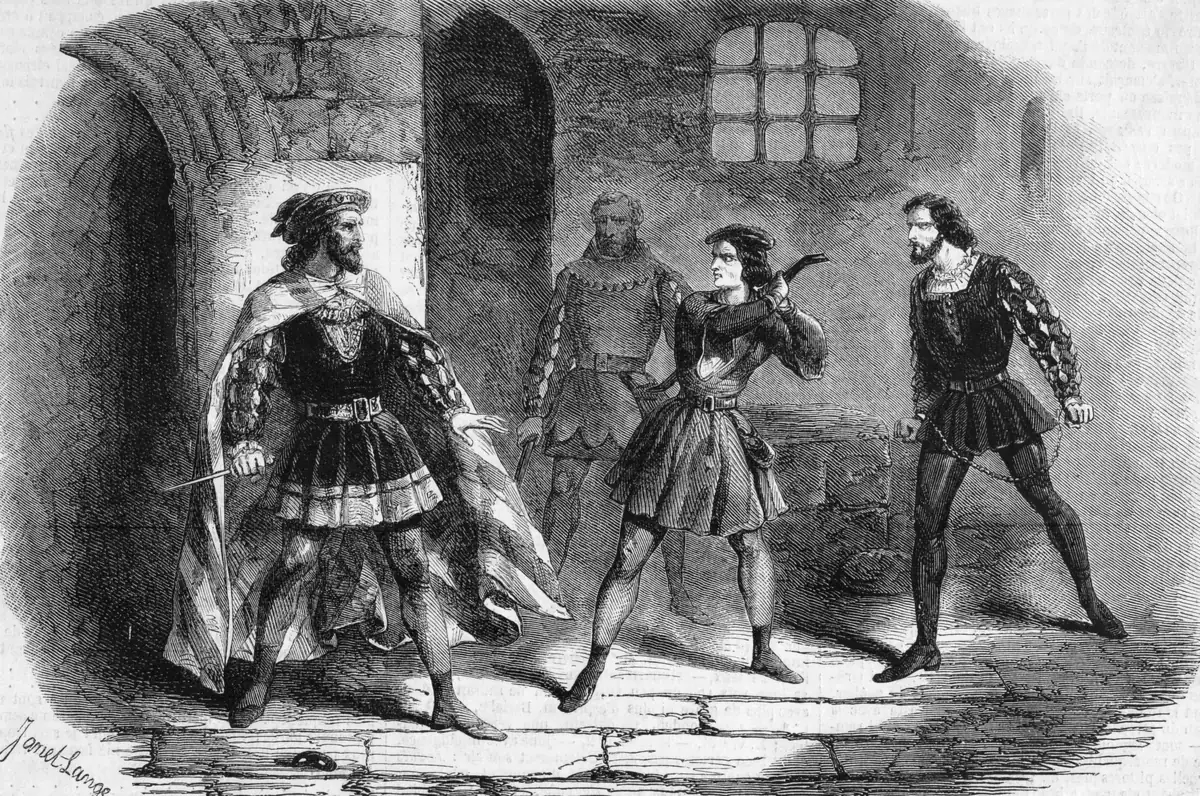
The actor, the horse and the crutch
As I understand the tradition I work in, from Stanislavsky to Michael Chekhov, the essential thing on stage is inner action: what I am trying to make another person do. It cannot always be found head-on, and theatre schools know the side roads. Say an actor who is shy by nature is cast as Don Juan. He remembers a first-year exercise in which he played a stallion: how it carries its head, how it places a hoof, how it fills the whole yard. He carries that sense of himself over into the man. It works.
Music is one of those side roads, and here I have to say something uncomfortable. Good music can cover weak acting. I use it. When the people on stage are students with one or two productions behind them, the music holds what they cannot yet hold, and the audience gets the evening it paid for.
“If the action survives, the music was a teacher. If it vanishes, the music was a crutch, and the actor needs to know it.”
There is a price. The test is simple, a rehearsal tool and not a verdict: switch the music off and see what is left. If the action survives, the music was a teacher. If it vanishes, the music was a crutch, and the actor needs to know it. Holding up a performance with music is legitimate. Letting the actor mistake that support for his own achievement is not.
What the audience brings in
Mozart’s Symphony No. 25 opens with some of the most urgent music he wrote; the film Amadeus begins with it. Play it in a theatre in Bengaluru and I would bet a good part of the house hears a wristwatch, because the same theme has been the signature tune of Titan’s commercials for decades.
A director chooses the sounds. He does not choose the memories they will be heard with. Familiar music arrives in the hall with luggage, and it is better to learn what is in it before opening night: seat ten outsiders at a run-through and ask what they were reminded of.
Where the director says no
The opposite temptation is music everywhere: a sad cue under the sad line, a tense one under the tense line, the score singing whatever the eye already sees, in case anyone missed that the sad scene was sad. The audience is never left alone long enough to decide for itself what a scene is worth.
“Good music in the wrong place does the same damage as bad music, and is far harder to let go of.”
Some of the best film directors went the other way, and their reasons are on record. The centre of Jules Dassin’s Rififi is a burglary that runs half an hour without a word or a note: breathing, tools, a ceiling being cut open. The composer, Georges Auric, wrote music for it regardless, sure the director would come round. Dassin screened the sequence both ways and asked his opinion. Auric told him to take the music out. Good music in the wrong place does the same damage as bad music, and is far harder to let go of. Auric let go of his own.
Sidney Lumet gave Dog Day Afternoon no score at all; he wanted the audience to feel it was watching a newsreel, not a film. The same Lumet wrote that almost every picture is improved by a good score, and that short bursts of music laid over every transition only fill the air and weaken the music when it is really needed.
Refusing can be the mistake too. Alfred Hitchcock wanted the shower scene in Psycho to play with no music at all. Bernard Herrmann wrote the strings anyway; Hitchcock listened and changed his mind.
Singers name this balance with two Italian words joined together: chiaro, bright, and scuro, dark. A good tone holds both at once, the high resonance and the low; too much of either spoils it. Sound and silence in a production are weighed the same way, scene by scene.
Choosing music for a play: three questions before the first rehearsal
Not rules. Three questions worth asking of every piece of music.
What changes in the understanding of the scene if it is removed? If only a general pleasantness is lost, try the scene in silence.
Is the music saying the same thing as the actor? If it is saying something else, I must know what, and want it.
Whom is it helping: the audience, to understand what is happening, or me, not to notice that nothing is happening yet?
A week after a performance I can recall almost none of the lines. The tune I am still humming. Perhaps that is only a musician’s memory. I would still choose the tune as though it were the only part of the production that will remain.