The Ballet Puccini Never Wrote
Why our Gianni Schicchi has dancers Puccini never scored, why we sing it in English, and what a comedy with a dead man in the middle asks of the stage.
Why our Gianni Schicchi has dancers Puccini never scored, why we sing it in English, and what a comedy with a dead man in the middle asks of the stage.
Puccini did not write a ballet into Gianni Schicchi.
There is no moment in the score when the action stops and the dancers are supposed to enter. No divertissement. No dance number waiting to be choreographed. So when ballet appears in our production, it is not there because we thought the opera needed one more attractive element, or because several people moving beautifully across the stage would make the production look richer.
If that were its only purpose, I would rather remove it.
It has another job.
Gianni Schicchi is a comedy with a dead man lying in the middle of it.
That alone is a challenge.
Death is a strange neighbour for comedy.
The family gathers around the bed of a wealthy relative who has just died. They grieve, search for his will, discover what he has done with his fortune, argue, calculate, conspire and gradually reveal how comfortably human grief can coexist with human greed.
Puccini makes it funny.
For a director, however, it is not enough simply to ask the actors to behave comically around a corpse.
The questions behind the comedy
Death brings with it questions that comedy cannot completely remove.
Where do we come from? Why are we here? Where do we go when it ends?
Religion, tradition, philosophy and individual experience give very different answers. I have no intention of giving the audience another one from the director's chair. Theatre rarely improves when a director starts supplying definitive answers to questions humanity has been arguing about for thousands of years.
But theatre can ask them.
That became one of the starting points for another visual layer in our production — something that Puccini did not prescribe in the score and that belongs specifically to our reading of the opera.
I do not want to explain that layer before the performance.
The audience will see it.
One person may interpret it one way, another may see something entirely different, and someone else may simply feel that the atmosphere of the stage has changed without needing to name what happened.
All three responses are legitimate.
If a director has to give the audience an instruction before the curtain rises — when you see this, it means exactly that — the stage solution is probably not finished yet.
One story
For me, directing begins with a simple rule.
Everything that happens on stage must work for one story.
The music. The light. The position of an actor. A pause. A turn of the head. A costume. A piece of furniture. Someone crossing three metres from one side of the stage to the other.
And dance.
If the choreography tells one story while the singers are telling another, the audience has to decide where to look. Usually that means we have not done our job properly.
The ballet in our Gianni Schicchi therefore does not exist beside the action. It grows out of the action. Its purpose is to make something already present in the drama more visible.
This matters because opera exists not only in music but in time.
Music can communicate an extraordinary amount without a single word being understood. But comedy depends on another mechanism as well.
A joke has to land now.
A line has to produce a reaction now.
One character says something; another answers a second later; somebody else hears it and changes direction. If the audience understands why it was funny only later that evening, after consulting the synopsis, the theatrical moment has already gone.
That problem led to another decision in this production.
Why we sing it in English
We did not make our own translation of Gianni Schicchi.
For this production I found and bought the Ricordi vocal score containing the established English version by Anne and Herbert Grossman — a translation that has existed for decades and that I had already encountered in a number of English-language performances of the opera.
The choice was deliberate.
For a significant part of our audience, this may be their first live opera. I did not want a person encountering the form for the first time to spend an hour dividing their attention between the music, a synopsis read before the performance and the question of why the people on stage have suddenly started arguing.
Of course, the music speaks for itself in many places.
But Gianni Schicchi depends on exact reactions, sharply defined characters, verbal exchanges and relationships that can change in seconds.
It is not enough to know how a scene ends.
You need to understand what happened one second ago.
That is why the English text, the acting, the movement and the visual language of the production all belong to the same task: allowing the story to be read directly from the auditorium while it is happening.
Not simplifying it.
Making it available at the moment when it matters.
So why ballet?
That same principle led to the decision to introduce dancers into the production.
Not as an independent dance interlude.
Not as decoration between vocal scenes.
And not quite as conventional dramatic characters either.
I wanted another level of theatrical reality — something capable of changing the way we see the very human activity taking place around it without stopping Puccini's story in order to explain itself.
What exactly that means is something I would rather leave inside the theatre.
The important point is that the dancers are not there to fill musical time. They have a dramatic function.
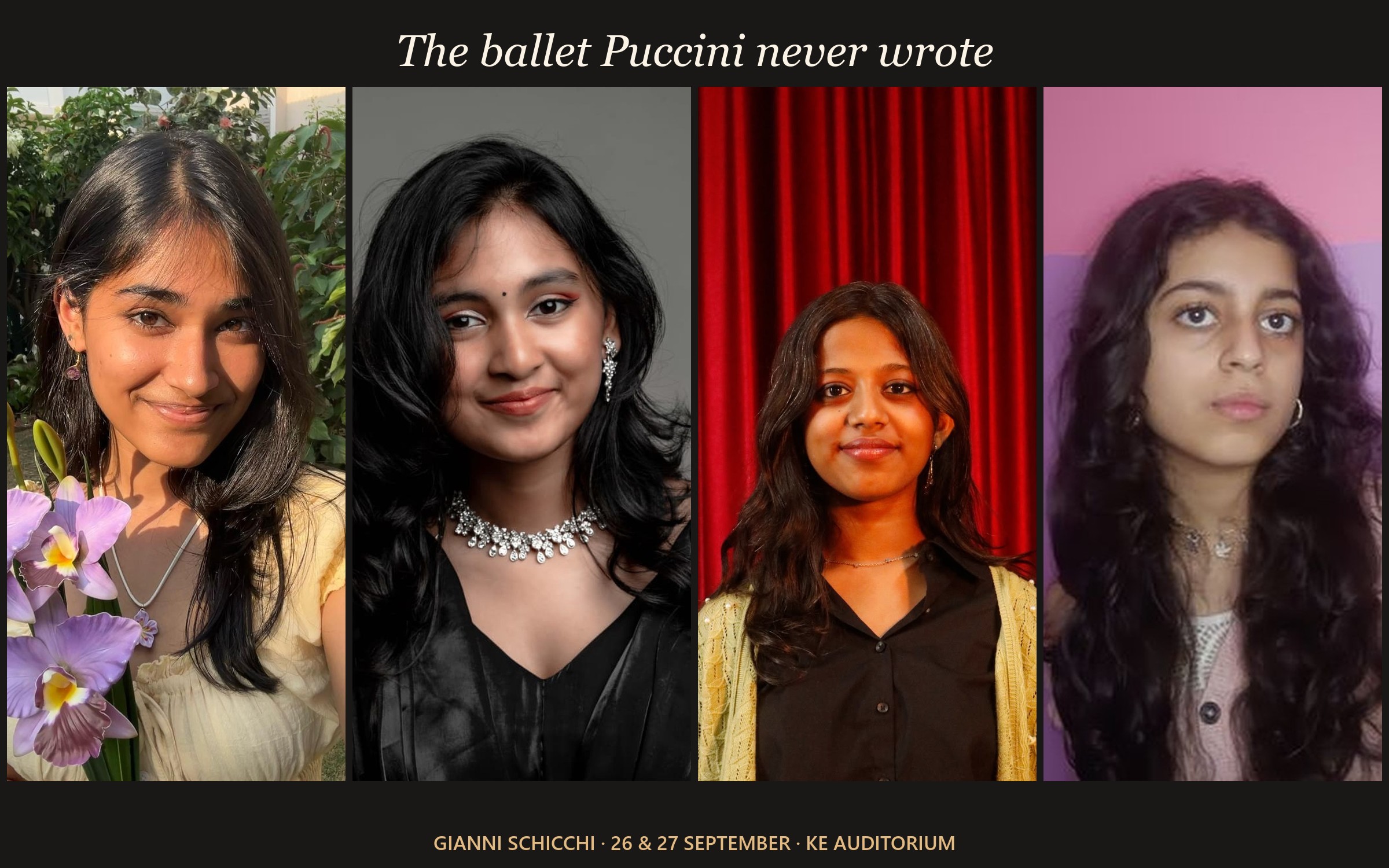
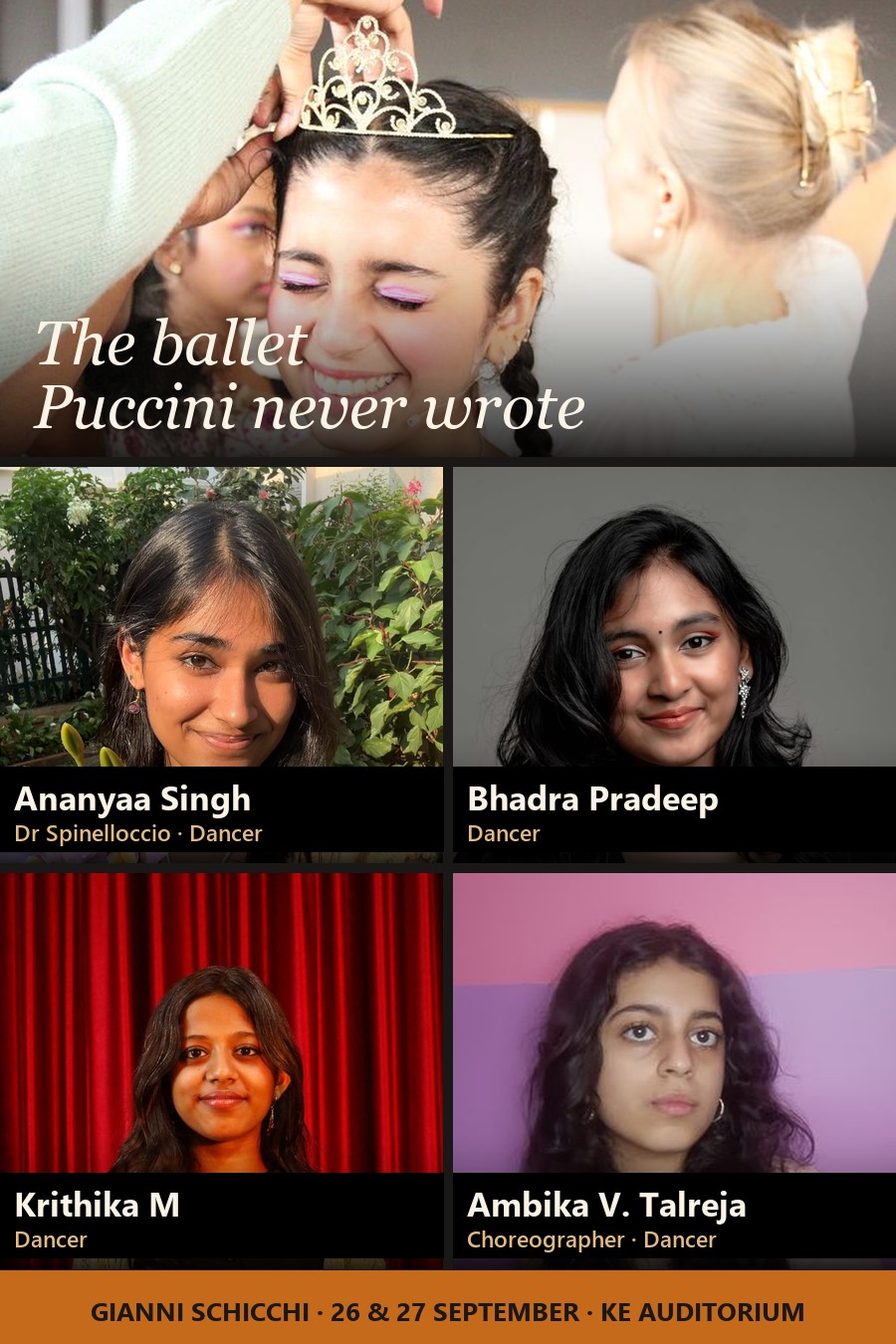
They are not a ballet company. Three of the four are students of the Department of Music — Ananyaa Singh, who also sings Dr Spinelloccio in this opera, Bhadra Pradeep and Krithika M — and the choreography is by Ambika V. Talreja, a first-year student of the Department of Theatre Studies, who dances in the production as well.
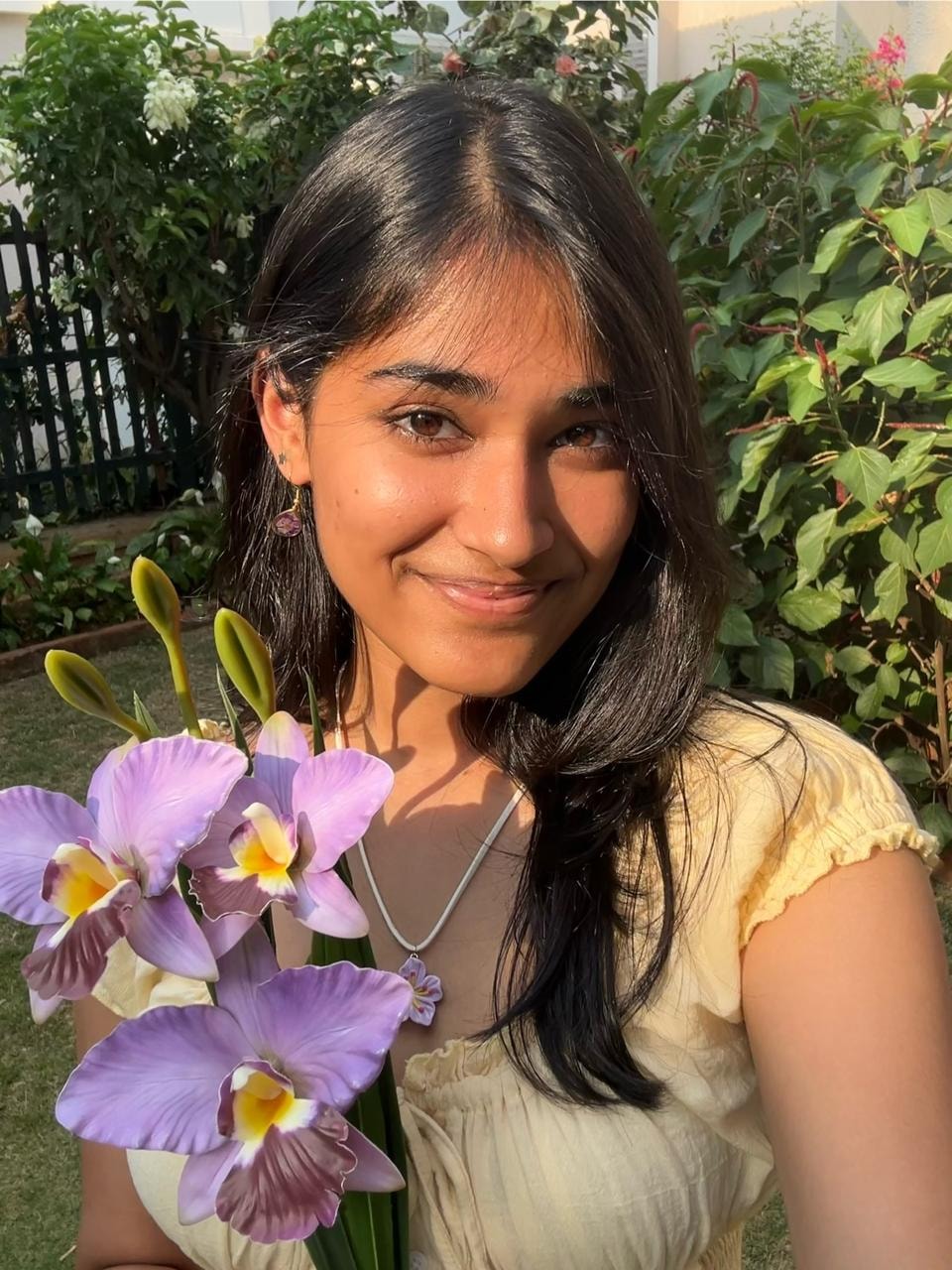
The starting question for their choreography is therefore never simply: What movement would look beautiful here?
The question is:
What is happening to the people on stage at this moment?
What is driving them?
What is already happening in the music?
What does the audience need to notice?
And can movement make something visible without adding another line of text?
That is where choreography becomes dramaturgy.
Turning an idea into movement
This is also where the work of Ambika V. Talreja, choreographer for the production, becomes essential.
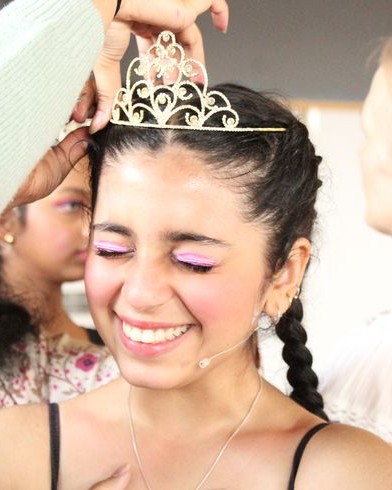
A director can arrive with an image, a dramatic function, a direction of movement or an idea about what should change in the scene. None of those things is yet choreography.
They have to become bodies moving through actual space.
And opera makes that space unusually demanding.
The music already exists. The tempo is not negotiable simply because a movement needs another two seconds. The singers have to breathe. They have to see the conductor. They have to deliver text. Other actors may already occupy most of the stage. Furniture may be exactly where a dancer would ideally like to travel.
The choreography has to live inside all of that rather than on top of it.
That changes the nature of the work.
Sometimes a dancer needs to be seen. Sometimes the dancer's job is to make someone else visible.
Those are two completely different things.
Ambika's task is therefore not simply to create sequences of movement, but to translate dramatic intentions into a physical language that can coexist with Puccini's music, the singers' acting and the geometry of the scene.
A successful movement should not make the audience think, now the choreography has started.
Ideally, it should feel as though the scene could not have happened in quite the same way without it.
I am not a choreographer
I have some experience of dance and stage movement. I have used dance for physical training, and during my years working in musical theatre I performed in productions where movement and dance were part of the stage language.
That experience gives me some vocabulary.
It does not make me a professional choreographer.
The distinction matters.
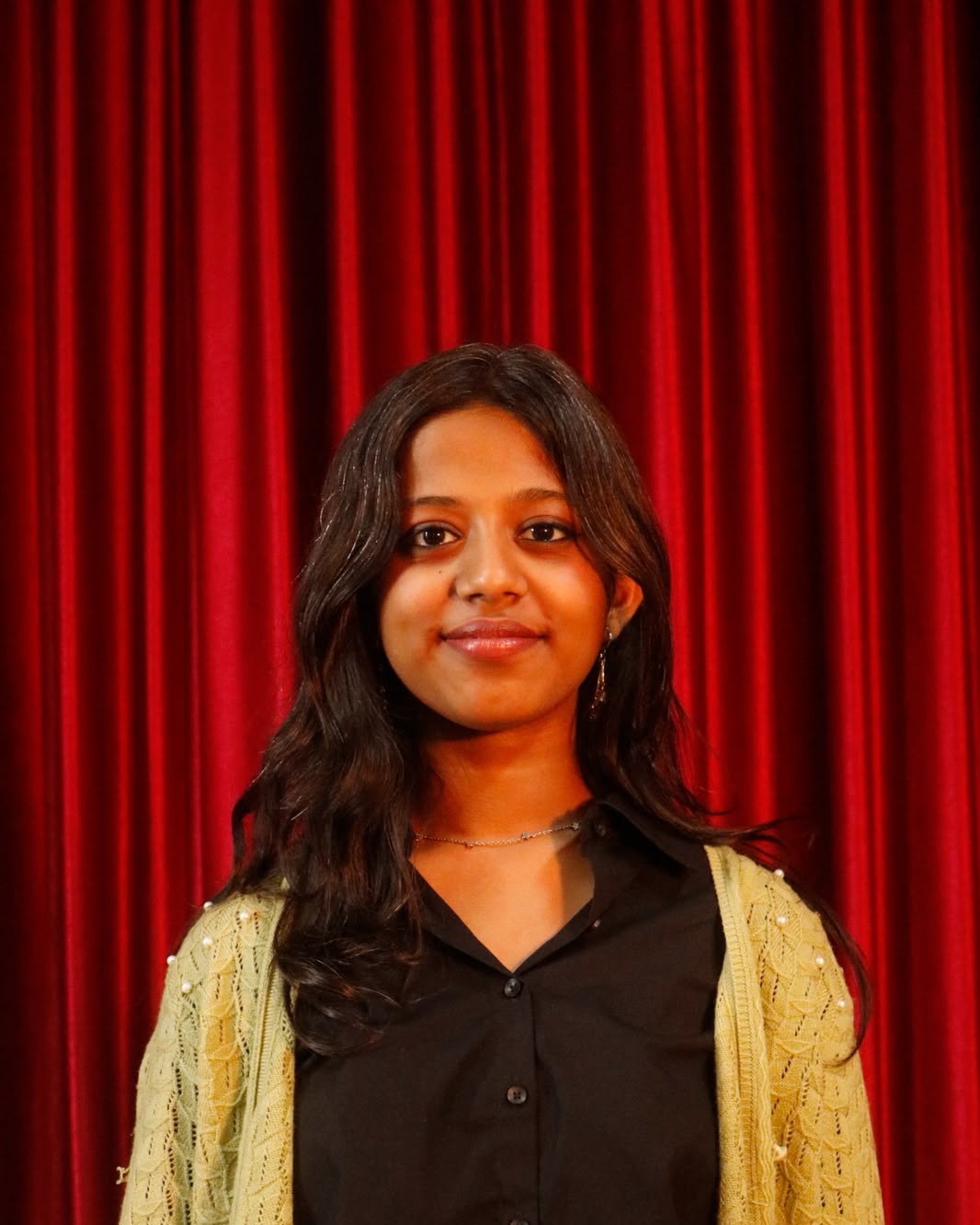
A director can understand why movement may solve a dramatic problem better than another gesture, another prop or another piece of scenery. Stage experience can also give you a sense of what a body might do in a particular musical moment.
But turning that idea into convincing movement is another profession.
So the process is a dialogue.
I can say what I believe the scene needs to communicate, what the dramatic direction is, what I want the audience to notice and where the movement has to take us.
Choreography then has to find the physical answer.
That exchange between score, directing and movement gradually creates a layer of the production that is absent from the printed page.
What is not in the score
Every production eventually reaches a point where the question What did the composer write? has to be joined by another one:
What are we telling with it here and now?
The second answer cannot disregard the first.
But it does not have to be limited to a literal inventory of everything printed in the score.
Puccini gave us the music, the characters, the conflict and an extraordinarily precise theatrical machine. Our responsibility is not to decorate that machine. It is to make it work in front of the audience sitting in this auditorium, on these two evenings, more than a century after the opera was written.
That is why our Gianni Schicchi contains a ballet Puccini never wrote.
What exactly it means, I am not going to explain yet.
In a few days the auditorium lights will go down, the music will begin, and the audience can decide for themselves.
Gianni Schicchi — 26 & 27 September 2026 · 5:00 PM · Kuriakose Elias Auditorium, CHRIST University, Bengaluru. Get tickets.
Don’t miss “Gianni Schicchi”
Tickets — 26 & 27 SeptemberWritten by

More in Behind the Scenes

Gianni Schicchi at CHRIST University: Six Voices Meet Opera for the First Time
Six of our singers meet opera for the first time in Gianni Schicchi - an old man in a wheelchair, a graduate who came back to sing, and two young performers who have to make an audience believe in love while the plot is being rewritten around them.

Backstage 02: Natalla Marozava, vocal coach
Vocal coach Natalla Marozava on choosing an opera to fit the voices you have, teaching by ear, and why Puccini's comedy is sung in English.
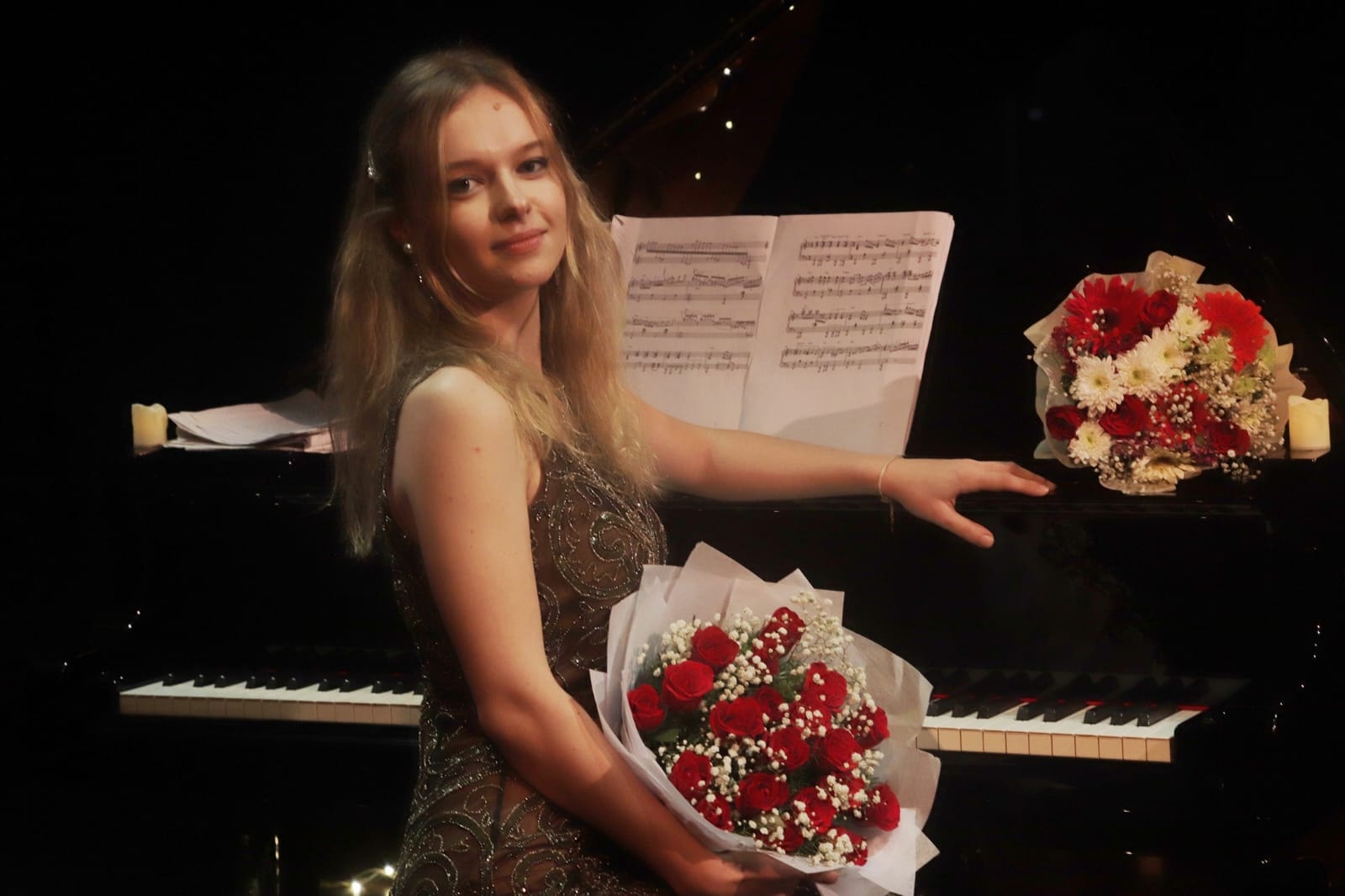
Backstage 01: Anastasiya Yafimava, répétiteur
At the piano with répétiteur Anastasiya Yafimava — conducting with her eyes and making one piano sound like Puccini's orchestra.
Backstage at Gianni Schicchi
Meet the singers, pianist, dancers and backstage team creating Gianni Schicchi at CHRIST University, Bengaluru, ahead of the performances on 26 and 27 September.