

Backstage 02: Natalla Marozava, vocal coach
Backstage series · 02 · Natalla Marozava, vocal coach
Vocal coach Natalla Marozava on choosing an opera to fit the voices you have, teaching by ear, and why Puccini's comedy is sung in English.
The instrument that does not exist yet
Almost everything in this production can be built. The set is being built. The props are bought. The orchestra was assembled in a studio from the score, bar by bar. The sixteen instruments that walk onto the stage on 26 September cannot be built. They are already inside people, and they grow at their own speed, slowly.
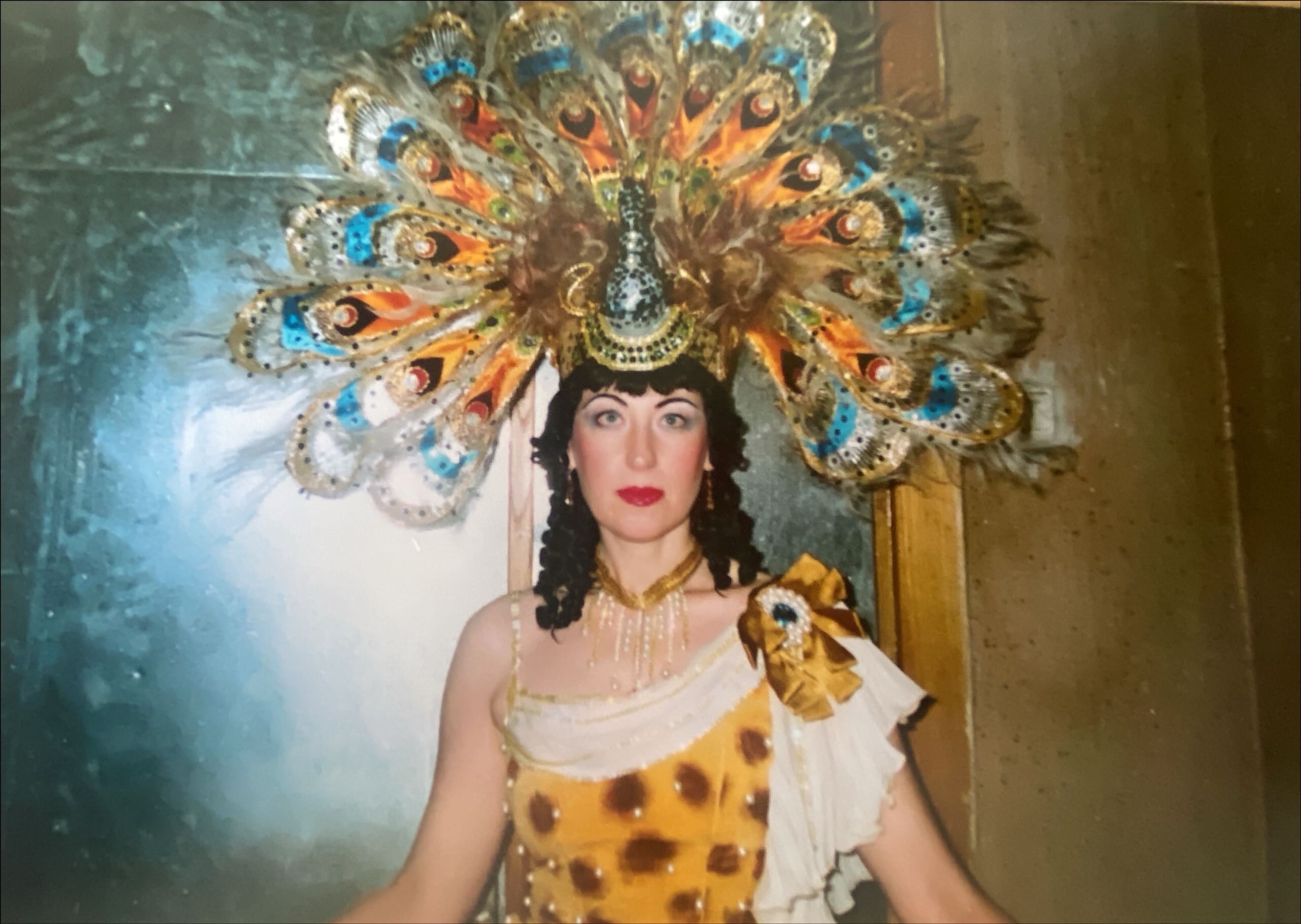
Vocal preparation for Gianni Schicchi is led by Natalla Marozava — soprano and vocal pedagogue, more than three decades with the Bolshoi Theatre of Belarus in Minsk, and at CHRIST University since 2018. Her biography and recordings live on her Artist Profile. This is about something else: what happens to a voice in the year before it reaches the hall. What follows is her own account.
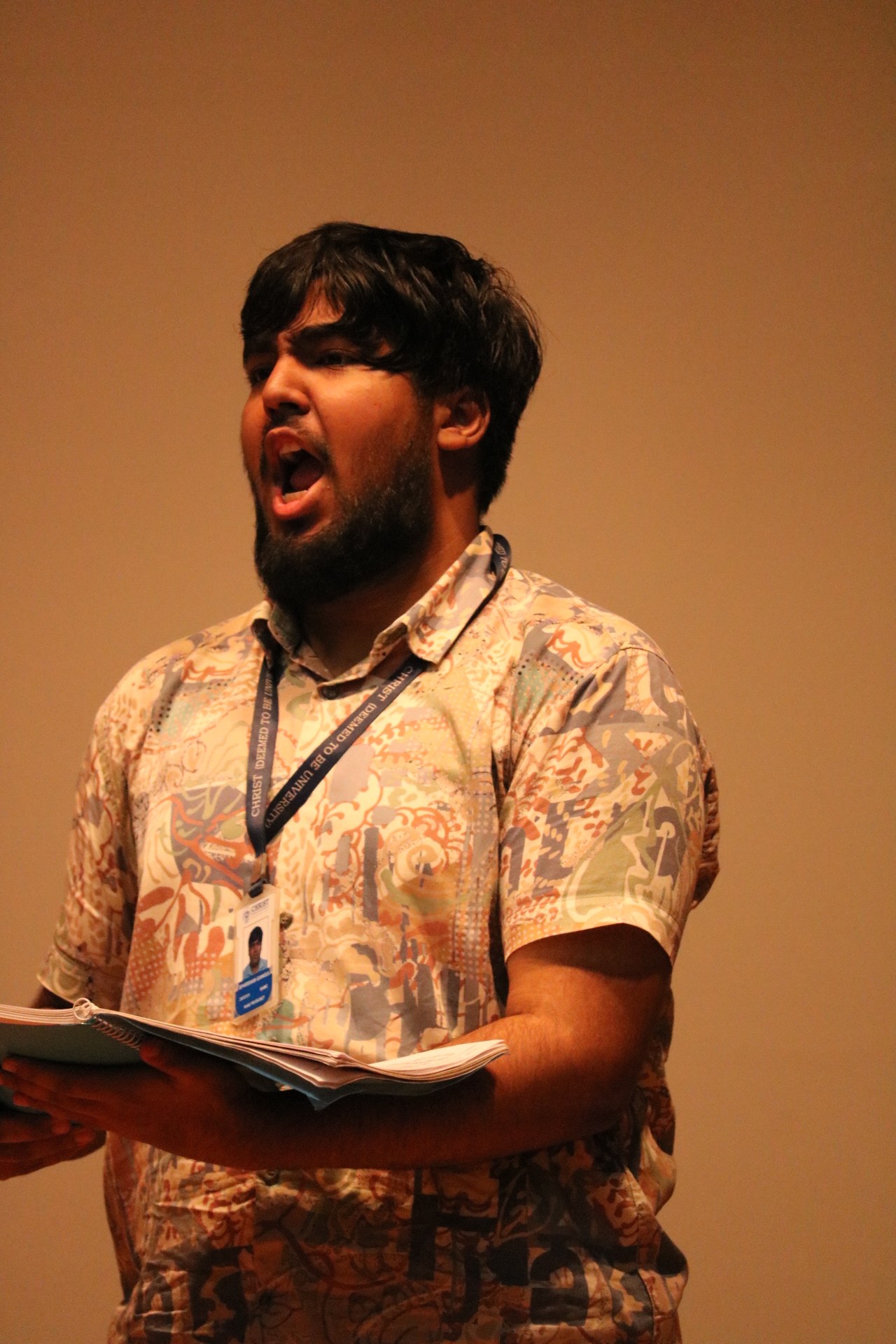
At the piano, music that is already written is assembled. In the voice studio, an instrument that does not exist yet is built. Some sessions are shared with the répétiteur: voice and piano learn each other long before the first staging call.
An opera is chosen to fit the voices
In an opera house the title is announced first and the singers are found afterwards. In a university voice department it works the other way round, and it could not work otherwise.
One year there is a tenor who can carry a role and no baritone. Another year there is a soprano with nobody to stand around her. So the question of whether a voice can carry a part is not settled at an audition, and not in a rehearsal. It is settled a year earlier, when the title is chosen. We look at the voices we have now and find an opera for them, not the other way round.
“We look at the voices we have now and find an opera for them, not the other way round.”
Gianni Schicchi suited us partly because it has sixteen roles and almost no long solo parts: the load is spread across the whole company instead of resting on two people.
Mouth to mouth
Officially, two sessions a week. In practice as many as the work needs, and no timetable records that.
People arrive at a voice department with a voice. Musical literacy comes later — a voice is discovered before the ability to read at sight, and that is true everywhere, not only here. So a great deal of the music is laid in by the oldest method by which music has ever been passed on: I sing a phrase, the student sings it back. Then again. Then with the piano. Then joined to the phrase beside it.
It is slow and it does not look impressive. But what goes in that way holds under pressure: someone who knows a phrase with their voice rather than with their eyes does not lose it when something on stage goes wrong.
Microphones that forgive nothing
A modern university hall was not built for acoustic singing — almost nothing built in the last fifty years was. There will be microphones in the KE Auditorium.
Not the kind people usually picture. My Fair Lady, which we gave six times across 2025 and the spring of 2026, used head-worn microphones: one each, you can whisper, and the back row hears you. That is right for a musical. It is not right for opera. Singing through a head-worn microphone always sounds like singing through a microphone; something mechanical stays in the tone, and the sense of a live voice never quite arrives.
Instead there will be a few microphones hung above the stage. They do not amplify a person. They pick up whatever reaches them.
“They do not amplify a person. They pick up whatever reaches them.”
The difference matters. A microphone like that will not rescue a voice that has not been sent into the hall. Turn away and you are gone. Lean over the will and sing into the floor and you are gone. So the staging is built with a map of the microphones in mind: we know where they will hang while we are still working in the studio.
“O mio babbino caro”, in the wrong language
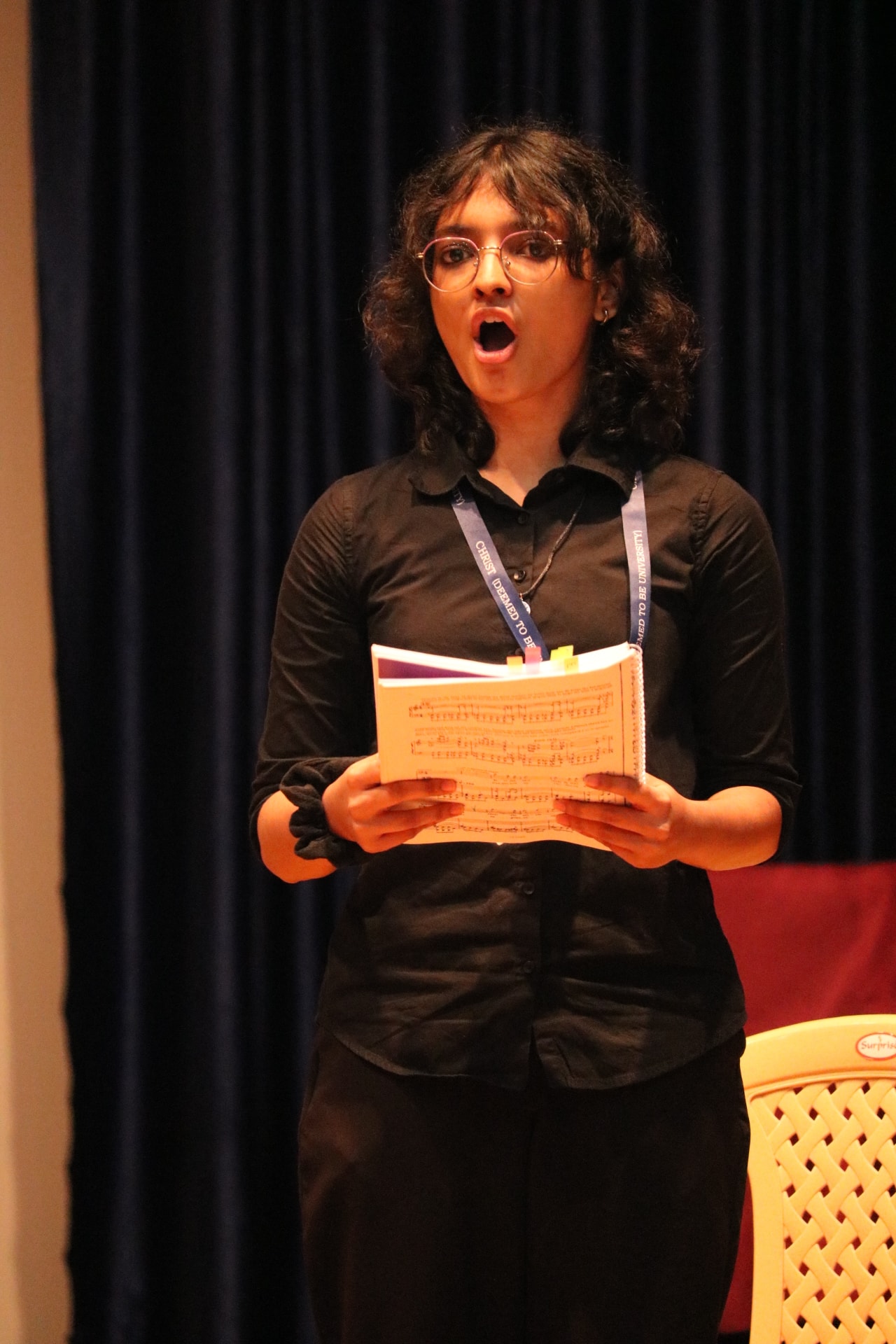
Many sopranos learn Lauretta’s aria in their first or second year, and they learn it in Italian, as it is learned everywhere. Italian is also easier to sing: open vowels, few closing consonants, the phrase settles onto the breath by itself. English is built differently, and the first thing that happens to a learned aria when the language changes is that the familiar articulation falls apart.
That is true, and I am not going to pretend otherwise.
But the system we work by is not tied to a language. Support, projection, the shaping of the vowel — the principles are the same, and languages are fitted to them, some more comfortably than others. English here is also the language the cast studies and talks in every day. The problem is a technical one, not a problem of understanding.
It was chosen for the hall. An oratorio can be sung in Latin and lose nothing. A comedy cannot. In the theatre where I worked for thirty years the operas were given in the original with a surtitle line above the stage, and in The Barber of Seville or The Marriage of Figaro the laugh arrived a beat late: the audience was reading the joke instead of hearing it.
A reaction to something read and a reaction to something heard are different things, and in comedy that difference decides everything. There is also this: a singer working in a language they own acts more consciously, even when a foreign text has been honestly translated and gone through line by line. Formalism in singing is not welcome here, and in a language you do not understand it arrives on its own.
What happens to people
We have been working on this opera long enough that part of the company has graduated. Some stayed and still come to rehearsals; others had to be replaced. Every replacement costs disproportionately more time, and not because the new person has to learn the notes. The notes are the smaller part. A singer in opera does not only sing.
The more interesting thing is watching a person on the day they arrive, and then watching the same person on stage.
They arrive locked. Shoulders up, the breath high, hands with nowhere to go, and above all afraid to move while singing, because it feels as though movement will take the sound apart. A few months later the same people are singing while turning, leaning, interrupting one another and laughing in character. Some of them now explain to the younger ones how it is done.
The voice lessons carry on throughout, on the specialisation timetable, and go nowhere. But someone cast in a production gains practical experience faster: standing in a studio and singing, and singing while tied to a partner, a piece of staging and a hall, are two different professions. Comedy demands a particular mobility. There is no standing still in it.
A separate part of the work is shared with students from the theatre department who are in the production as actors. The exchange runs both ways: they help the singers with the role, the singers help them with the voice.
The last week: taking away
Honestly: a voice is not built in a month. A voice is built over years, and no teacher changes that.
So in the last week nothing is added. Things are taken away — the extra effort, the fear of the top note, the habit of finishing a phrase nobody is listening to any more. The aim is not to make the voice better. It is to get it to 26 September intact, with something left for the 27th.
On the evening of the 27th the set will be taken apart. The orchestral track will stay a file on a disk. And the instrument that has been built this year goes home with the person, and stays with them long after nobody remembers who sang Zita.
30+ years at the Bolshoi Theatre of Belarus · 2 scheduled sessions a week · 16 voices on stage
New to the series? Start from the opening letter: Backstage at Gianni Schicchi. Previous: Backstage 01: Anastasiya Yafimava, répétiteur. A new story every two days until opening night.
Gianni Schicchi — from the archive
View the production archive
More in Behind the Scenes
The Ballet Puccini Never Wrote
Why our Gianni Schicchi has dancers Puccini never scored, why we sing it in English, and what a comedy with a dead man in the middle asks of the stage.

Gianni Schicchi at CHRIST University: Six Voices Meet Opera for the First Time
Six of our singers meet opera for the first time in Gianni Schicchi - an old man in a wheelchair, a graduate who came back to sing, and two young performers who have to make an audience believe in love while the plot is being rewritten around them.
Backstage 01: Anastasiya Yafimava, répétiteur
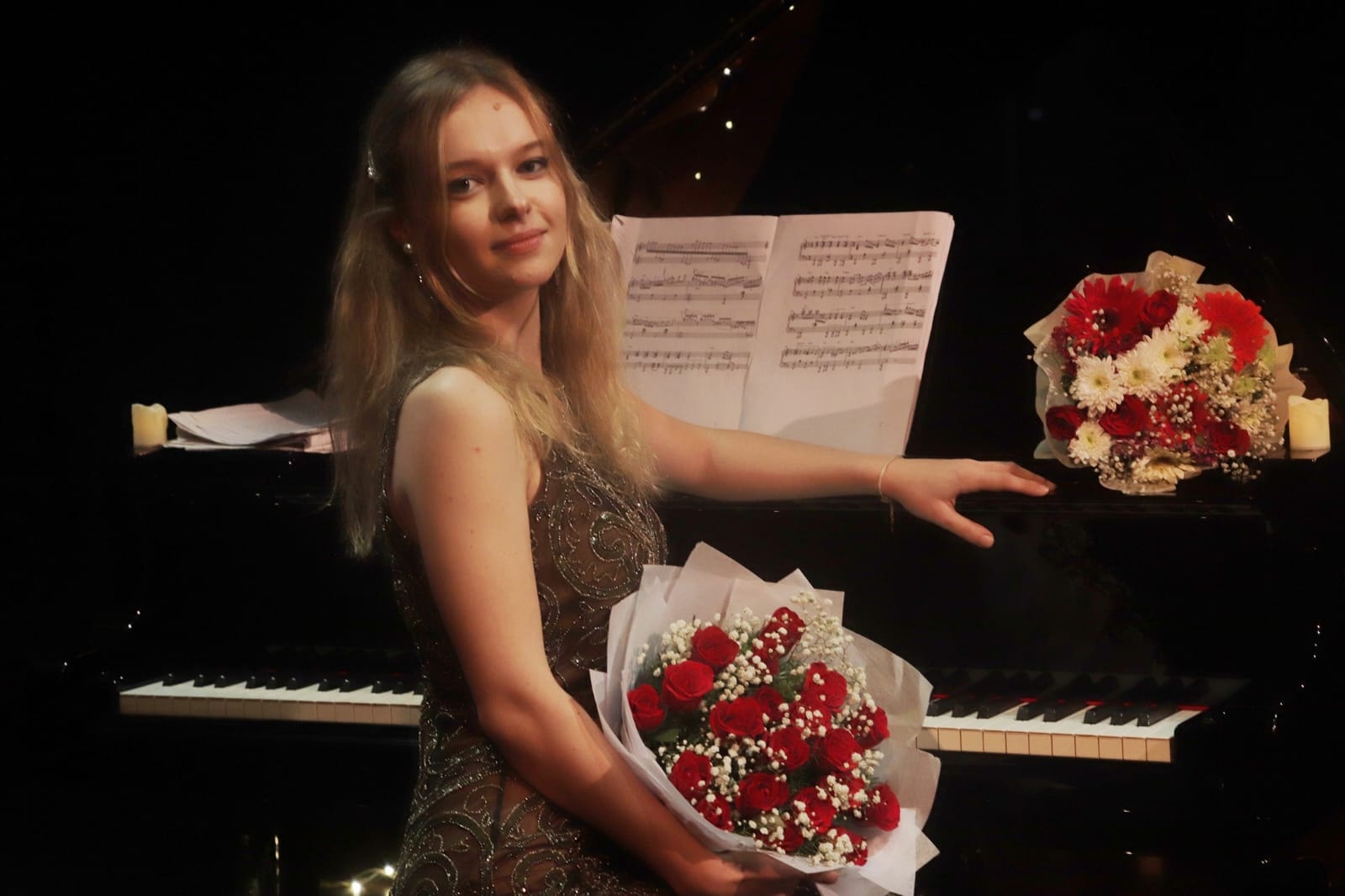
At the piano with répétiteur Anastasiya Yafimava — conducting with her eyes and making one piano sound like Puccini's orchestra.
Backstage at Gianni Schicchi
Meet the singers, pianist, dancers and backstage team creating Gianni Schicchi at CHRIST University, Bengaluru, ahead of the performances on 26 and 27 September.