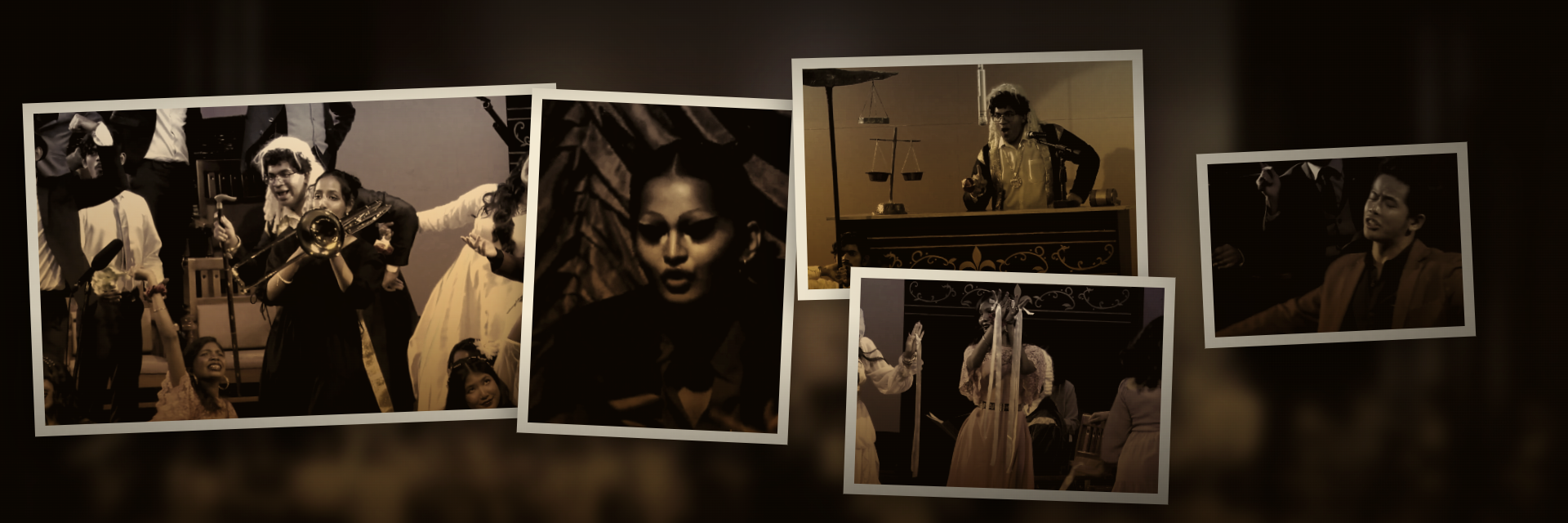
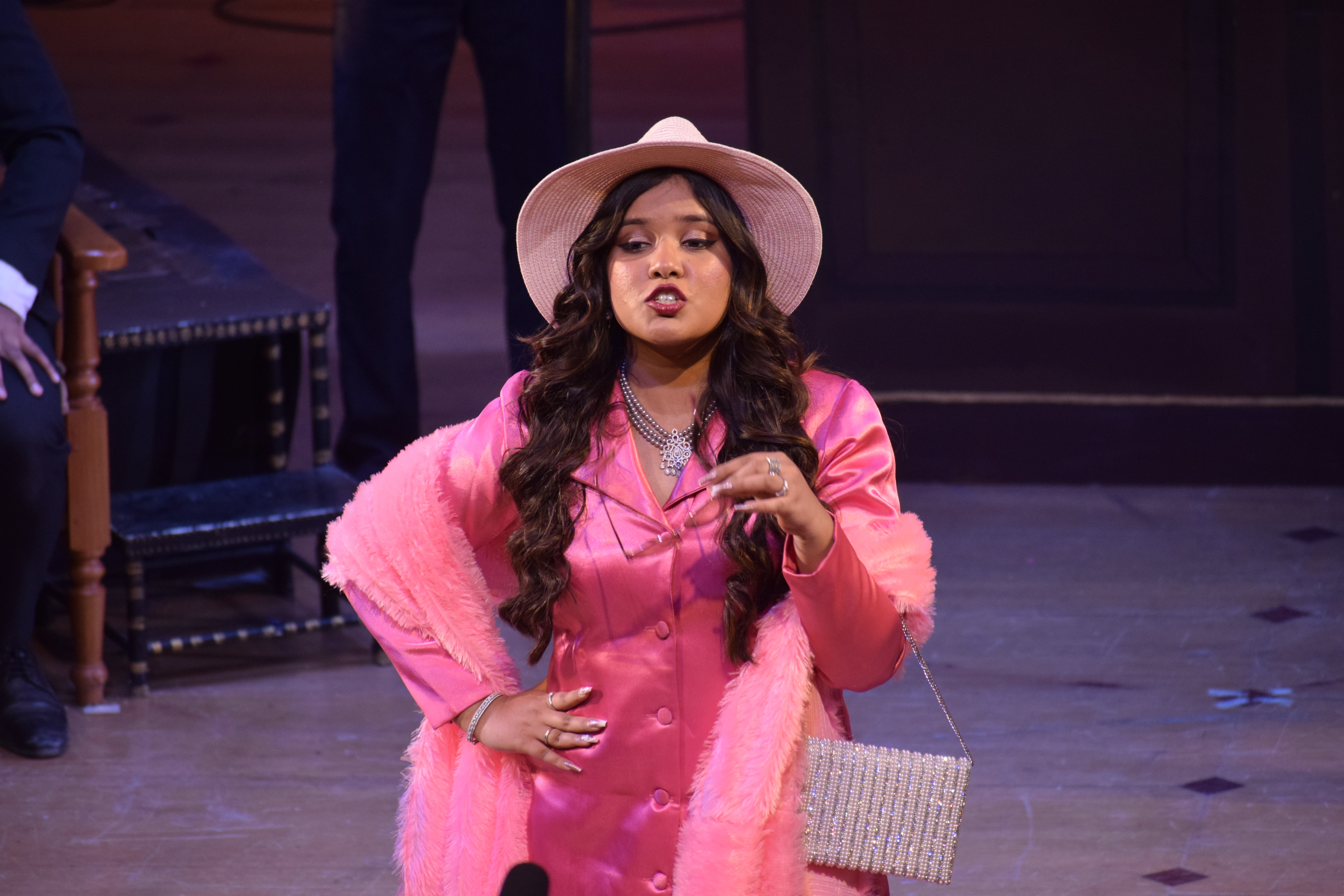
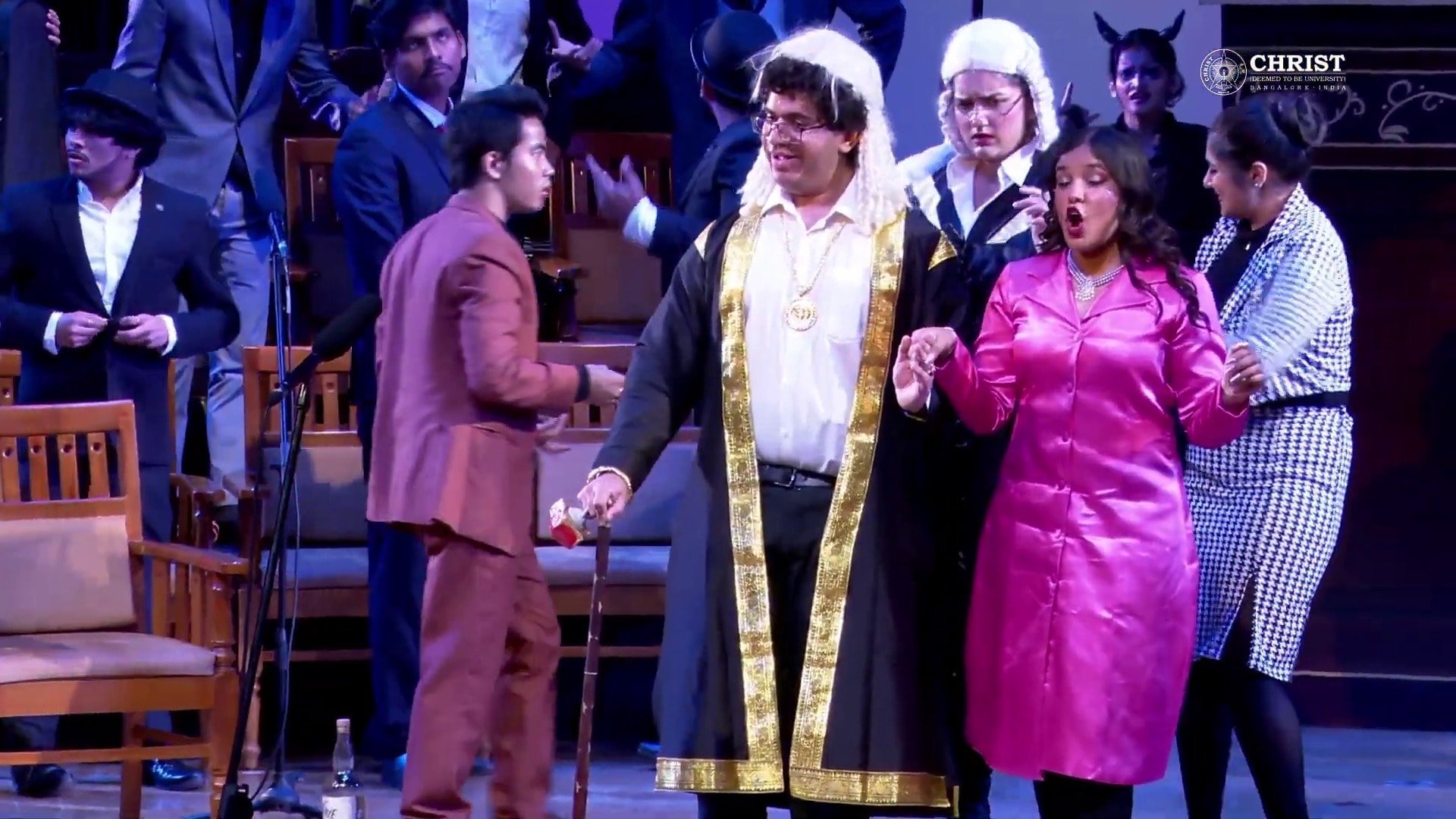
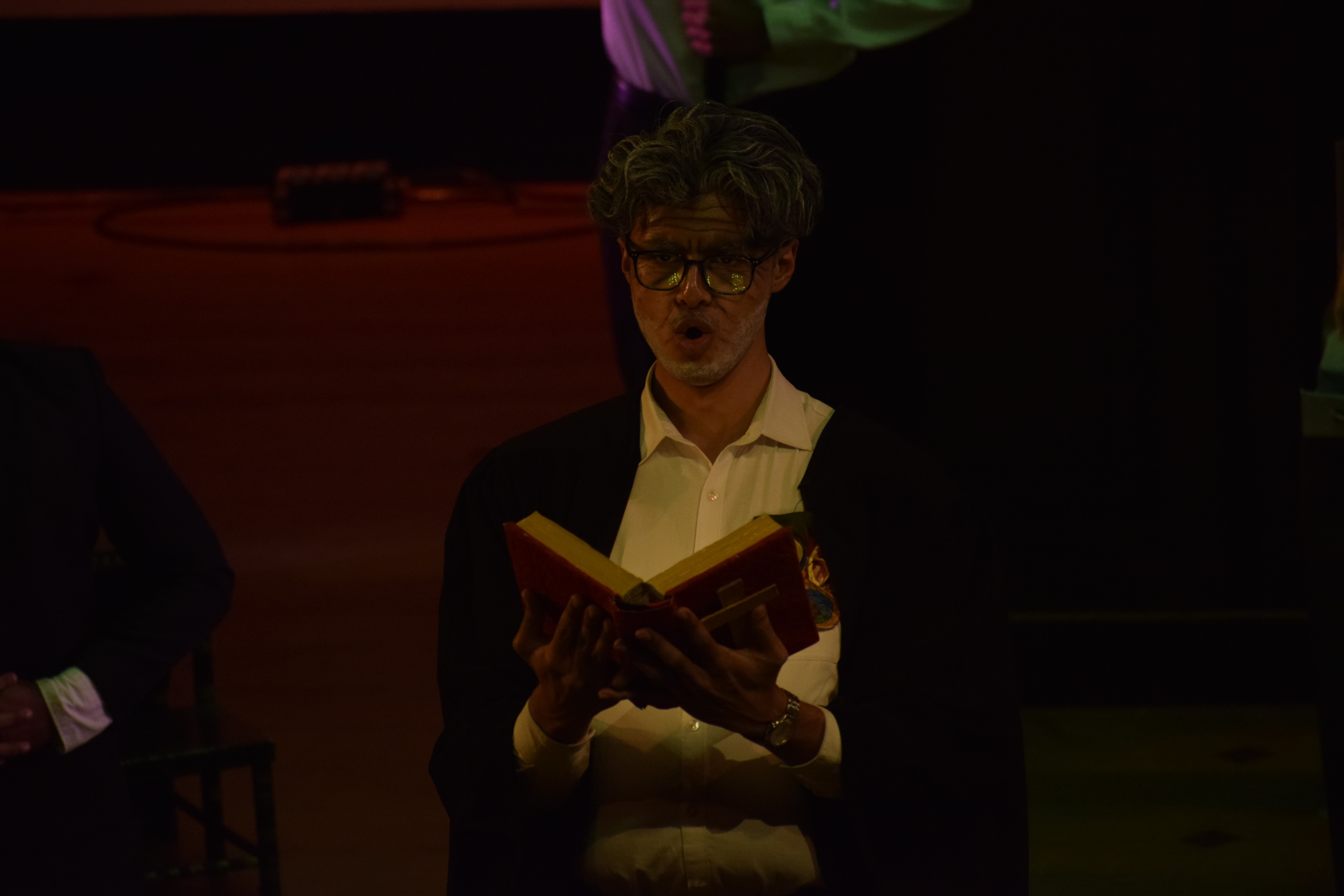
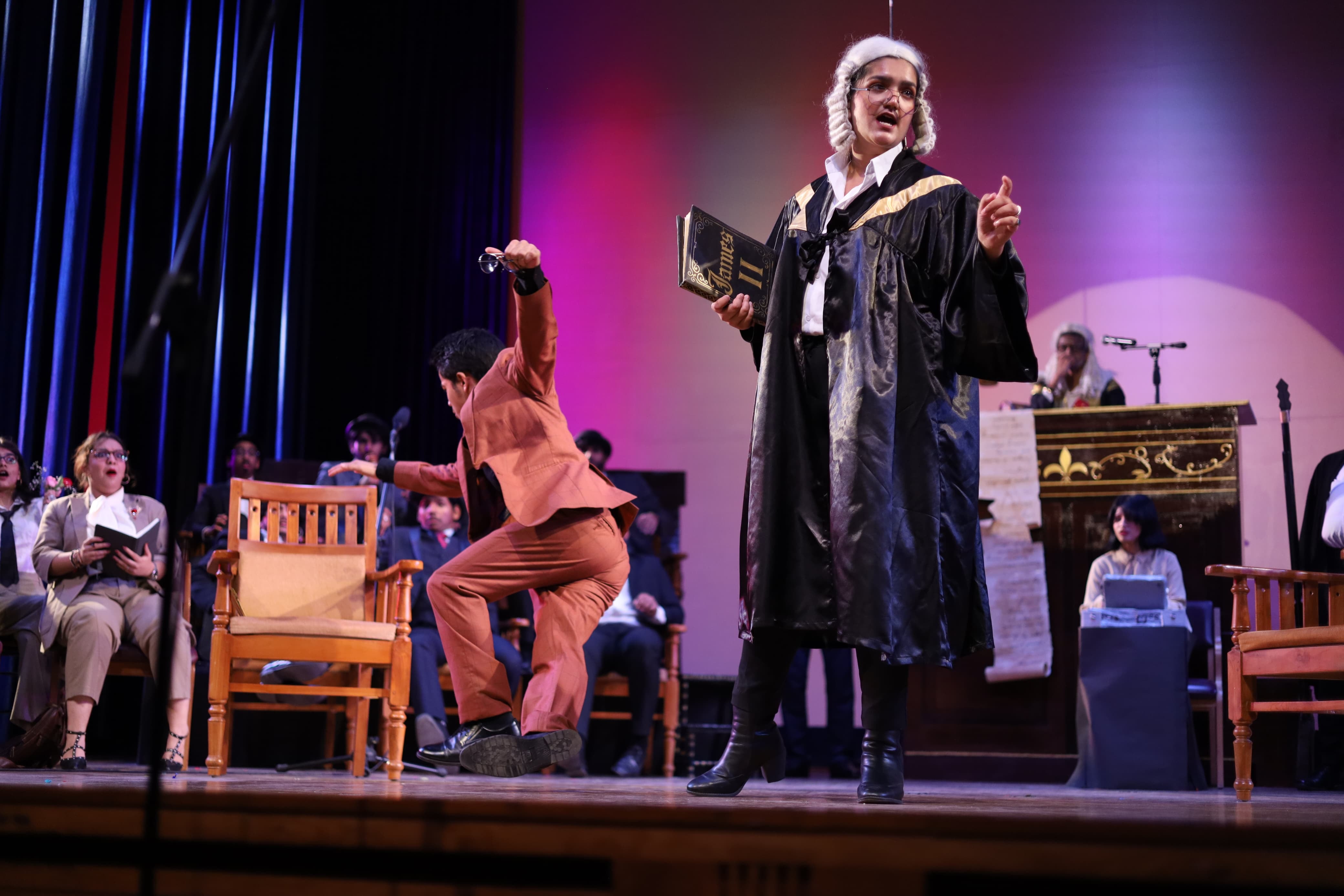
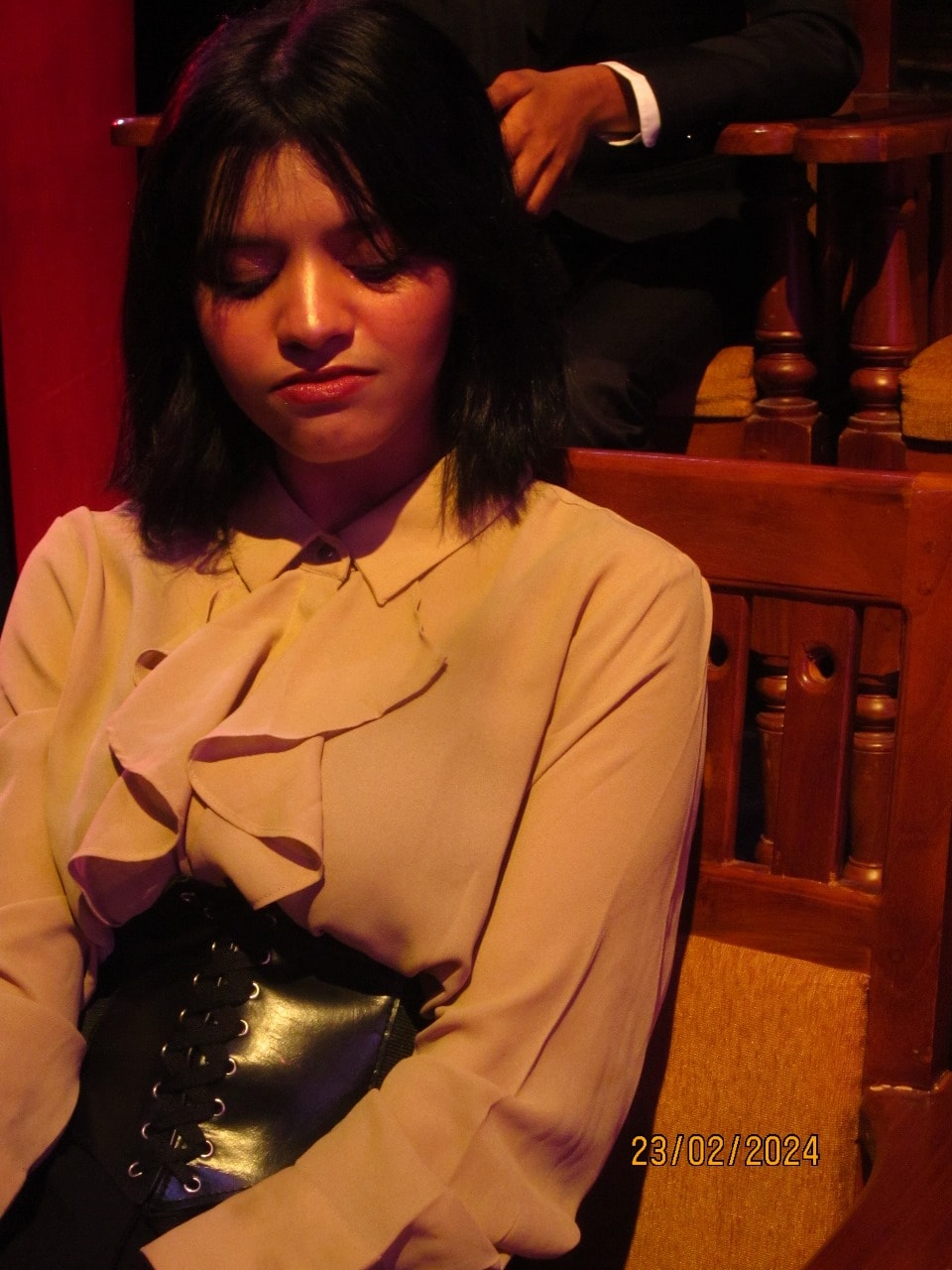
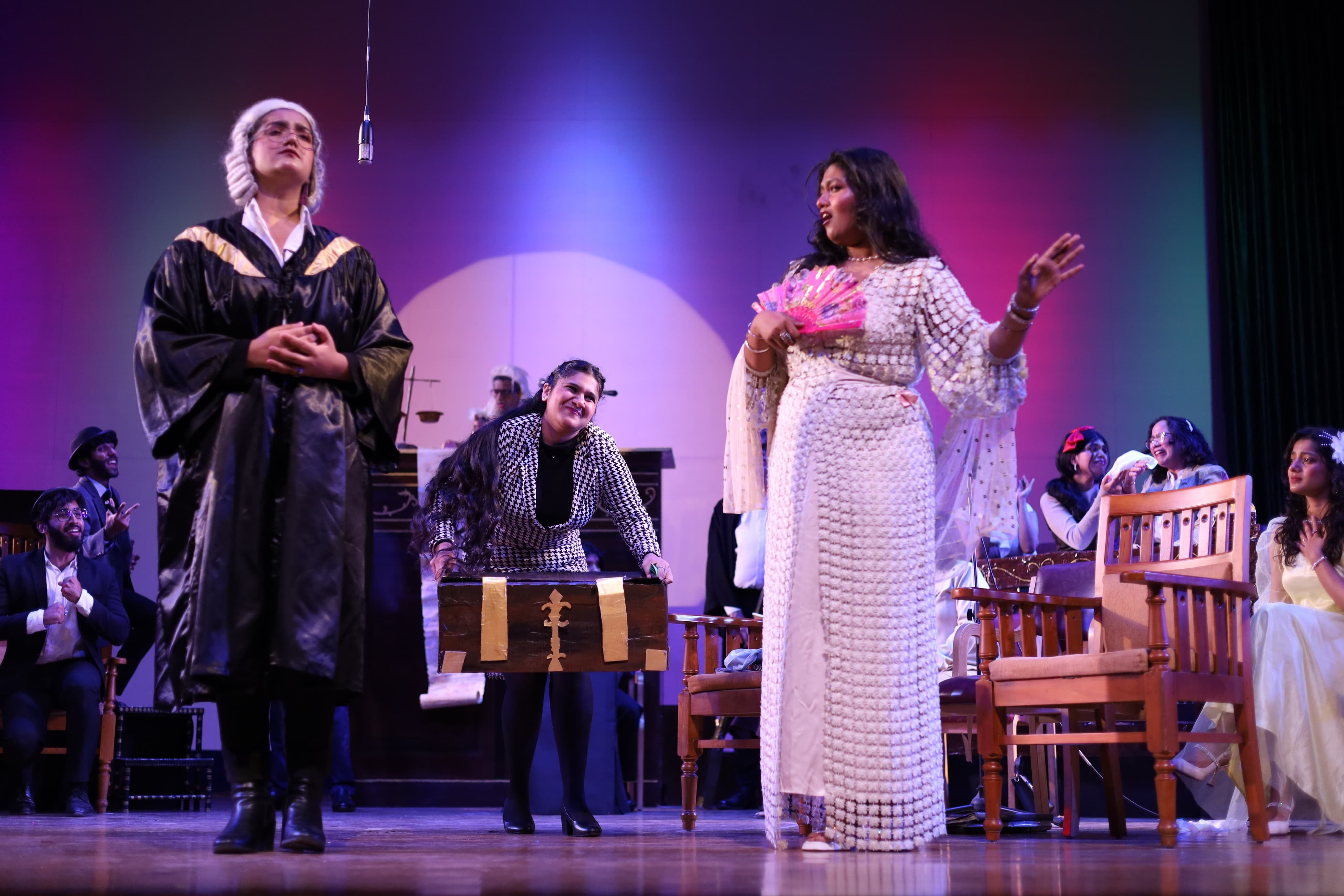
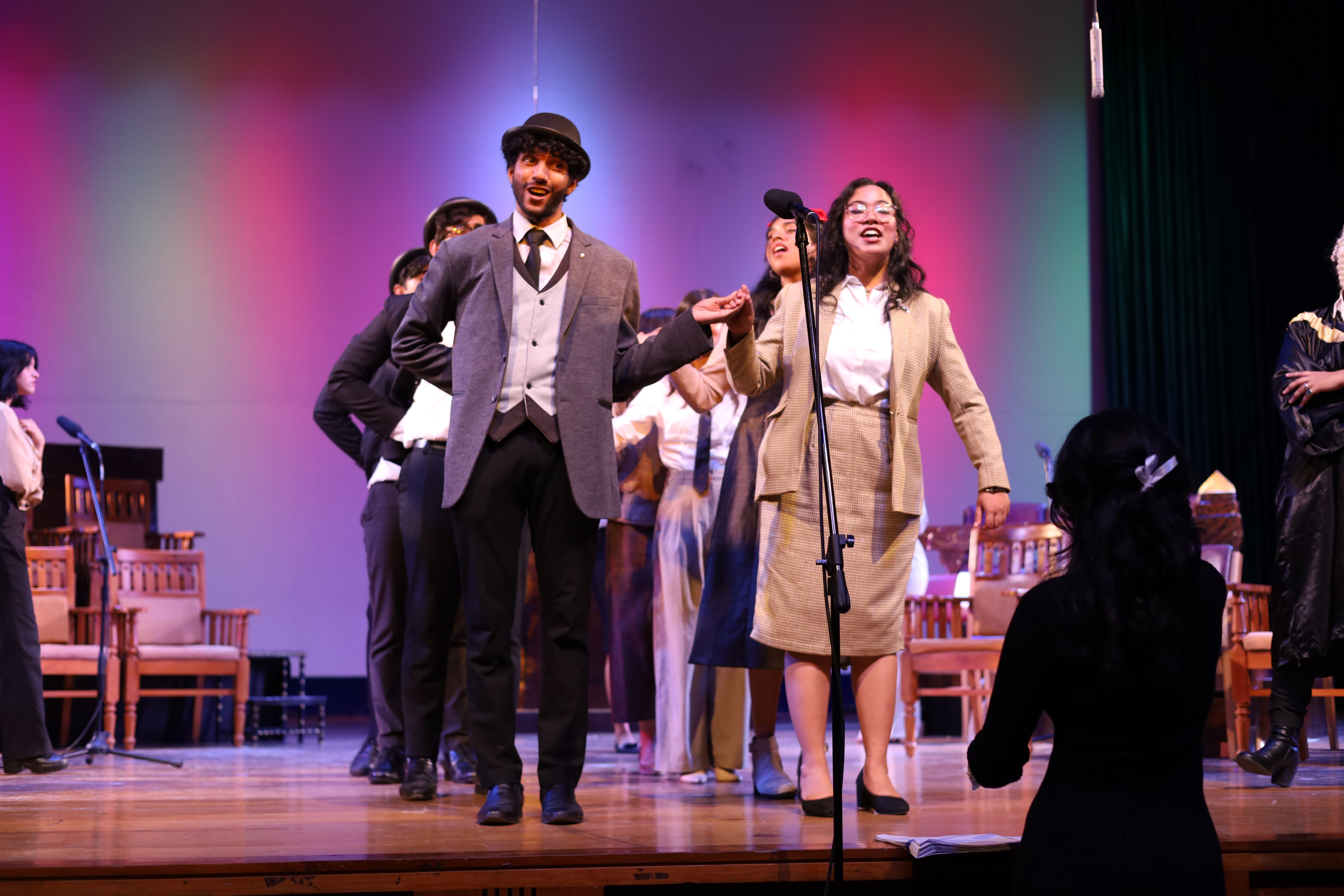
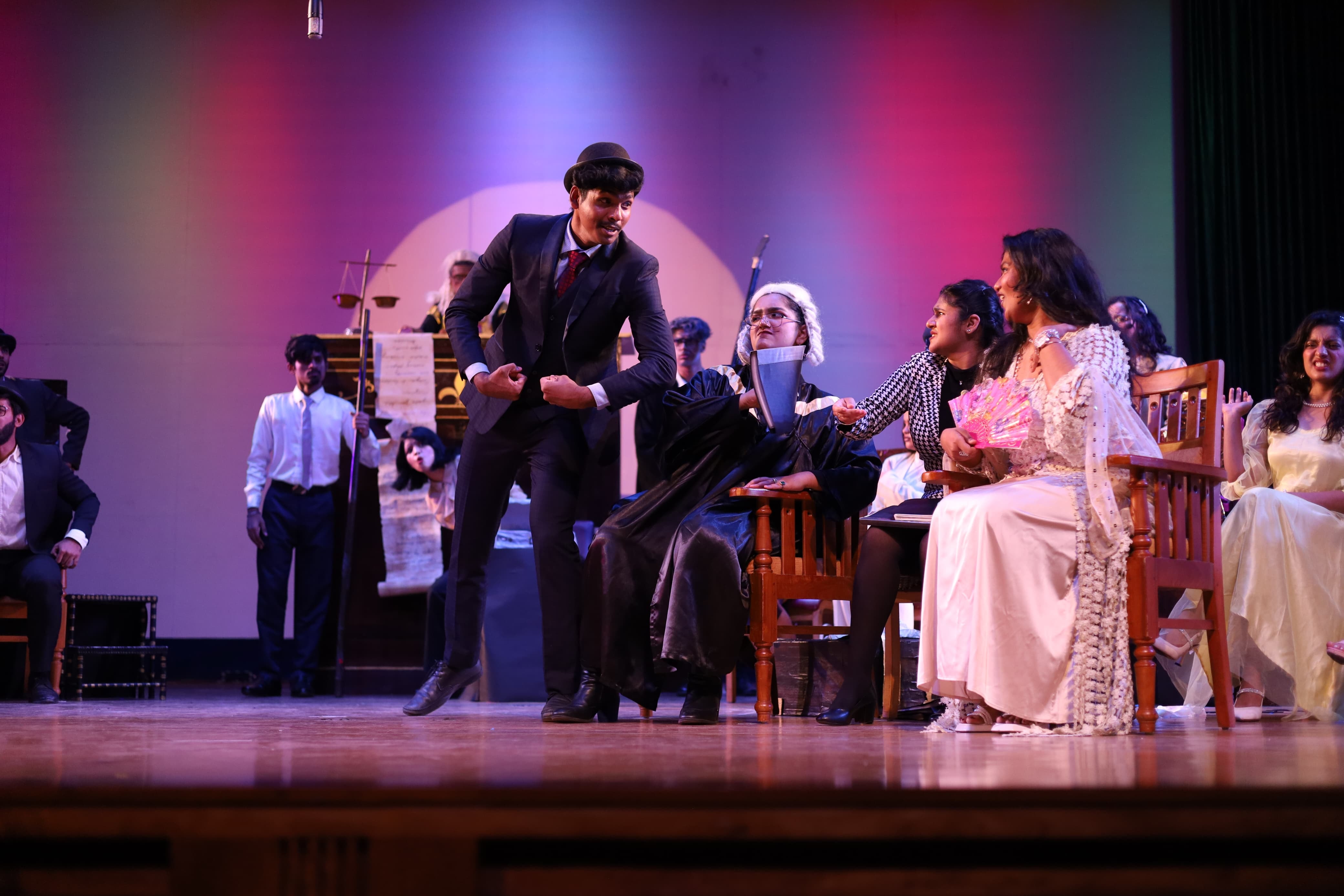
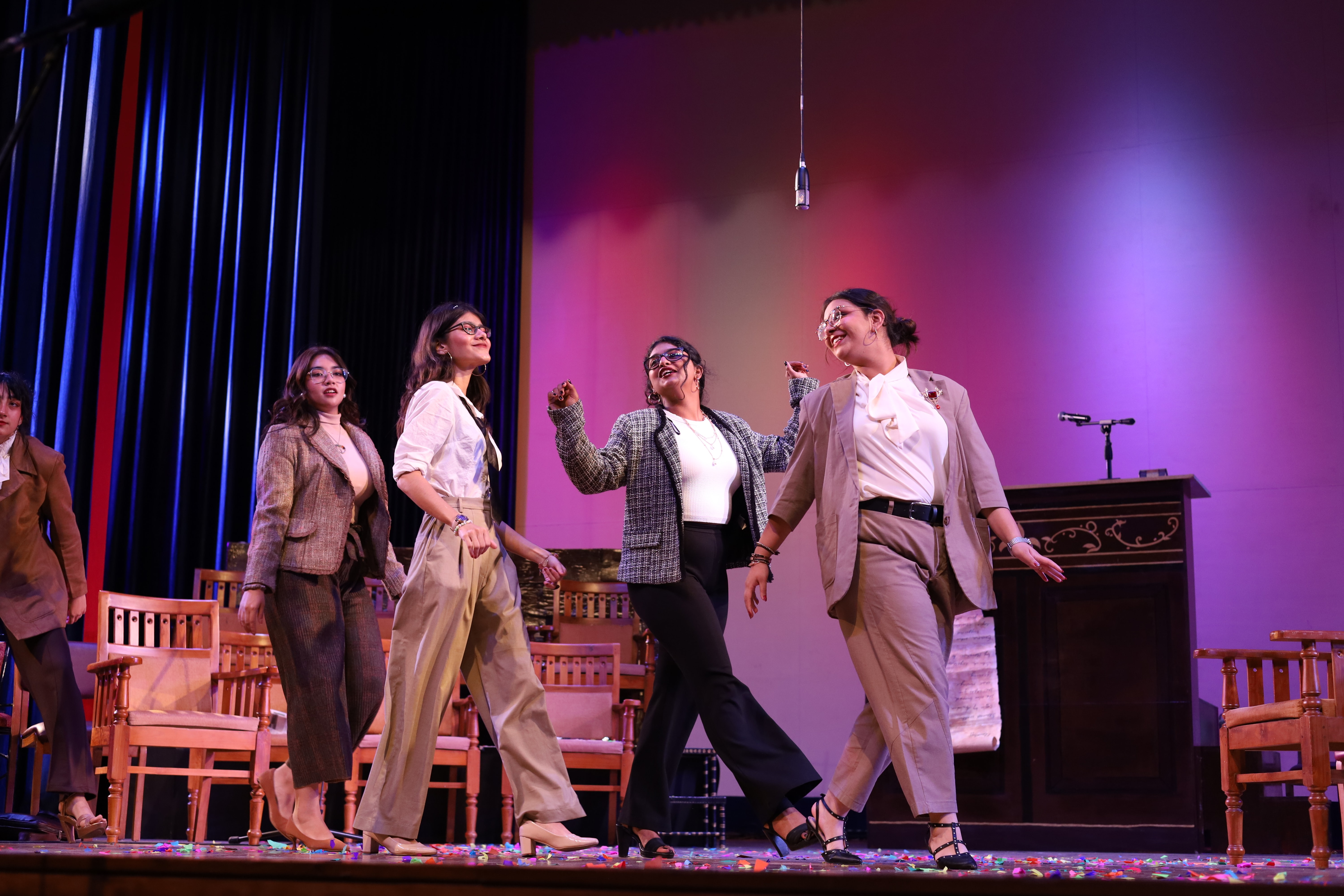
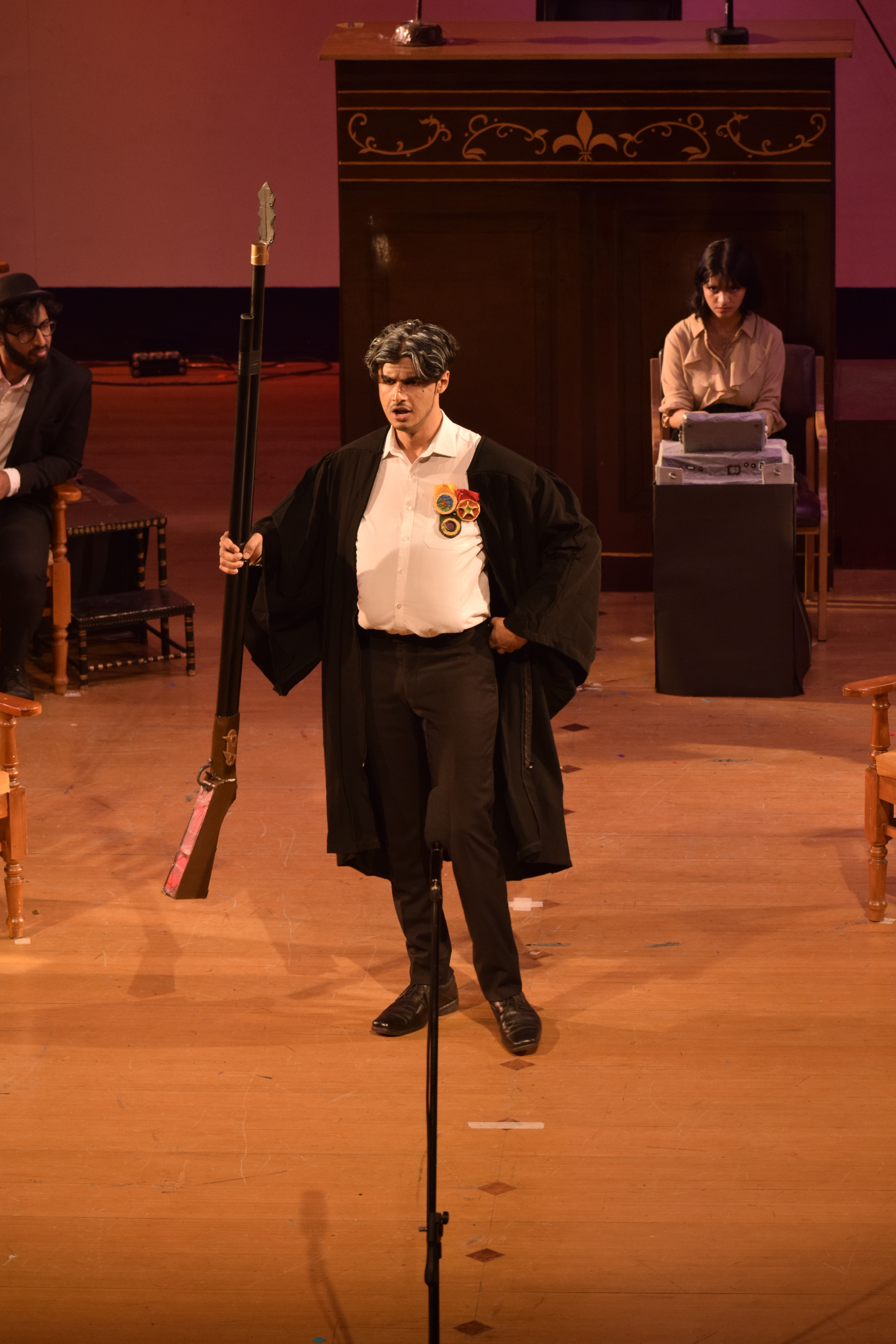
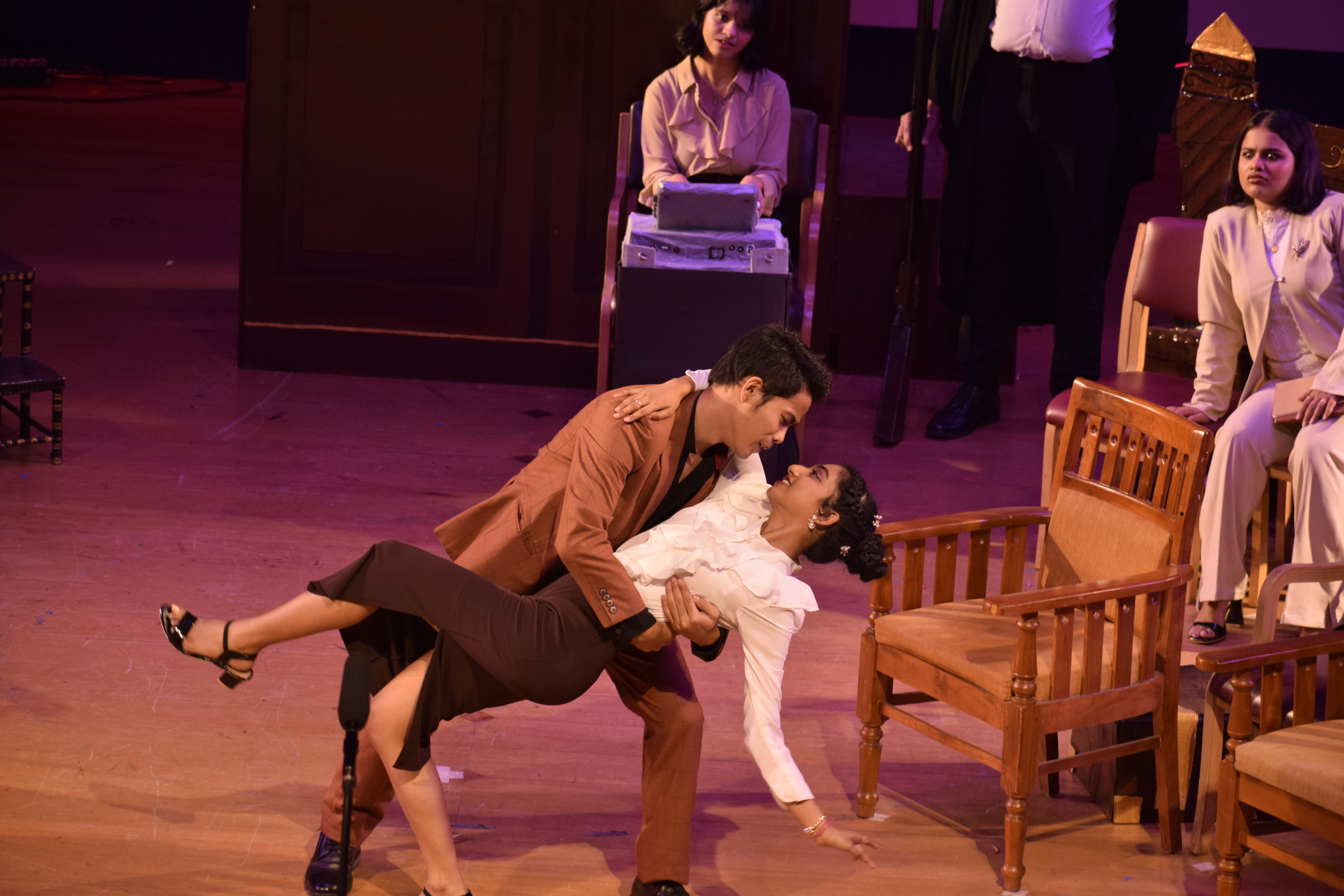
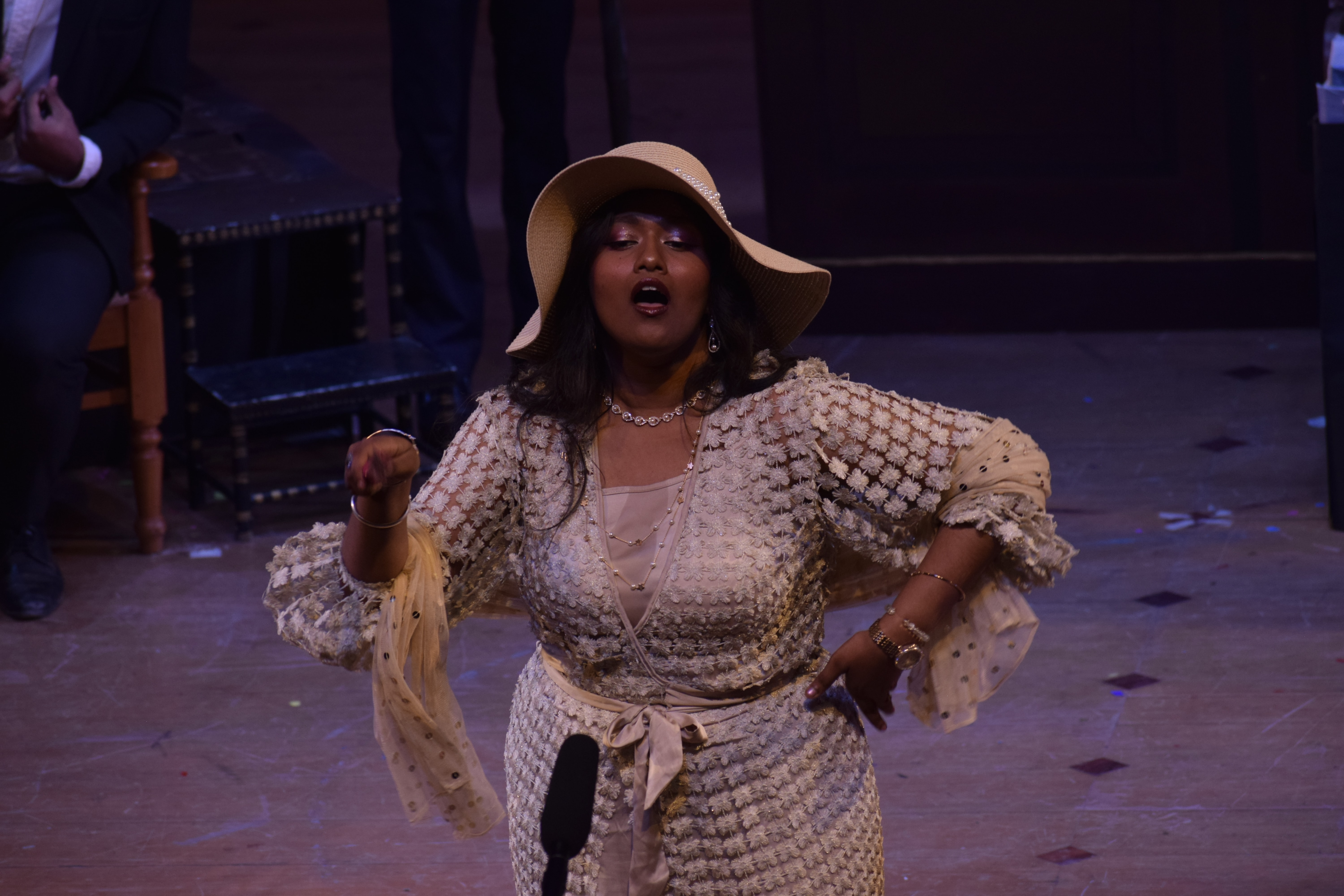
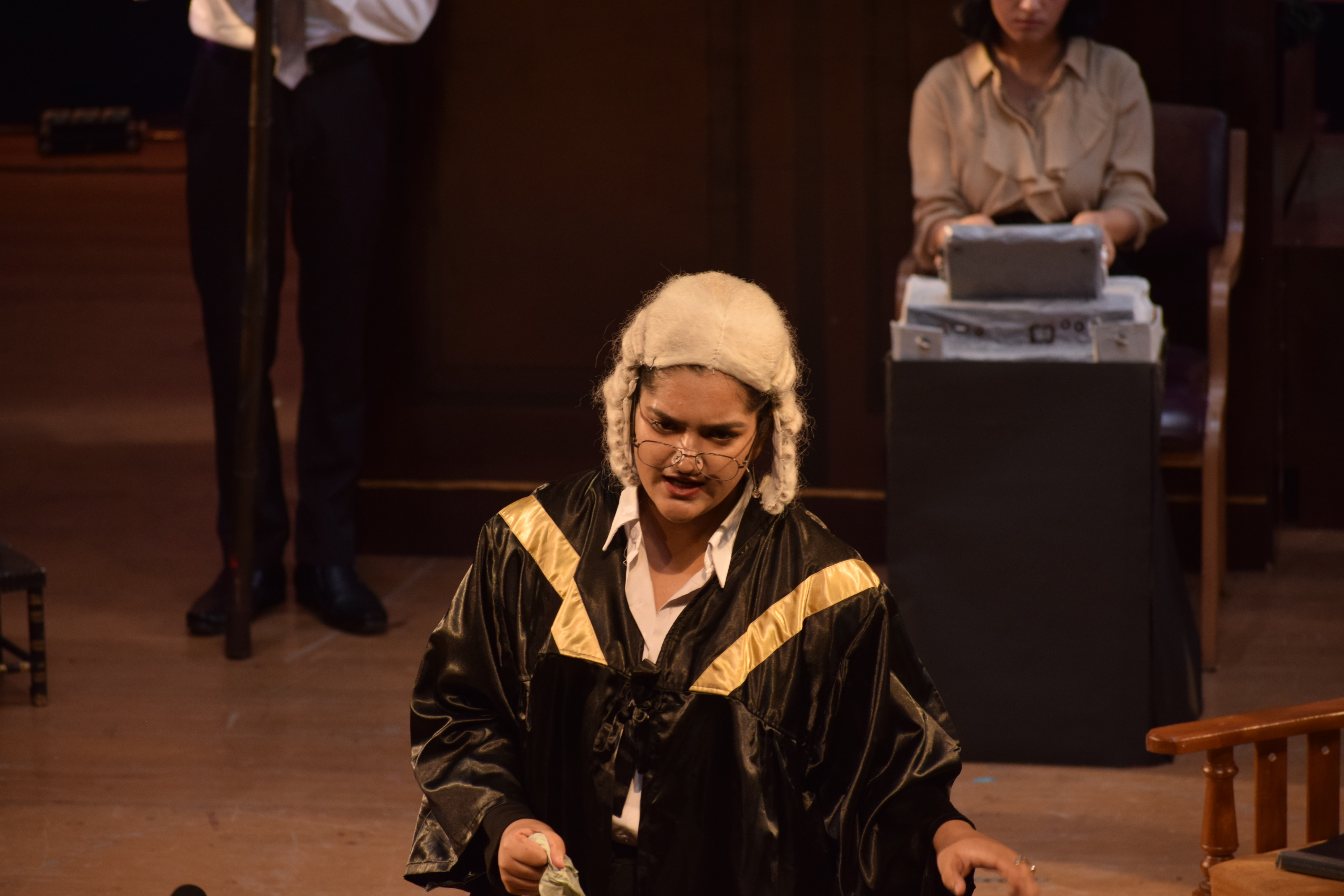
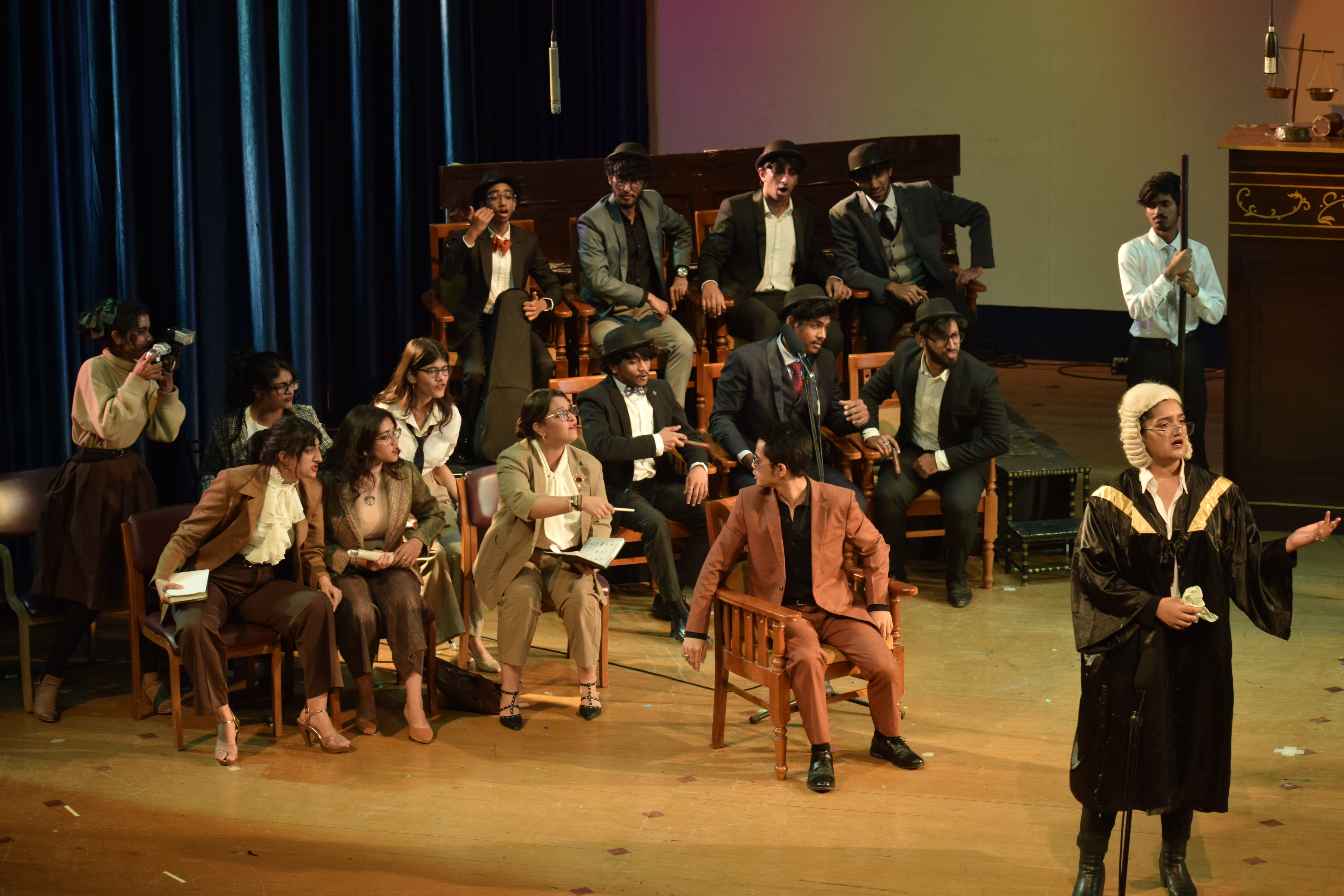
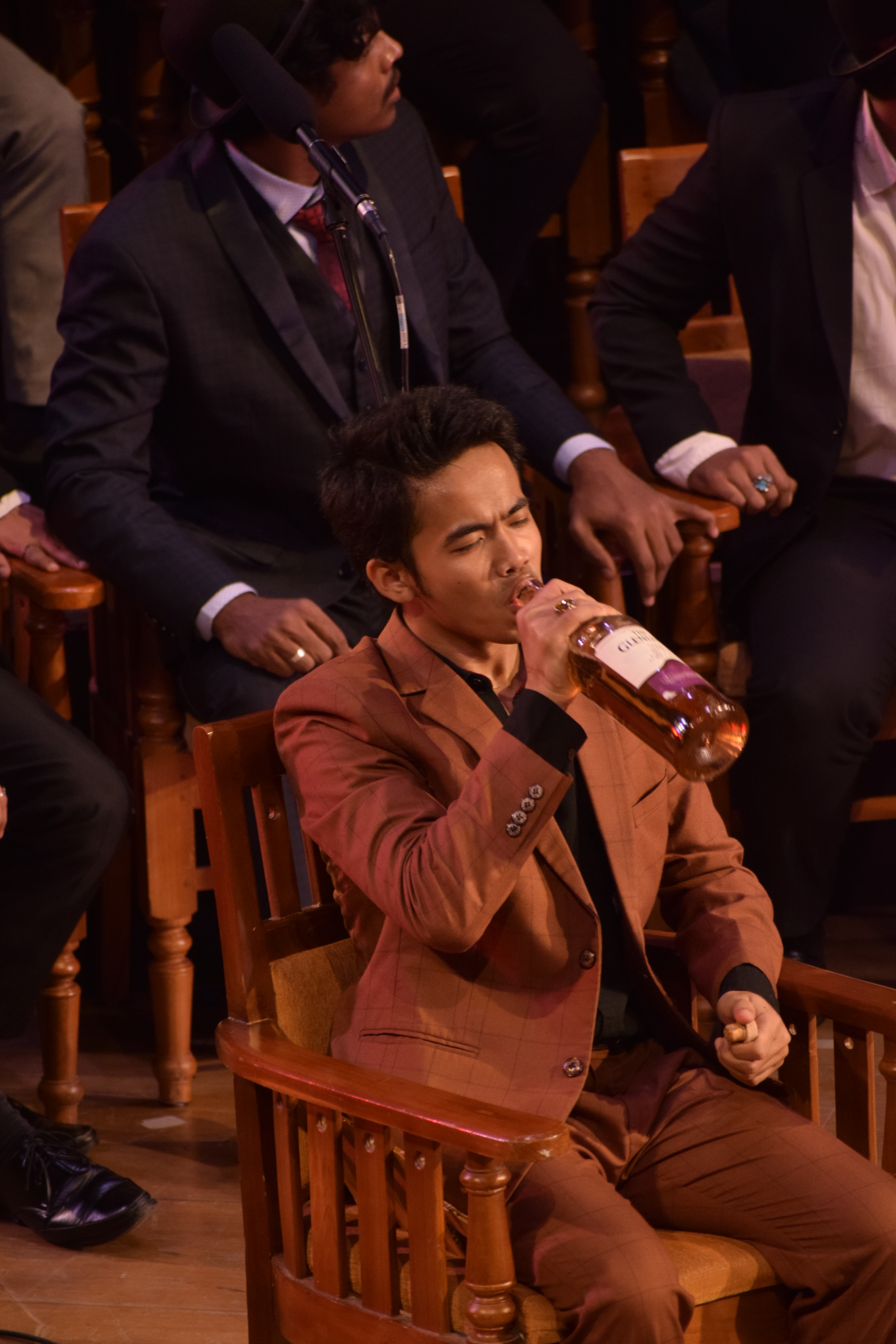
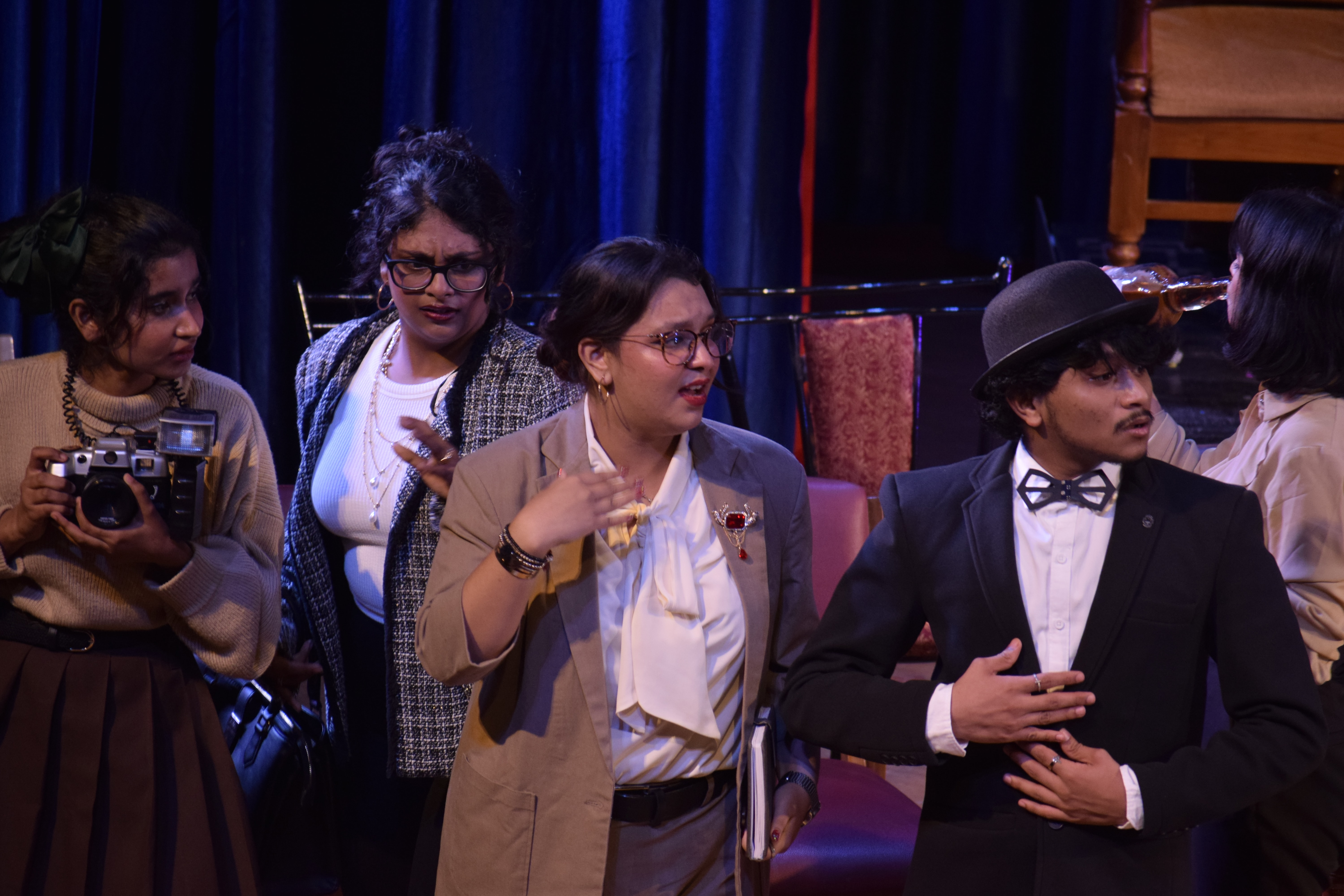
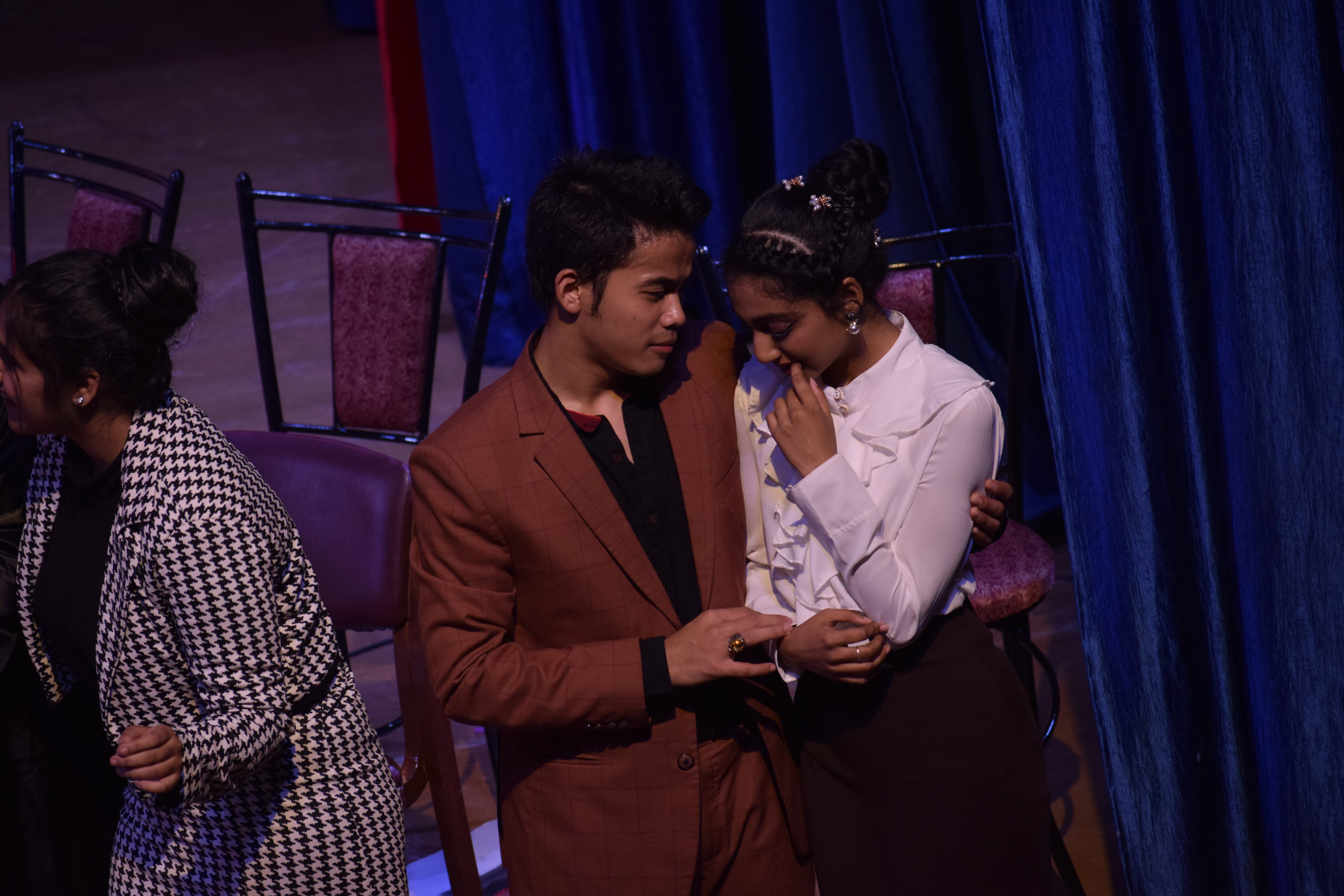
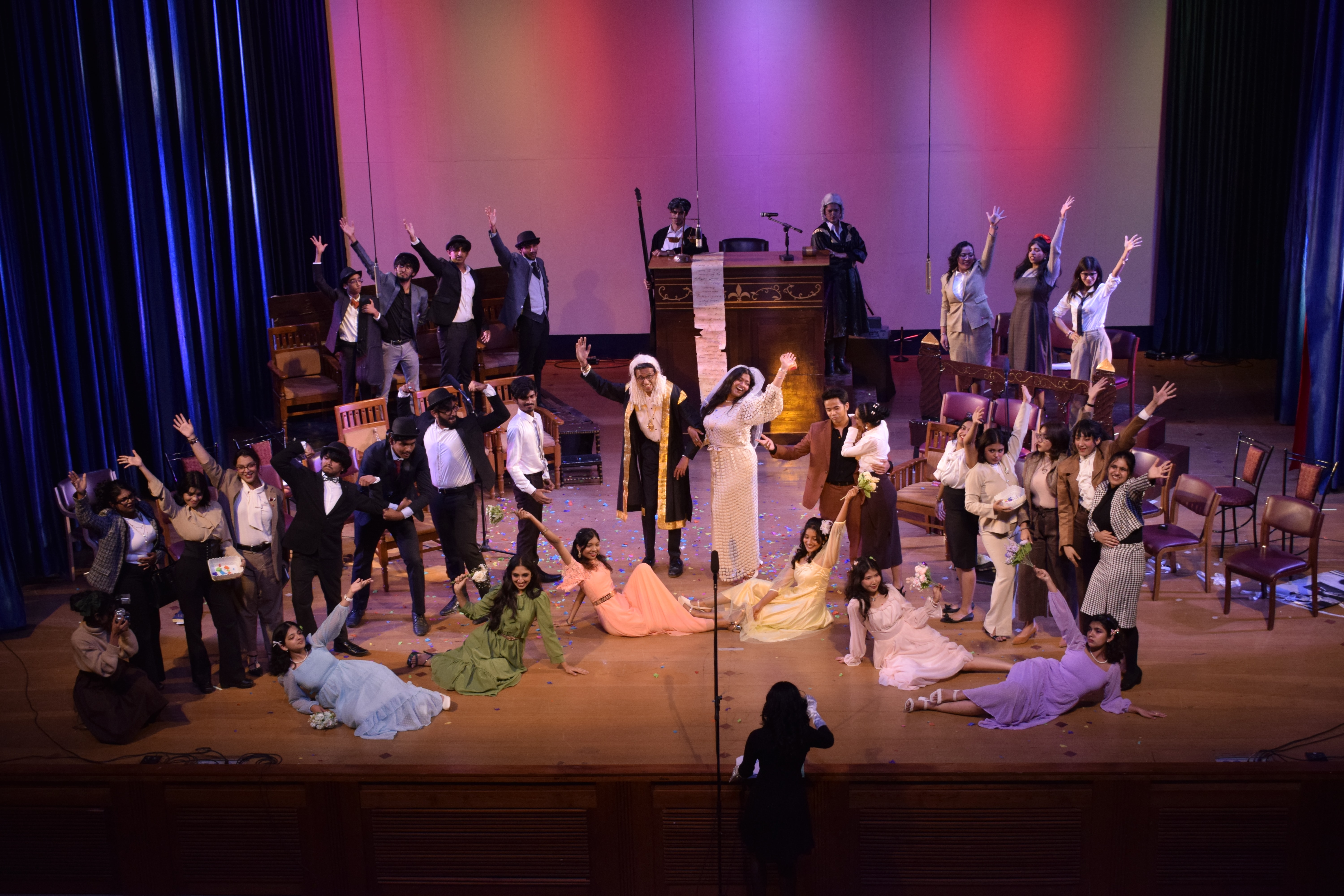
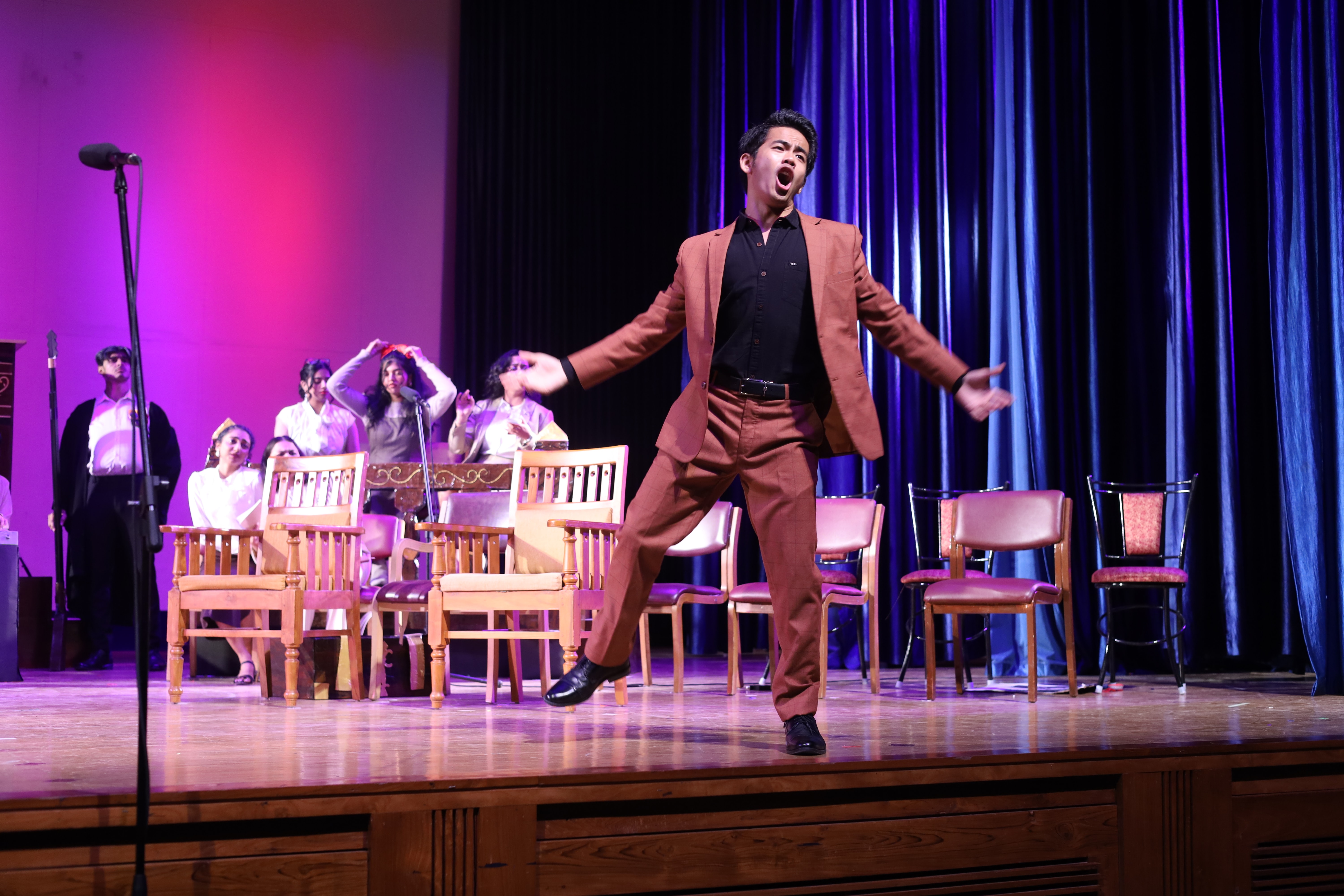
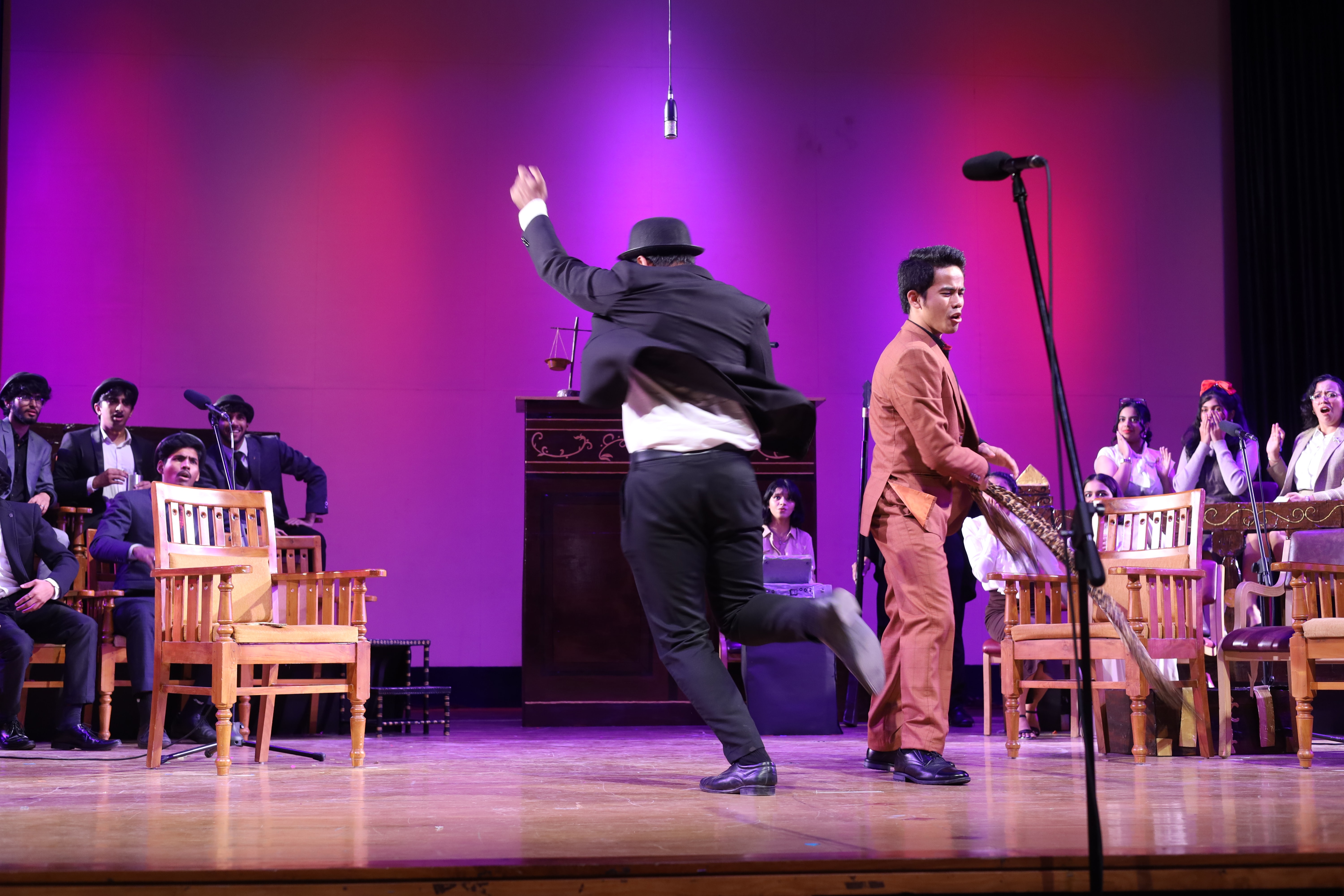
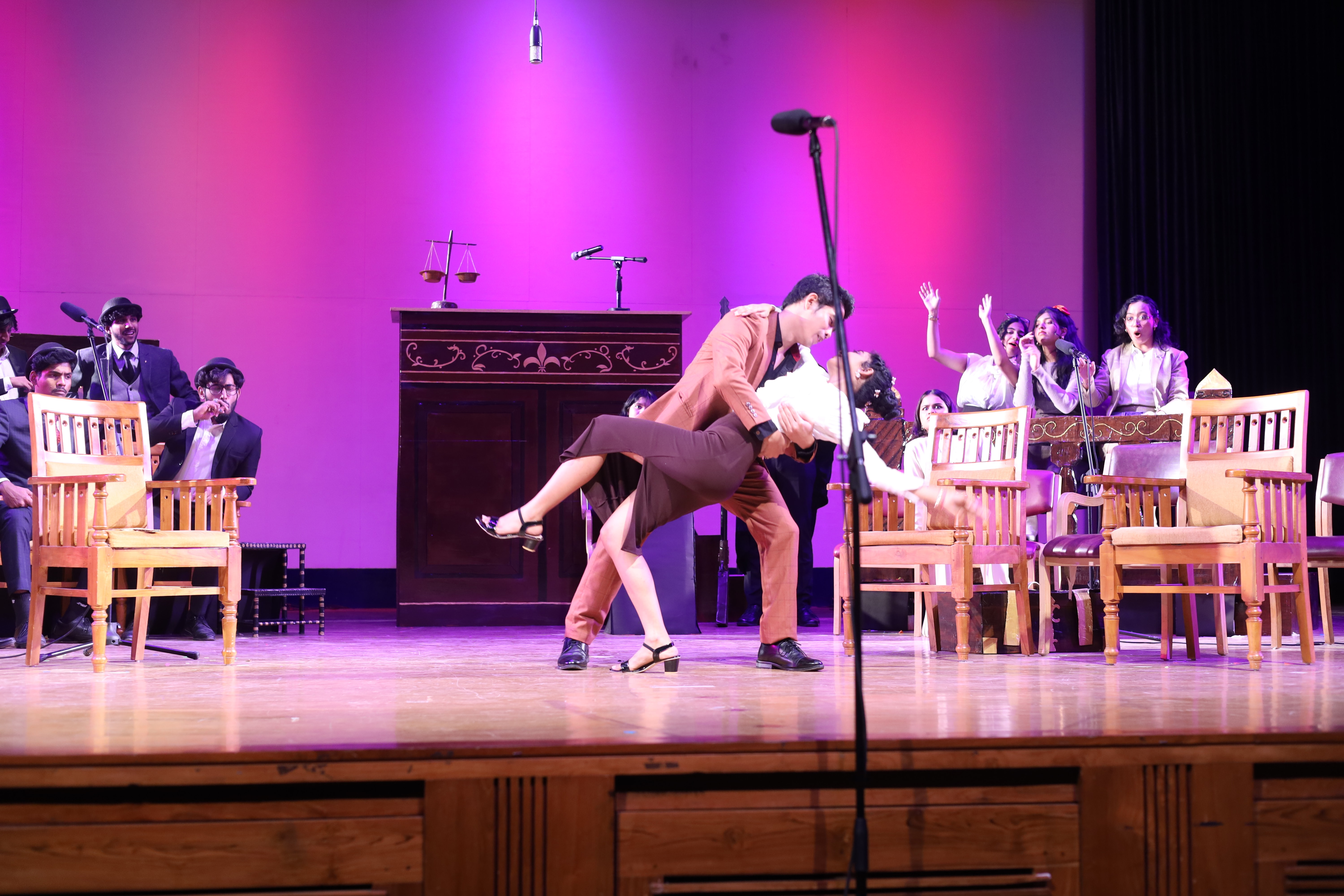
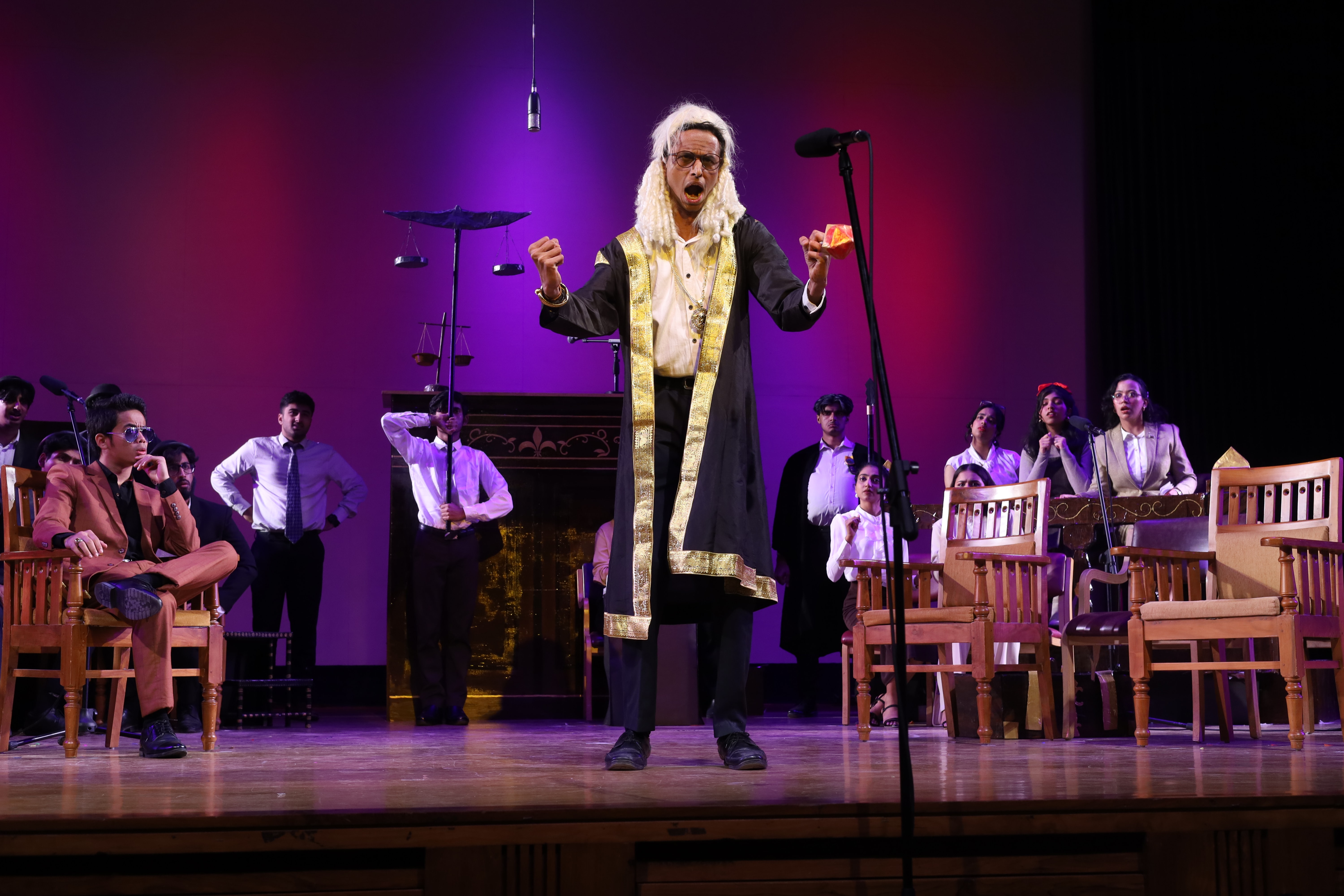
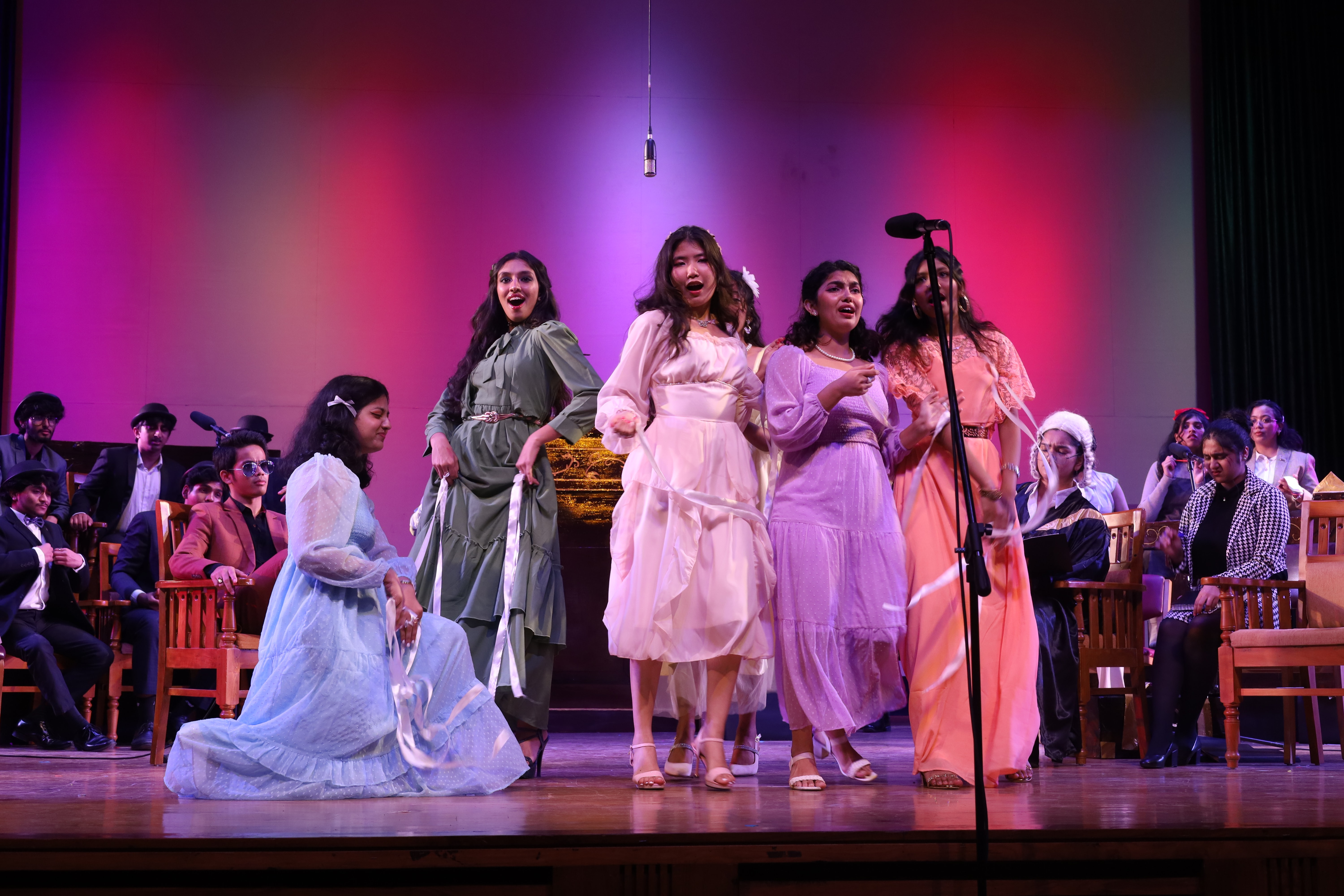
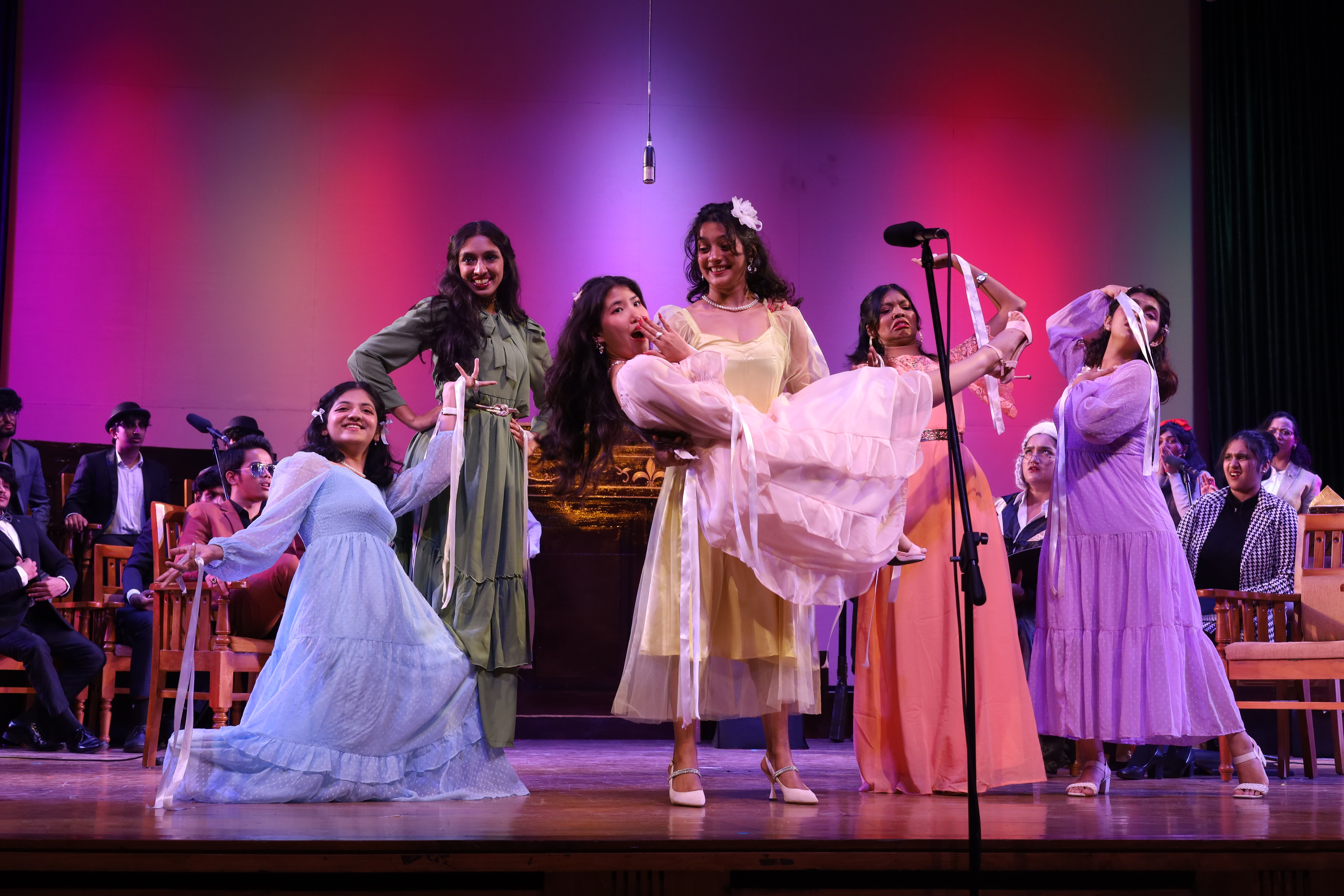
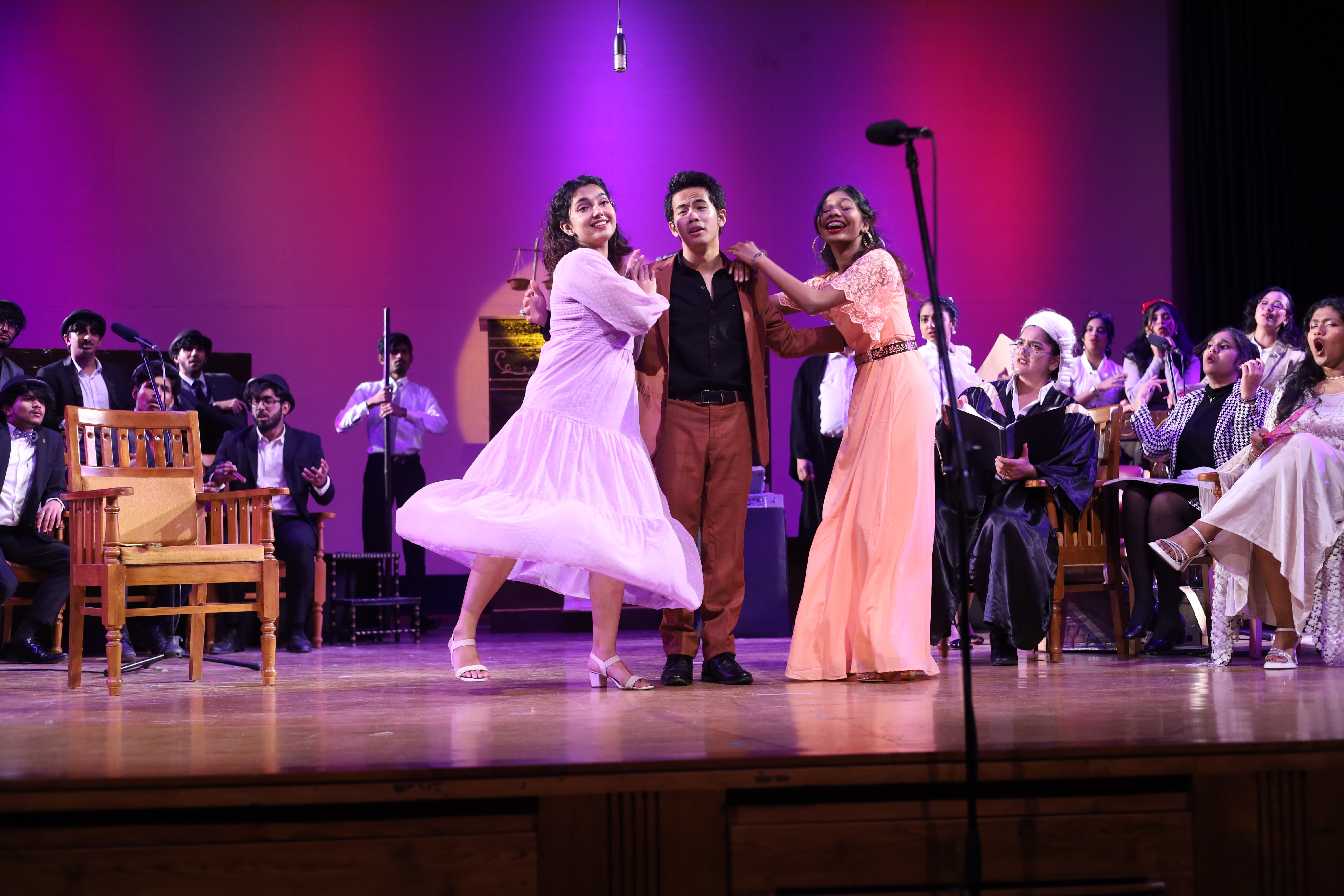
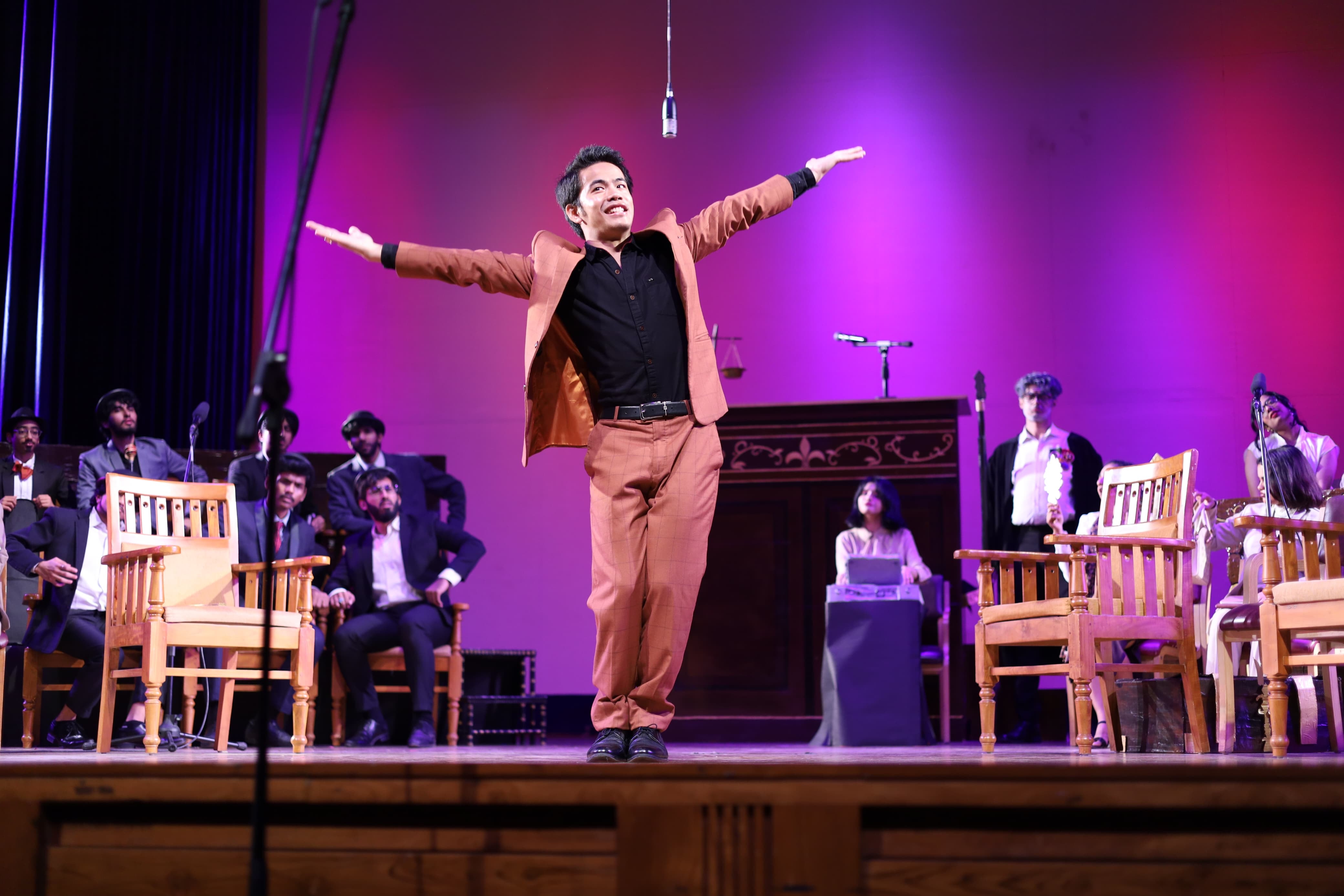
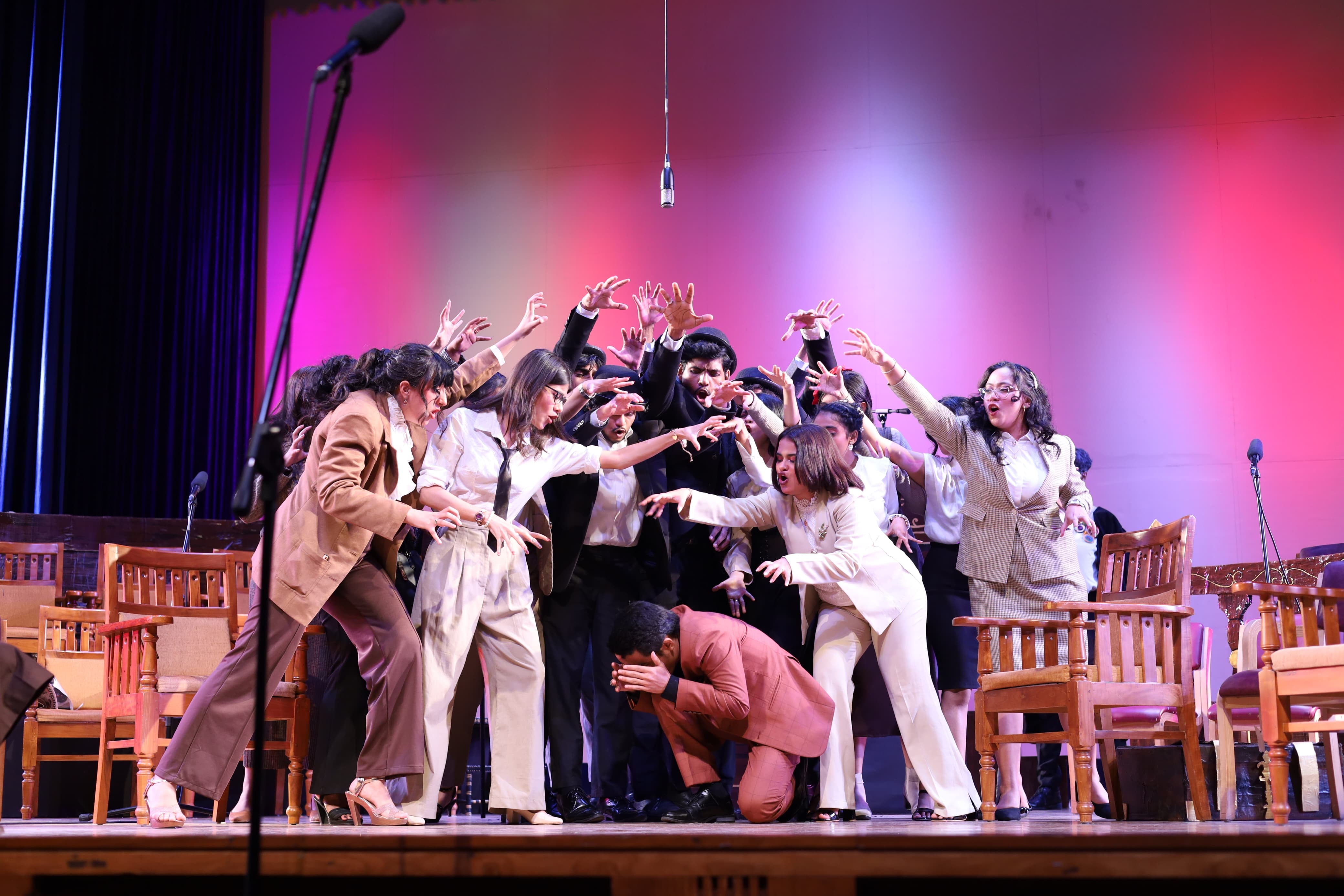
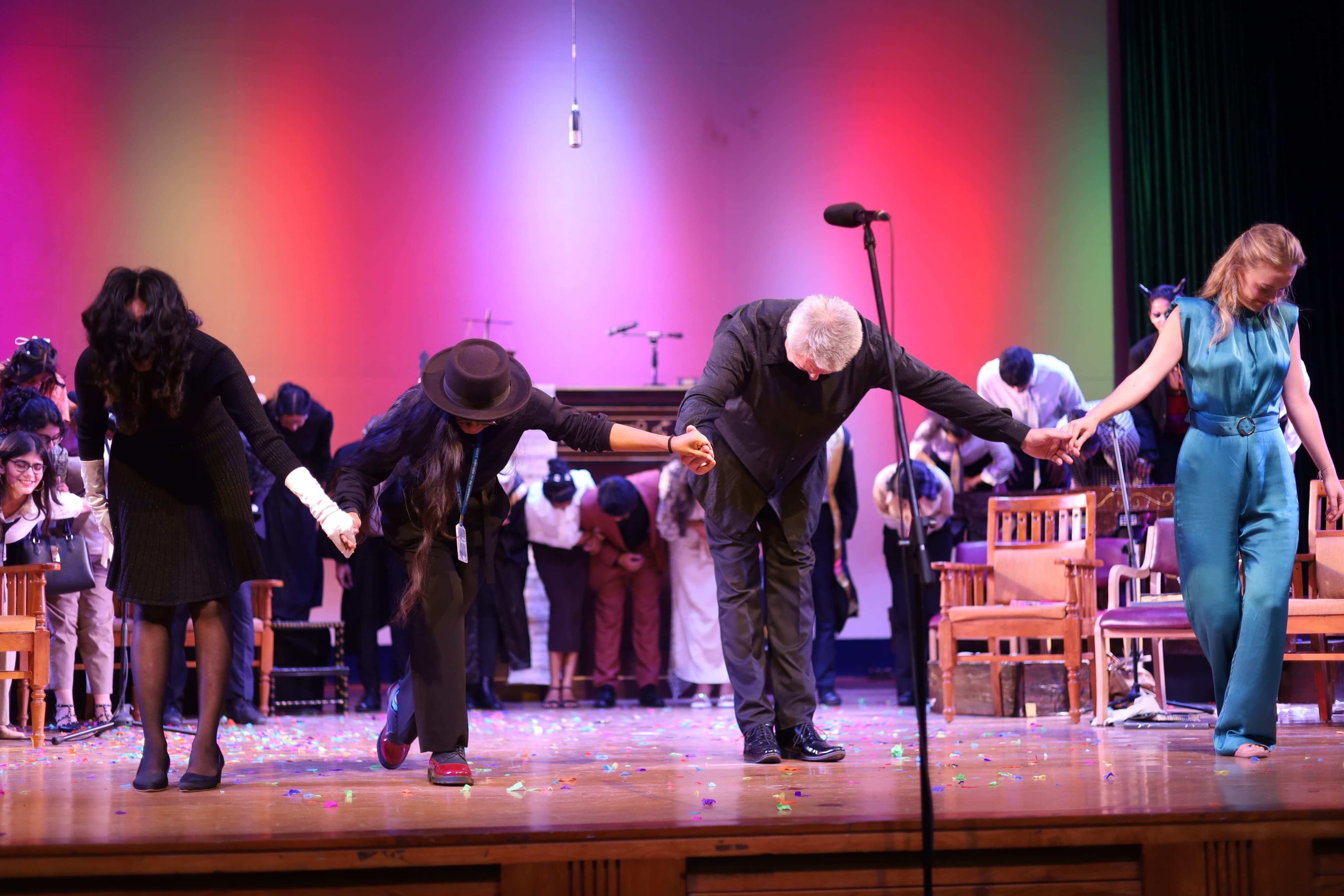
In February 2024, the Department of Western Music staged a comic opera about a broken engagement, sold tickets, and returned the university’s entire budget for the production. Not most of it. All of it, and a margin so small it would be dishonest to call it a profit, but the sign was right. The show cost the university nothing.
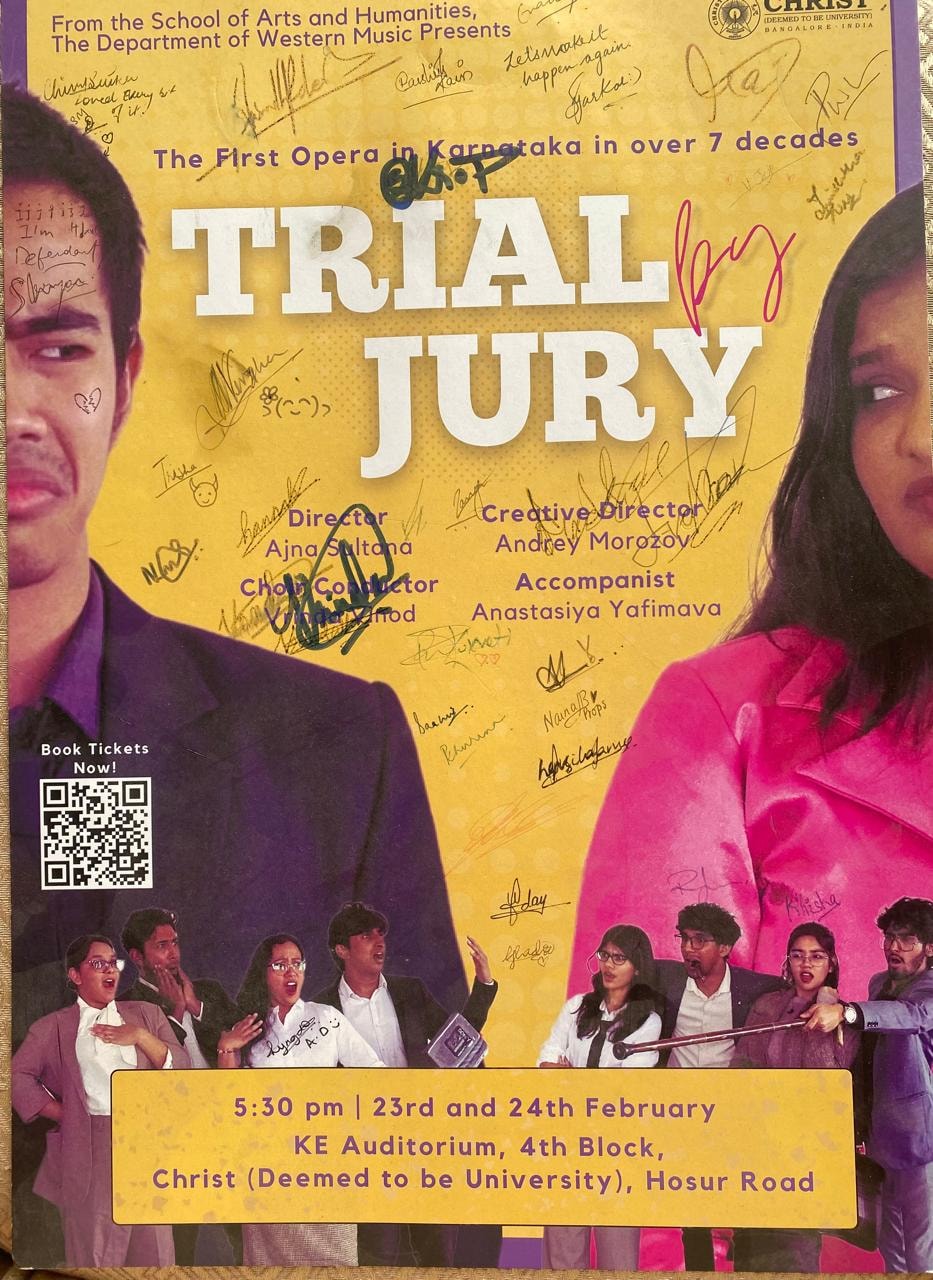
It did this without a website. There was no ticketing platform, no BookmyShow listing, no printed advertisement, no paid promotion of any kind. The whole campaign ran through WhatsApp: students messaging friends, friends messaging cousins, a poster photographed and forwarded until it had crossed most of the campus and a good part of the city.
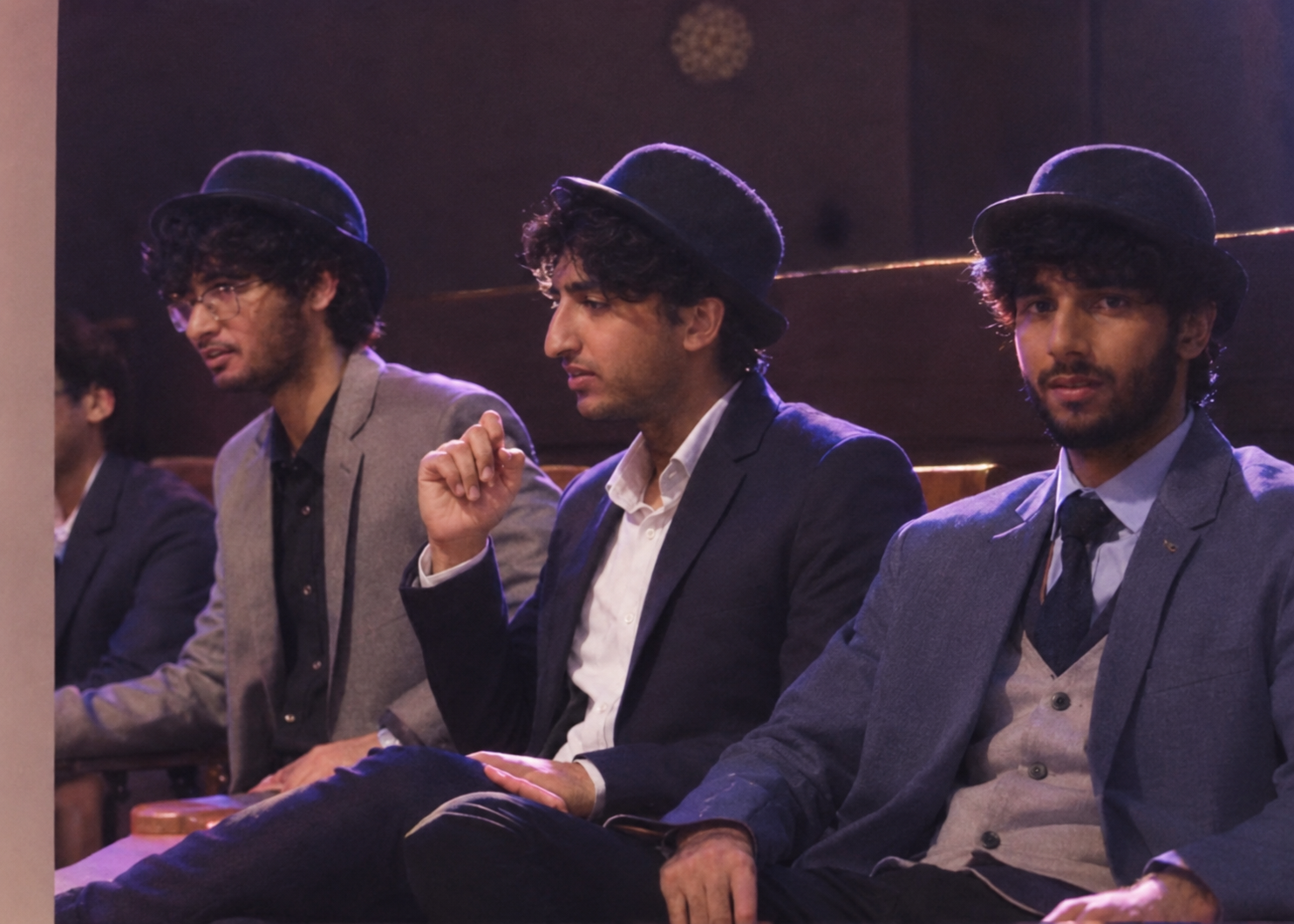
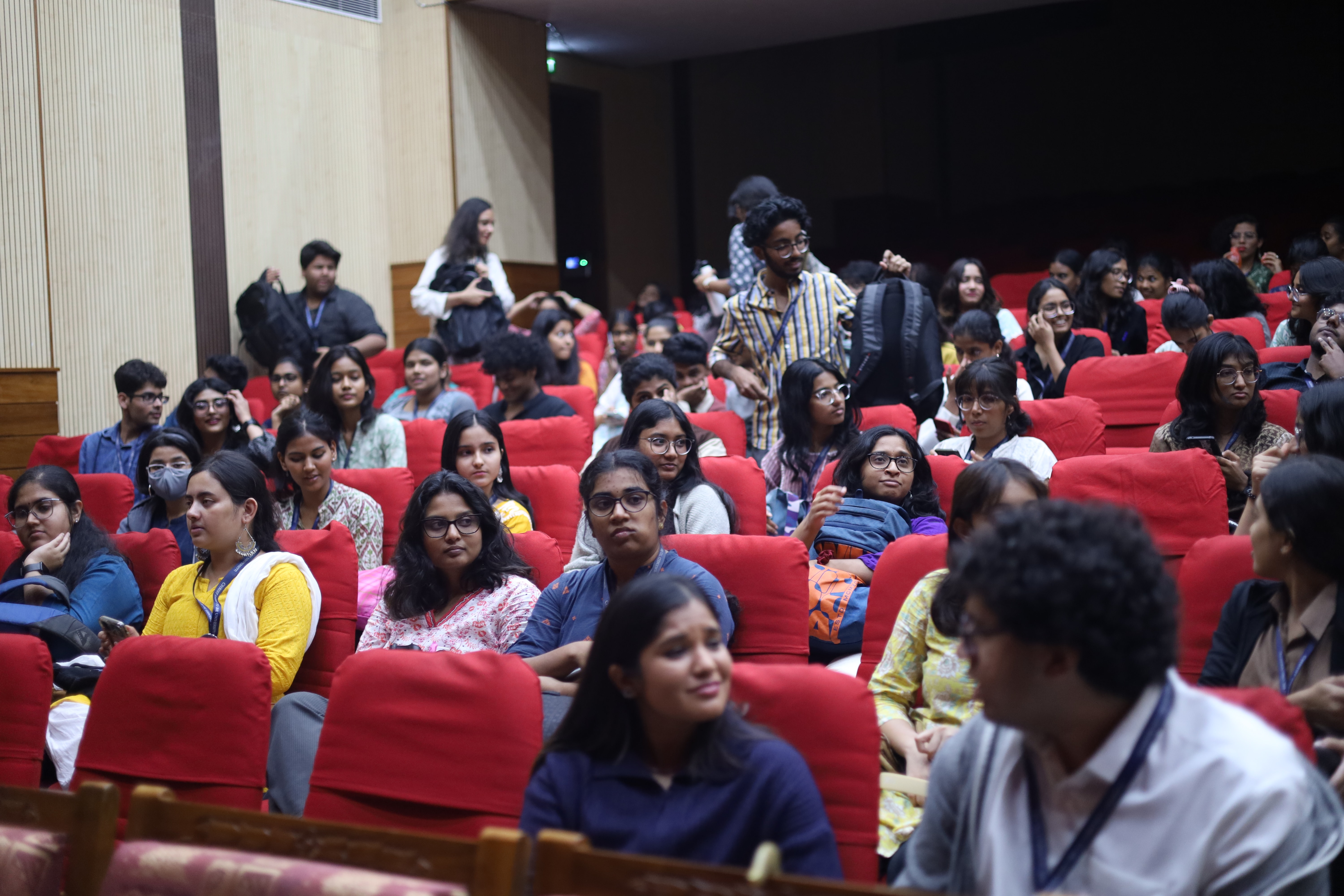
Two performances, 23 and 24 February, 5:30 pm, KE Auditorium, 4th Block. Five hundred seats. A form of theatre that had not been staged in Karnataka with tickets and an audience for over seven decades — as far as our own research could establish.
❦
It began in the Collaborative Class
Nobody set out to make an opera.
It began in the Collaborative Class — the class that puts the two halves of the department which usually meet only in the corridor into the same room on purpose. Voice students sing; piano students play. Not accompaniment as a service, but two disciplines learning the same music from opposite sides of it.
We chose an opera for that class and divided it into scenes, distributed among them. That was the whole of the plan: scenes, in a classroom, for a term.
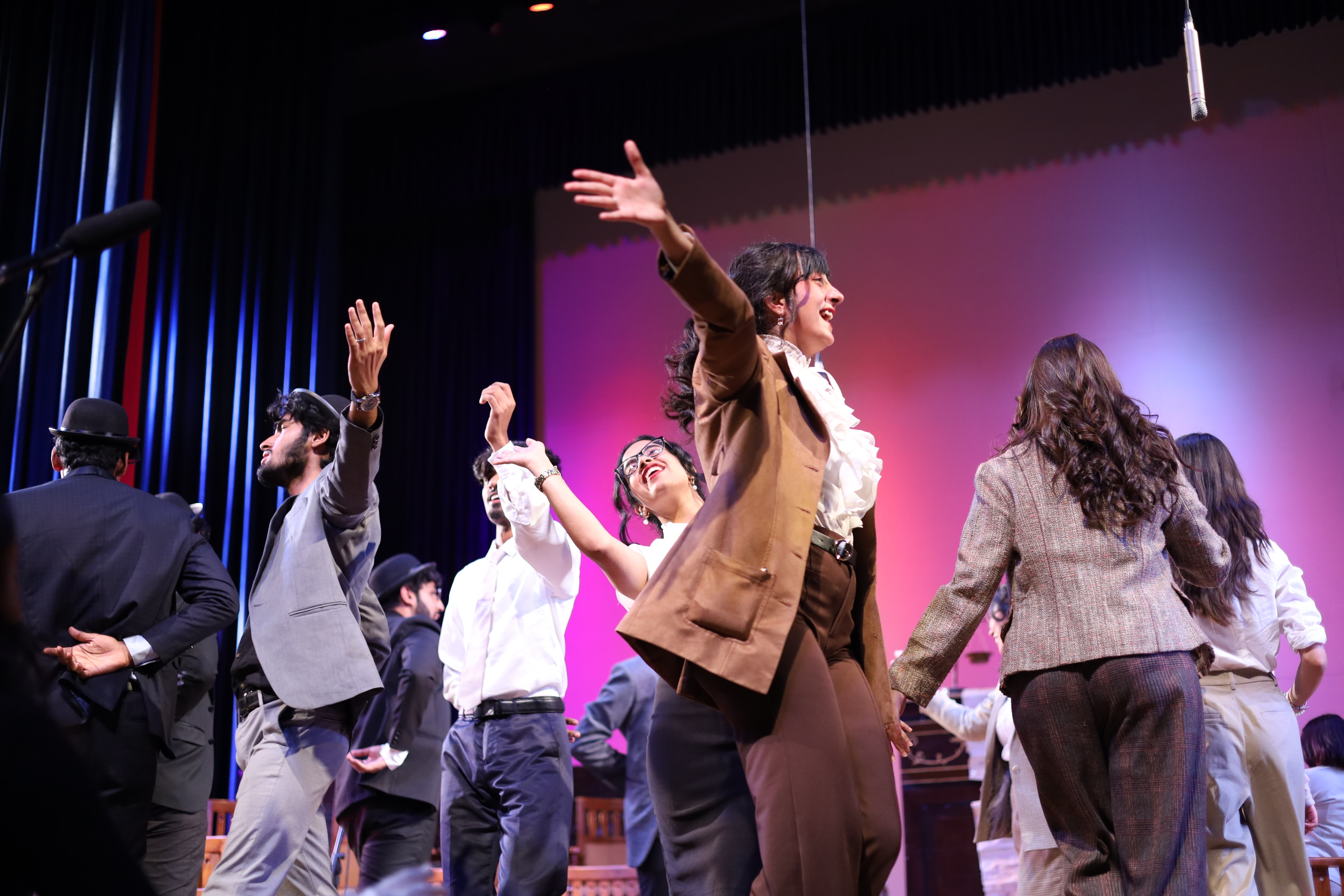
What changed it was a proposal made in the middle of the work — that we perform the thing entirely. By then the scenes had started to want costumes, and entrances, and a reason for the singer to be standing where she was standing. At some point — no one can identify the meeting where this was decided — it stopped being a class and became a production.
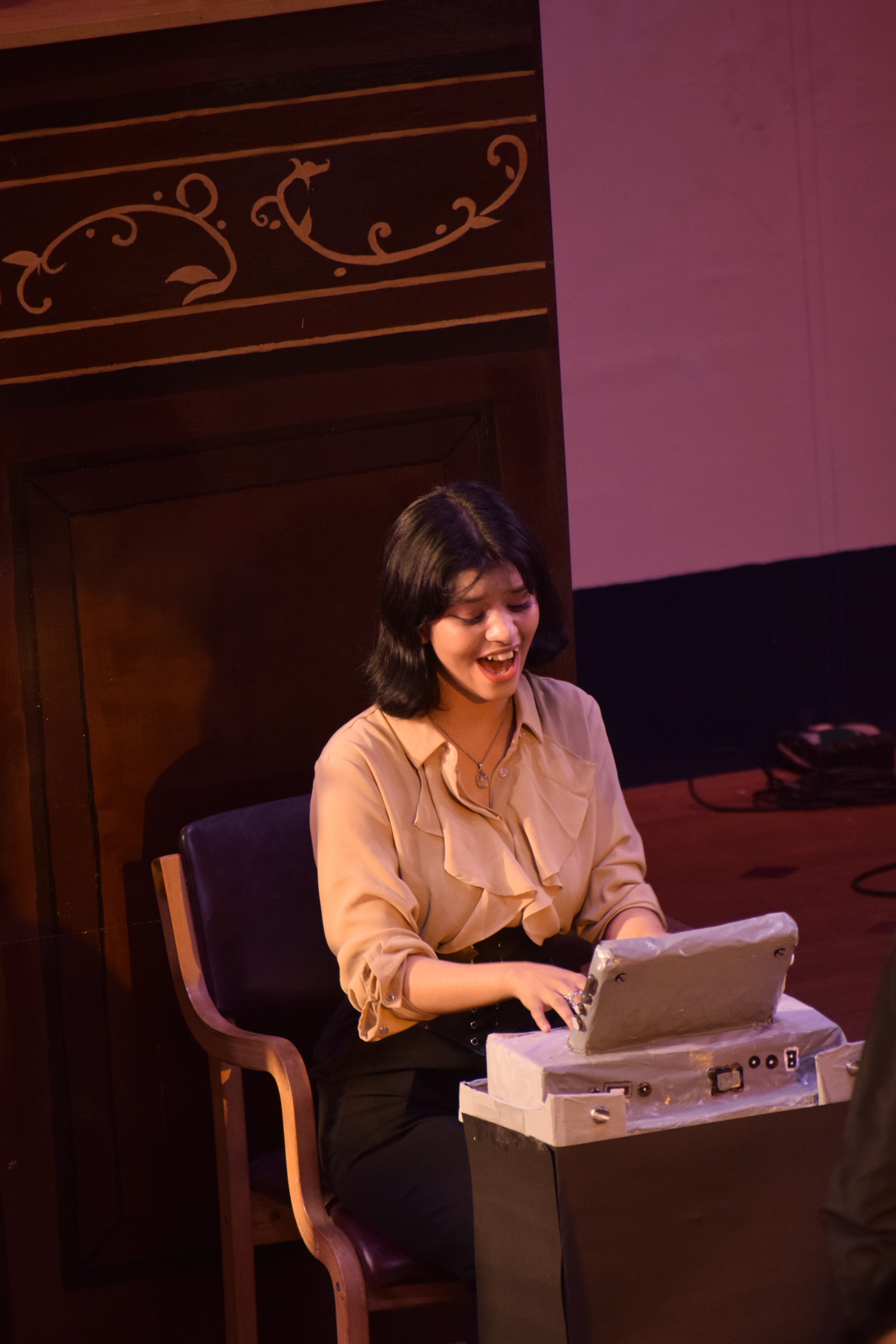
The pianists were never the accompaniment. They sat their own assessment on stage for this music, and then performed in the production on the same terms as the singers.
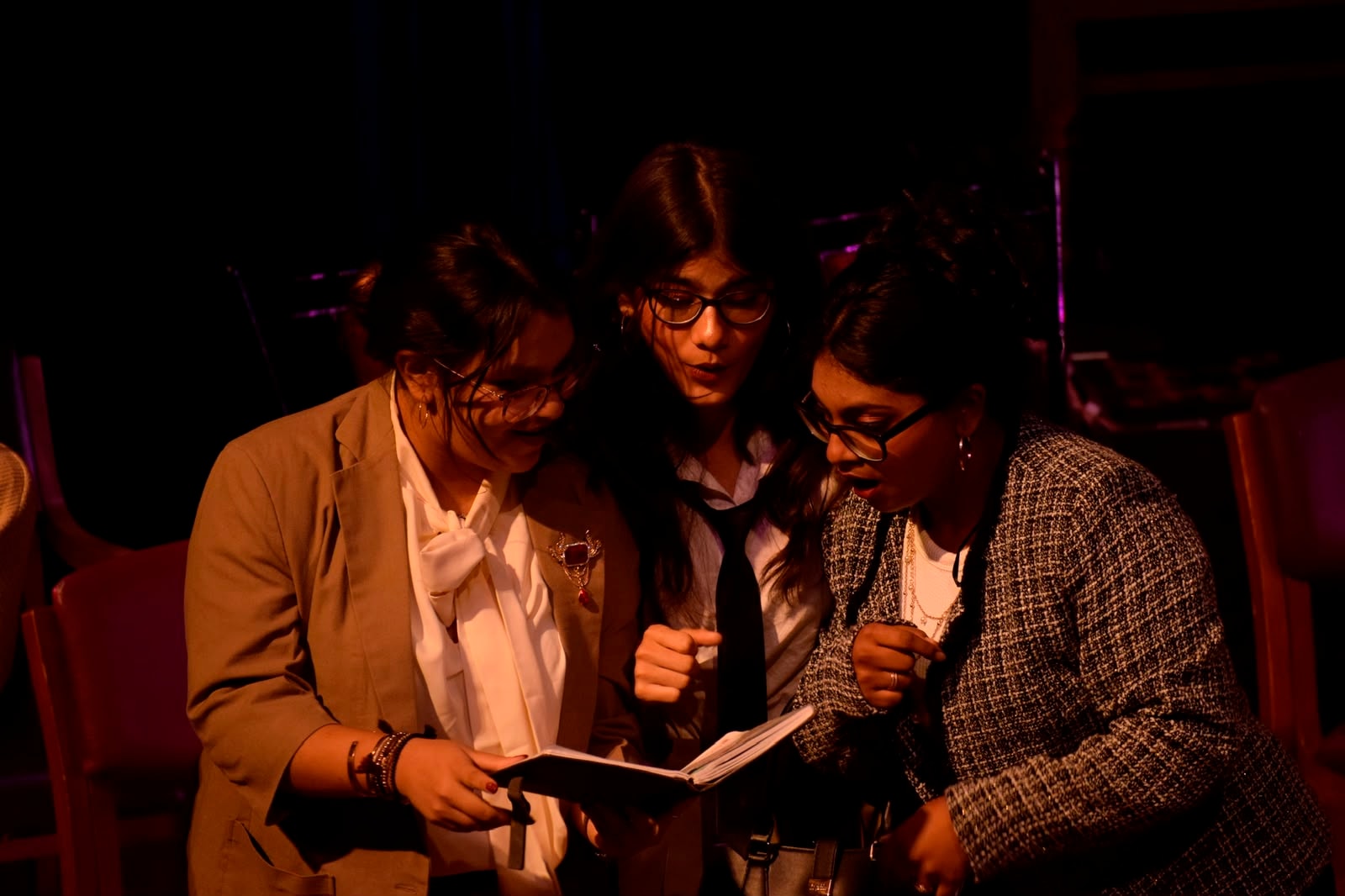
That distinction is worth stating plainly, because it is the part most easily lost. The piano students sat a separate assessment on stage for this repertoire — their own examination, on the same platform, under the same lights. And when the production went up, they were in it on the same terms as the singers: in the chorus, in the production team, in the assistant and stage-management jobs that have no aria attached to them. A collaborative class where one group performs and the other turns pages has not collaborated at all.
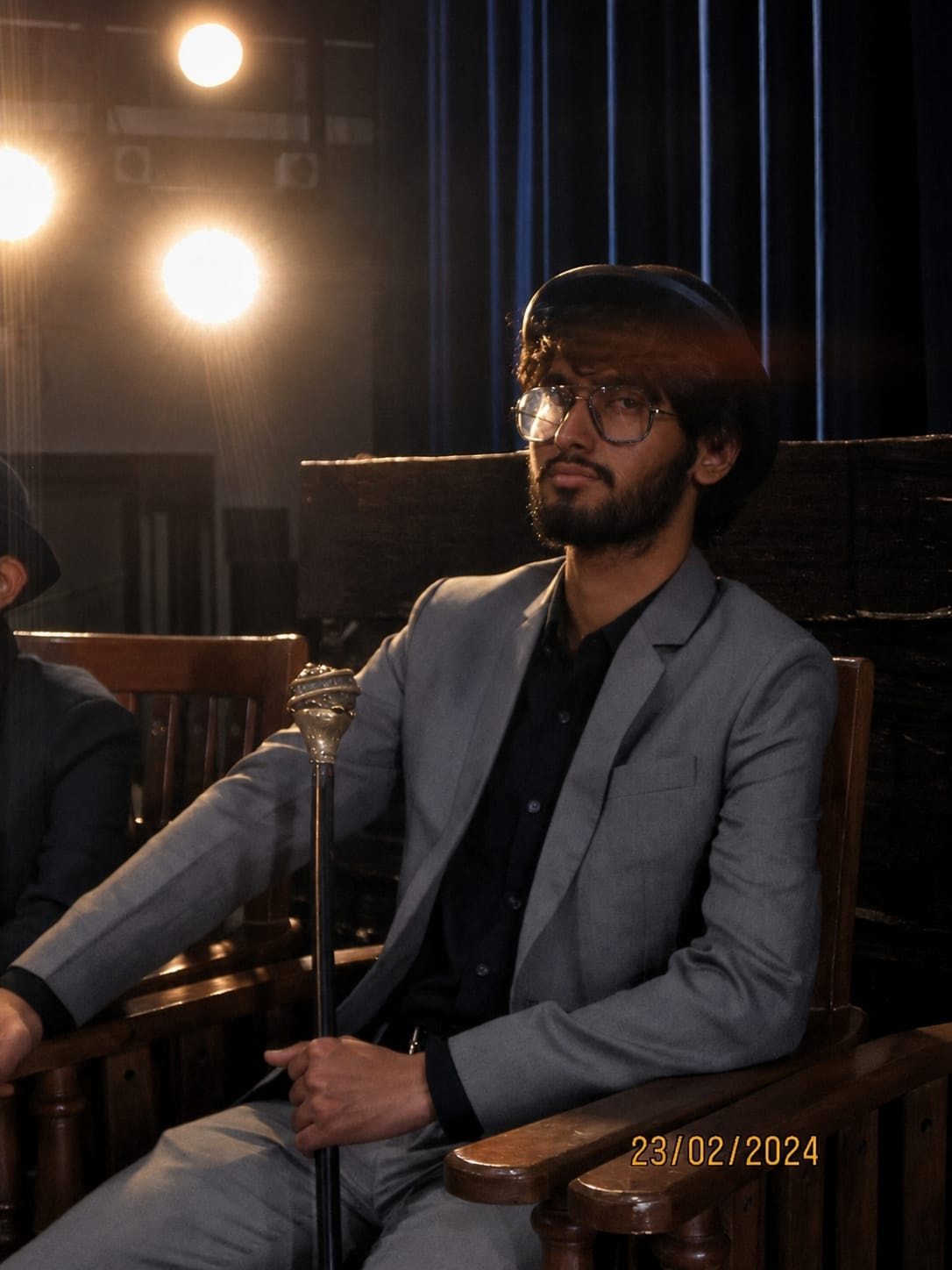
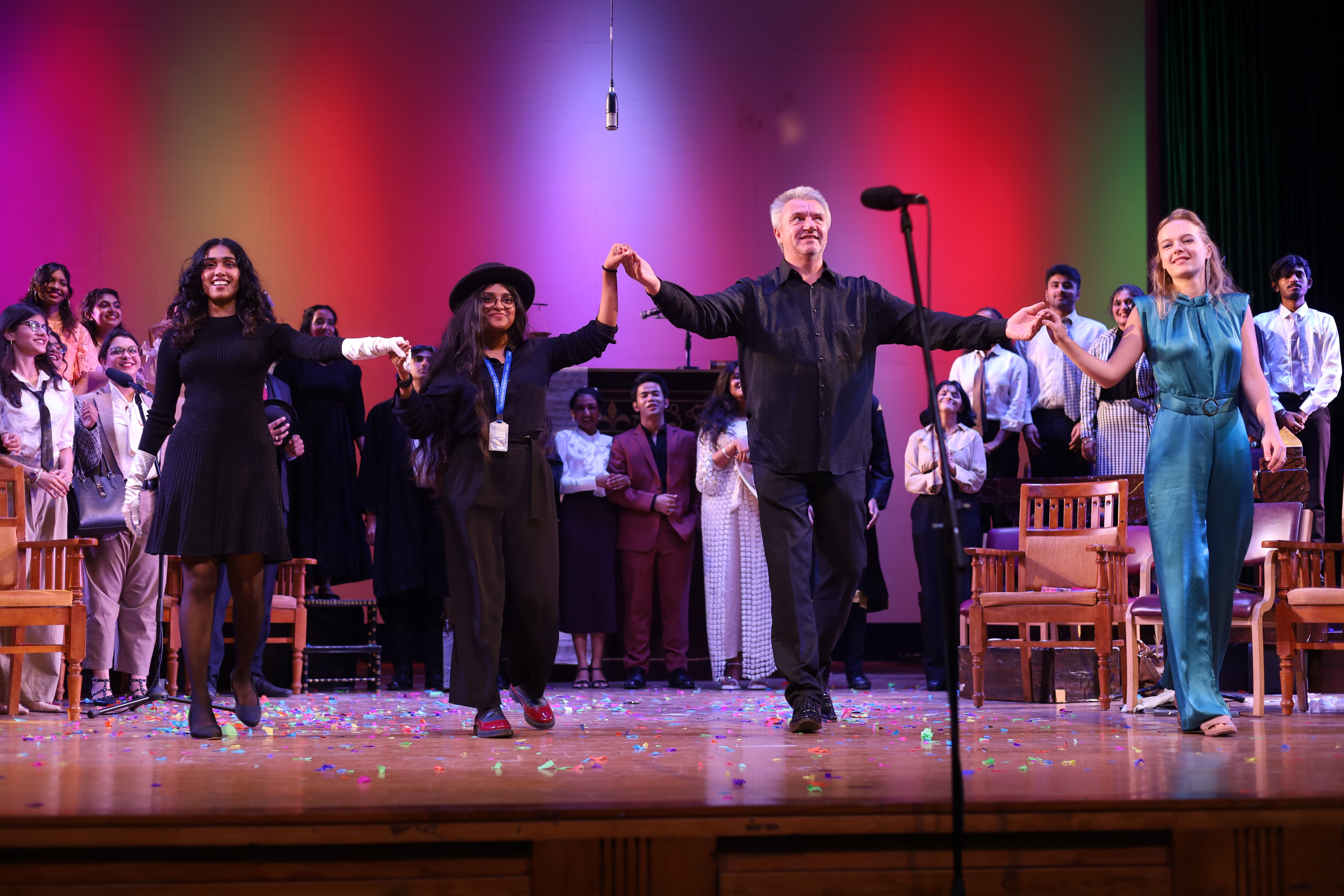
We asked Ajna Sultana, of the Theatre department, to direct it, and she agreed to considerably more than the word “director” usually covers. She built the production’s visual world: sets, the props workshop, costumes, and the poster and print material that went on to do all the selling. A music department can prepare an opera. It cannot, on its own, put one on a stage and make it look like it belongs there.
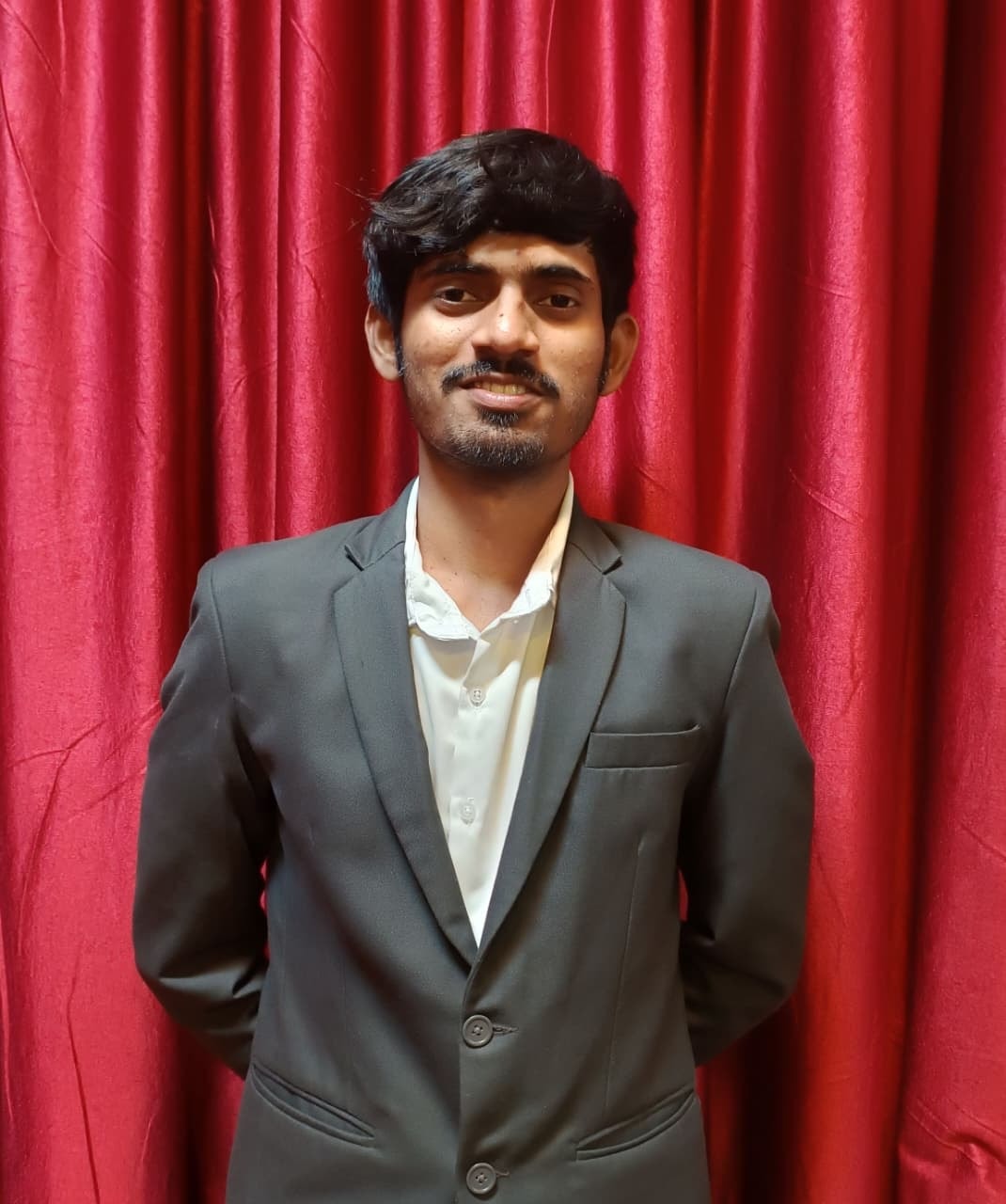
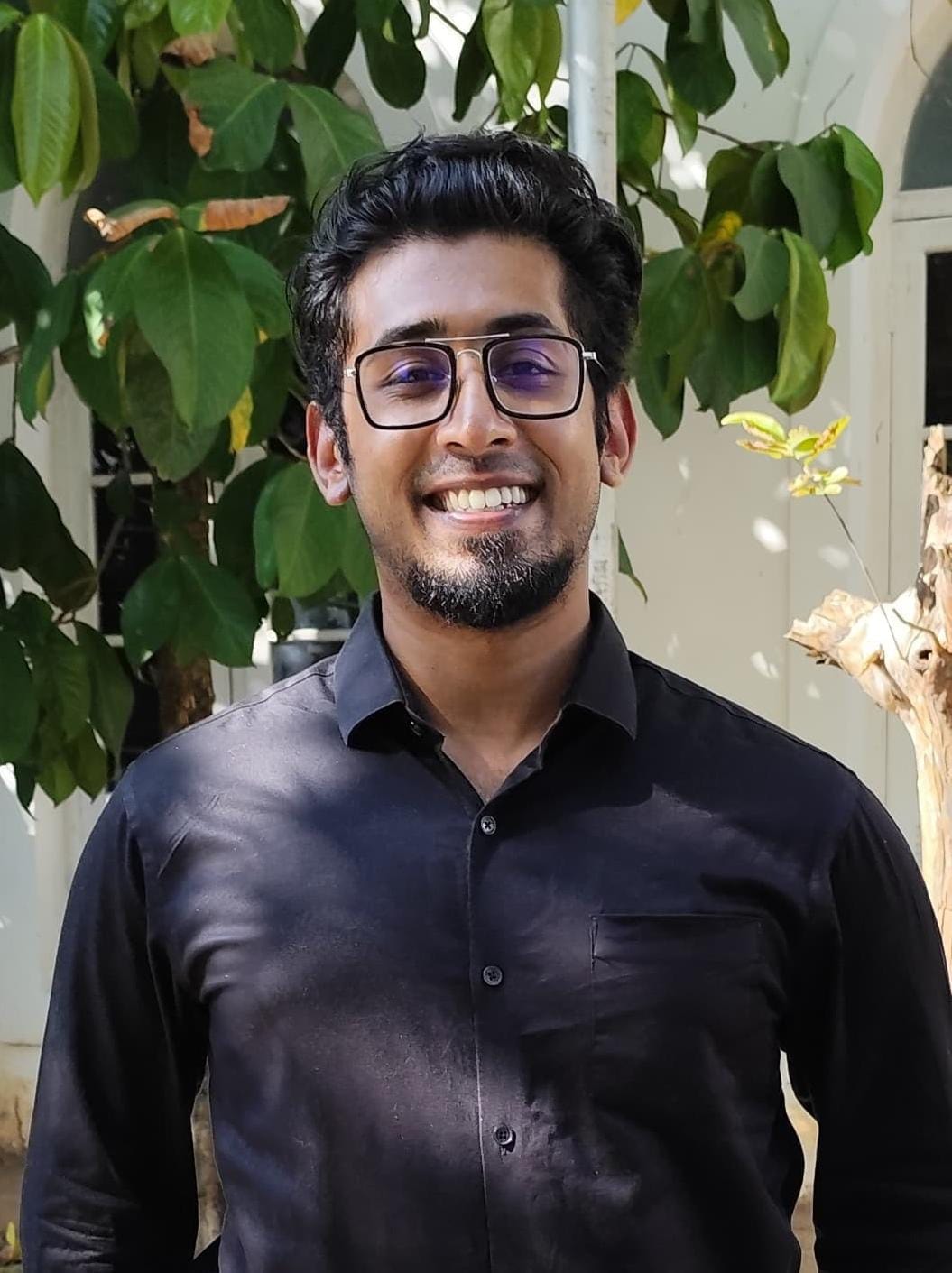
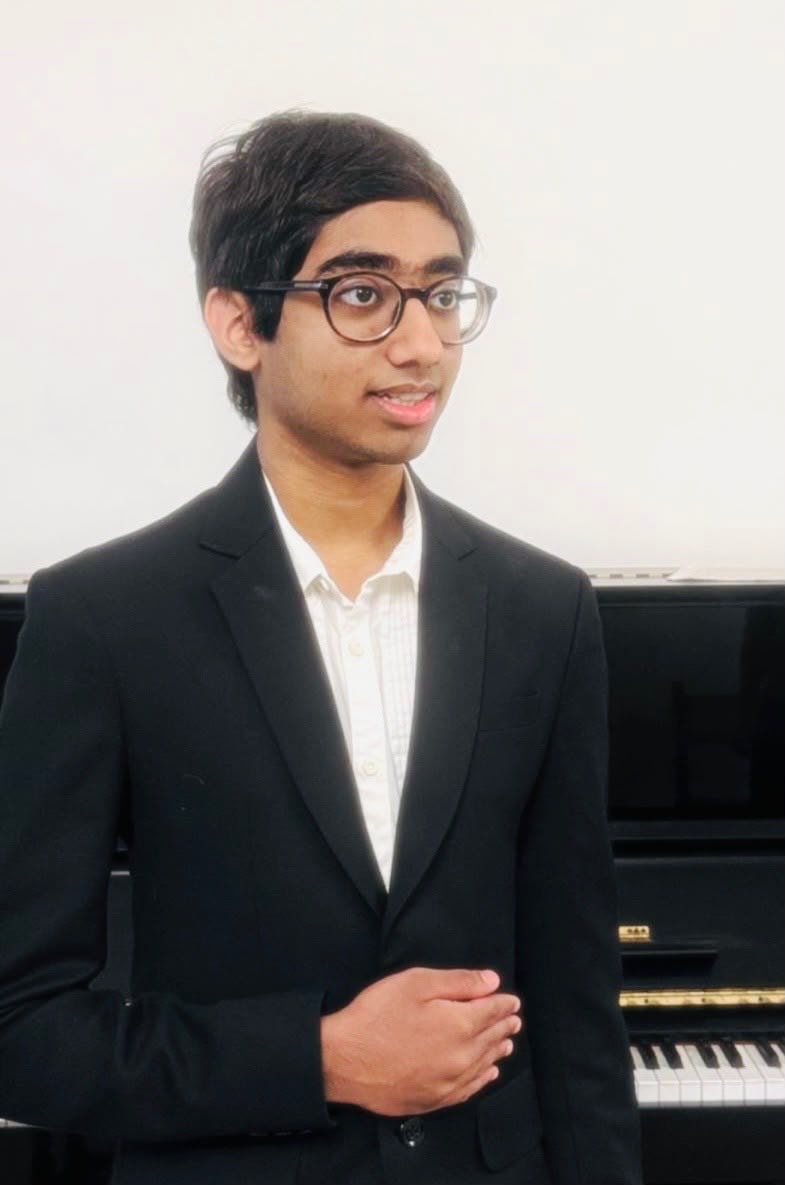
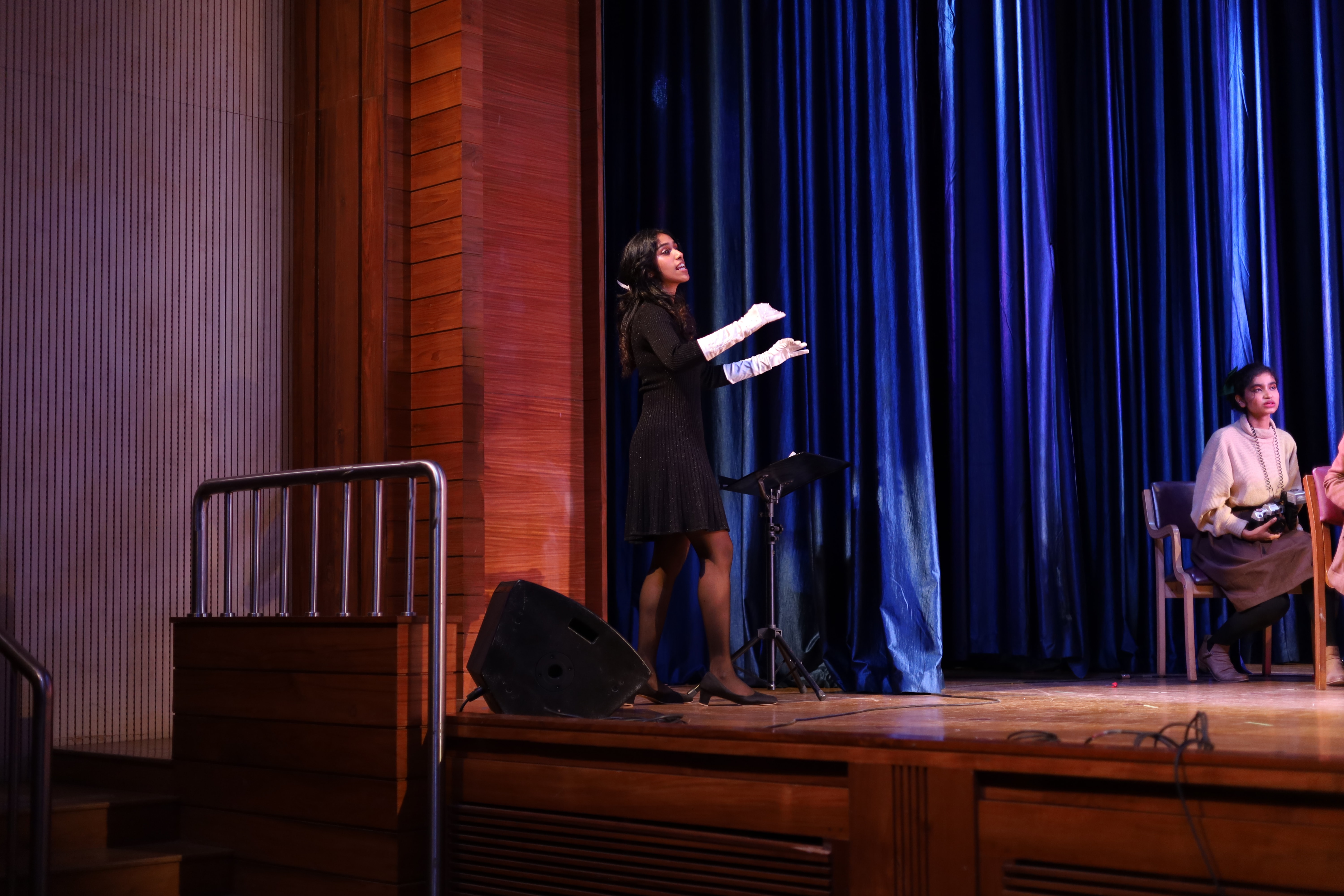
I took the production as Artistic Director. Anastasiya Yafimava was at the piano, and the chorus was prepared and conducted by Vrinda Vinod, at that point still a student in the department.
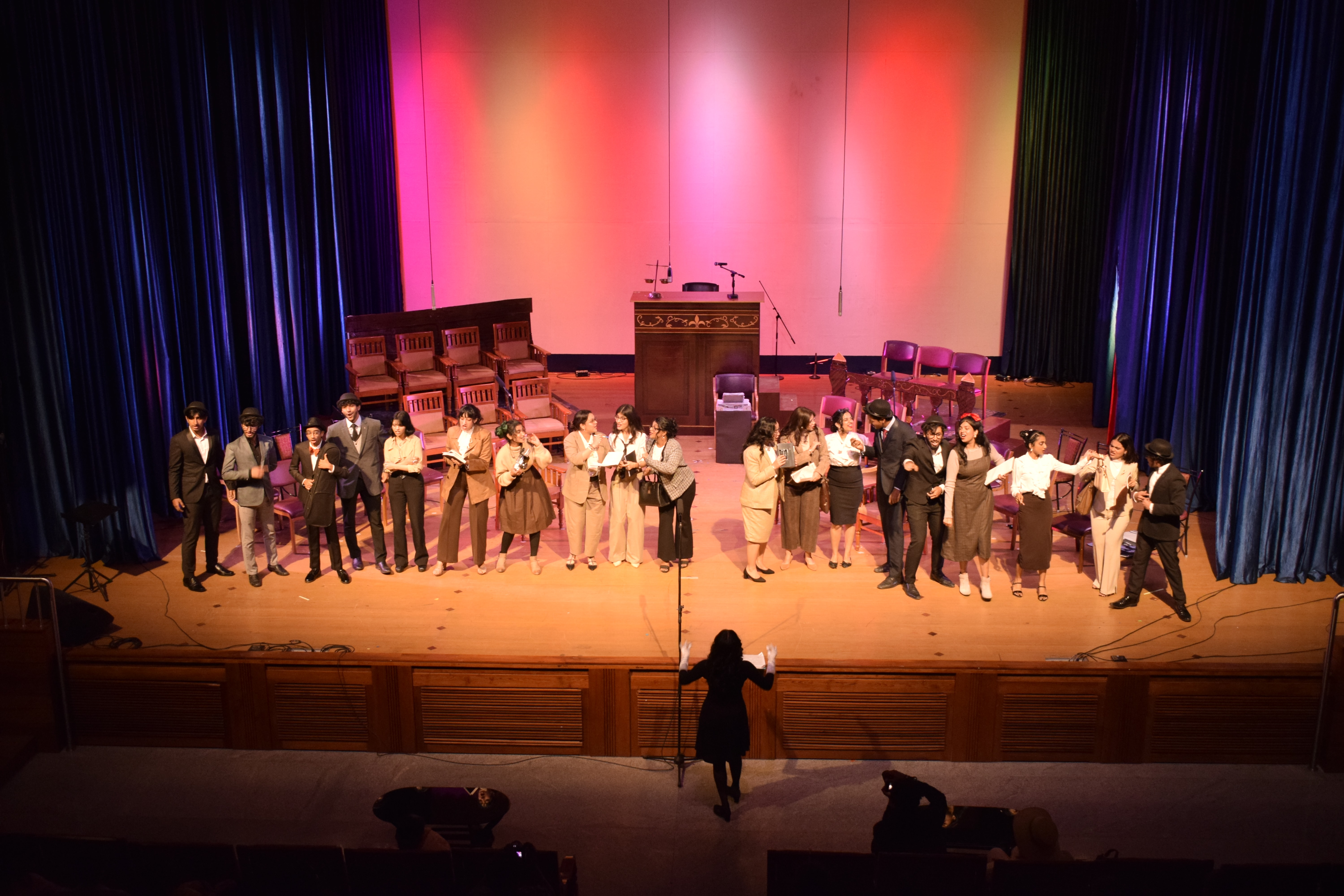
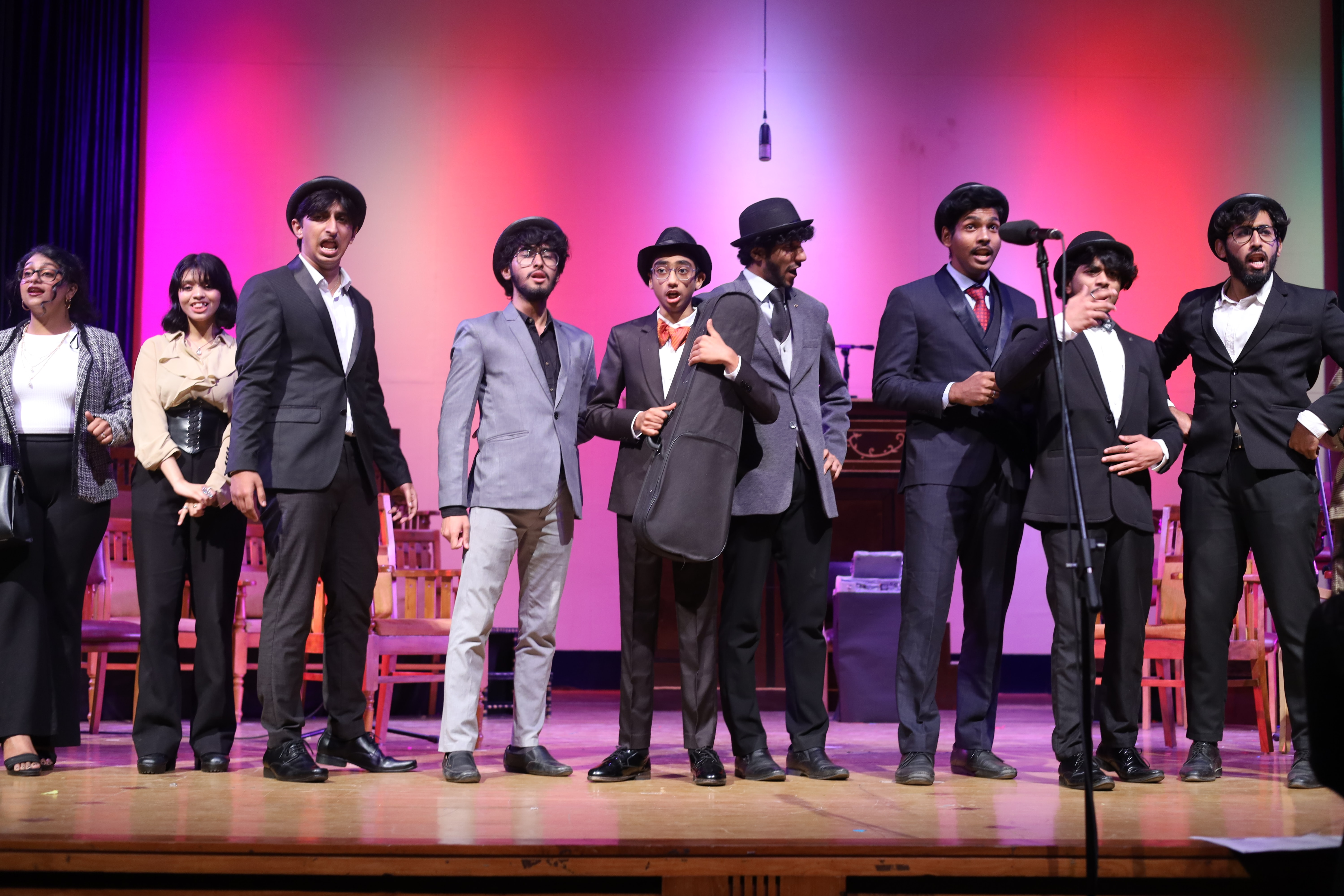
That last fact deserves more than a clause. A student conductor on a full opera is not a symbolic appointment; the chorus in Trial by Jury carries most of the piece’s architecture, and the conductor is the only person who can hold twenty singers and a piano to the same beat while a comedy is happening in front of them. She held it. Twice, and then a third time.
The case of Angelina v. Edwin
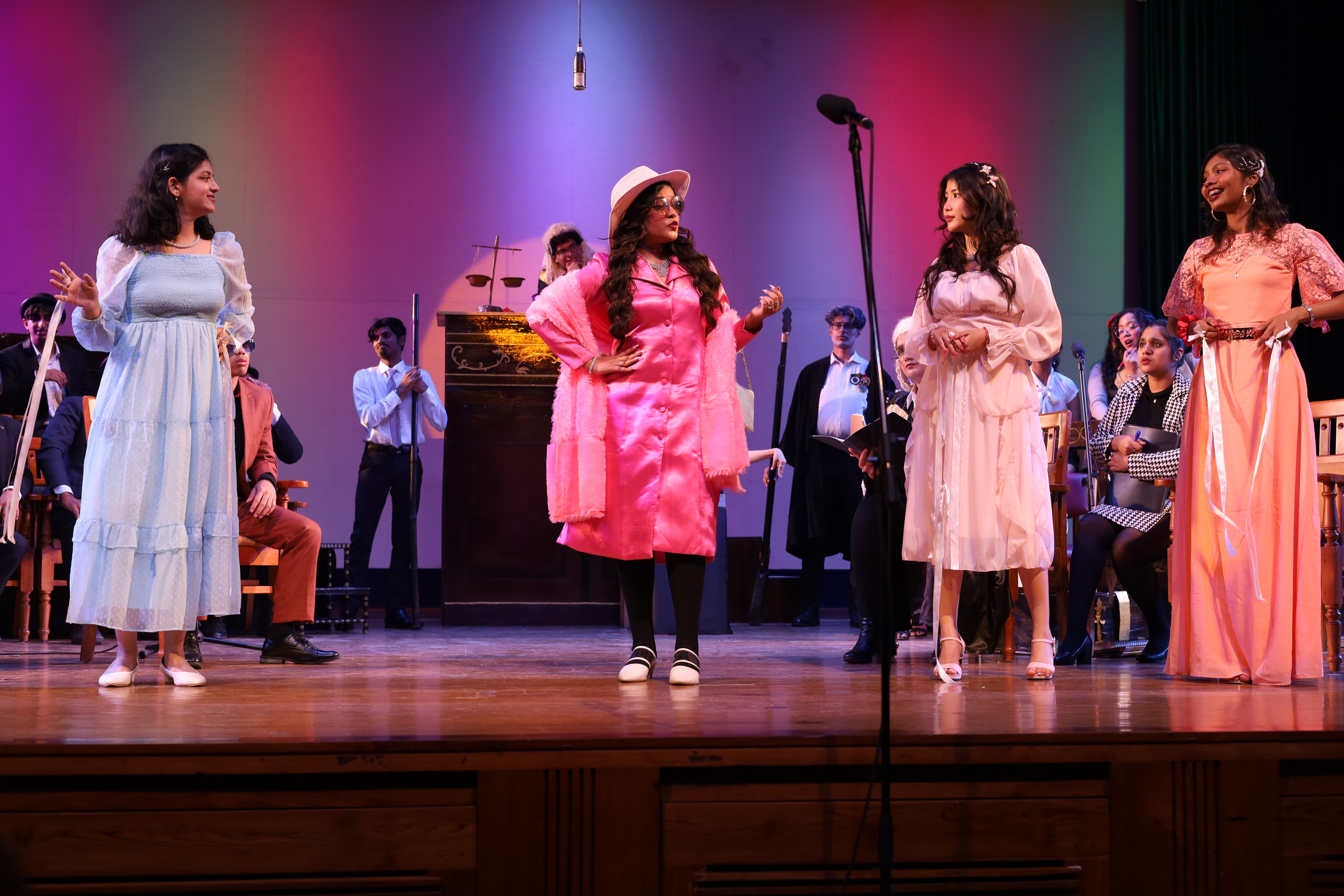
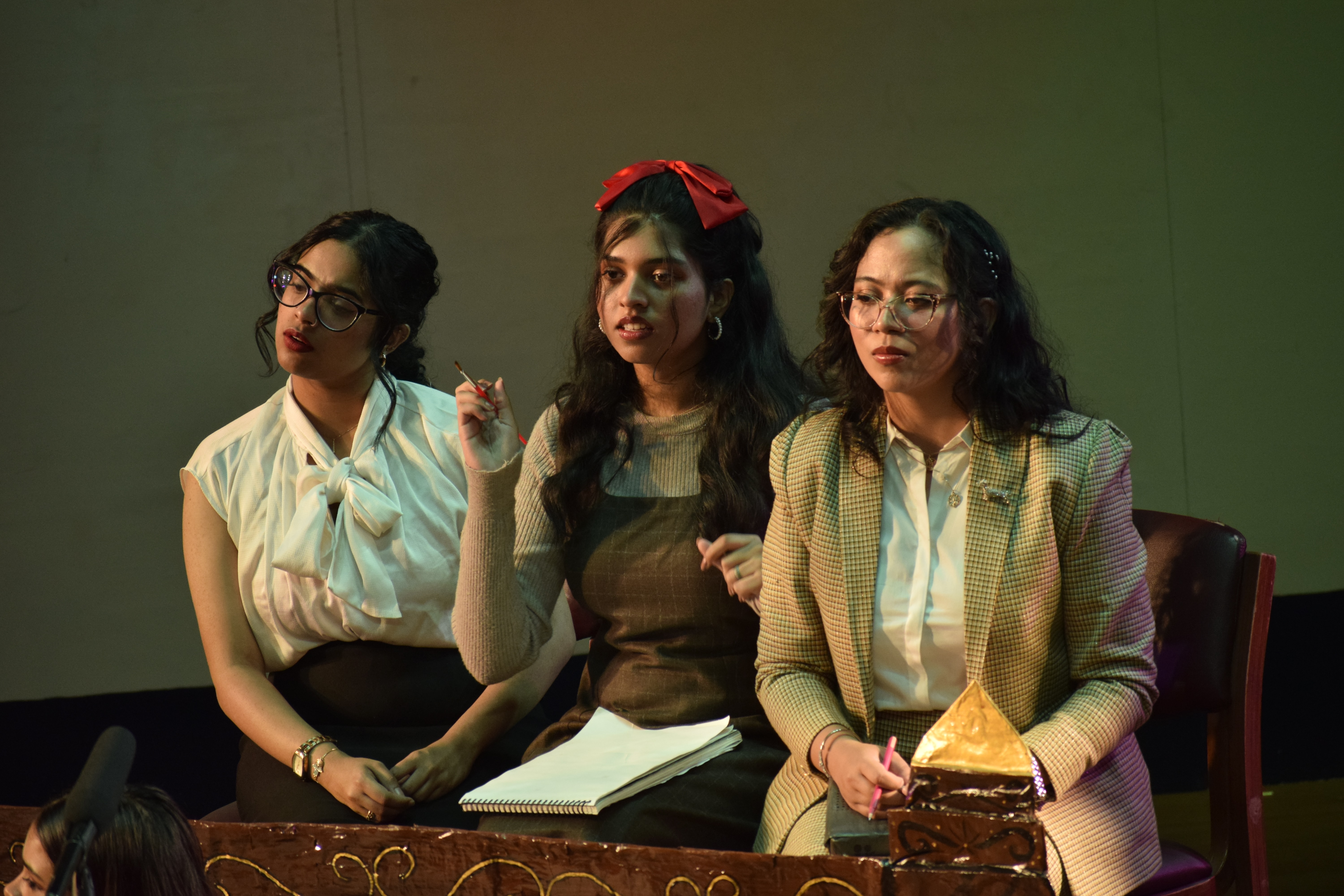
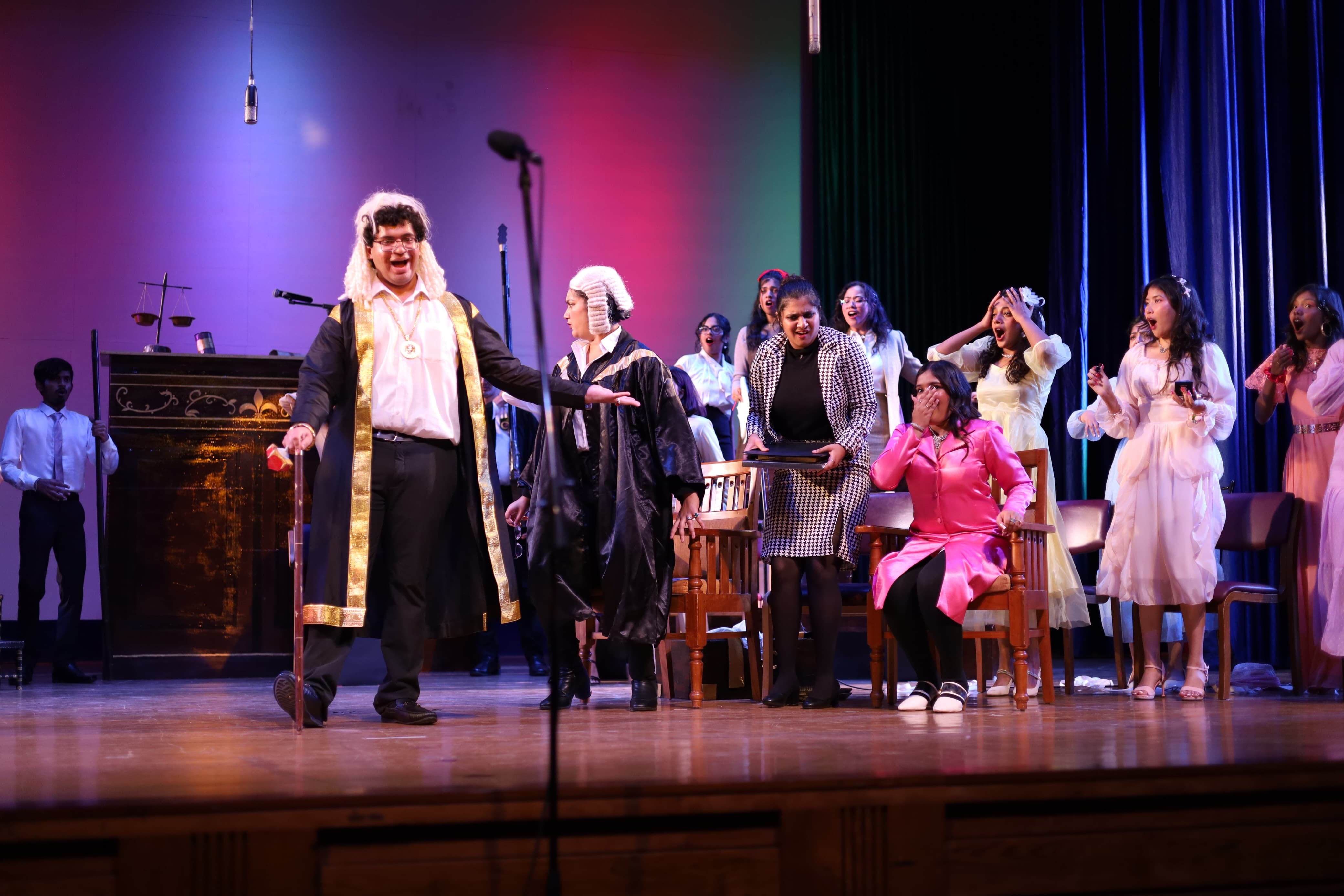
Sullivan and Gilbert’s Trial by Jury runs about forty minutes and takes place entirely in a courtroom.
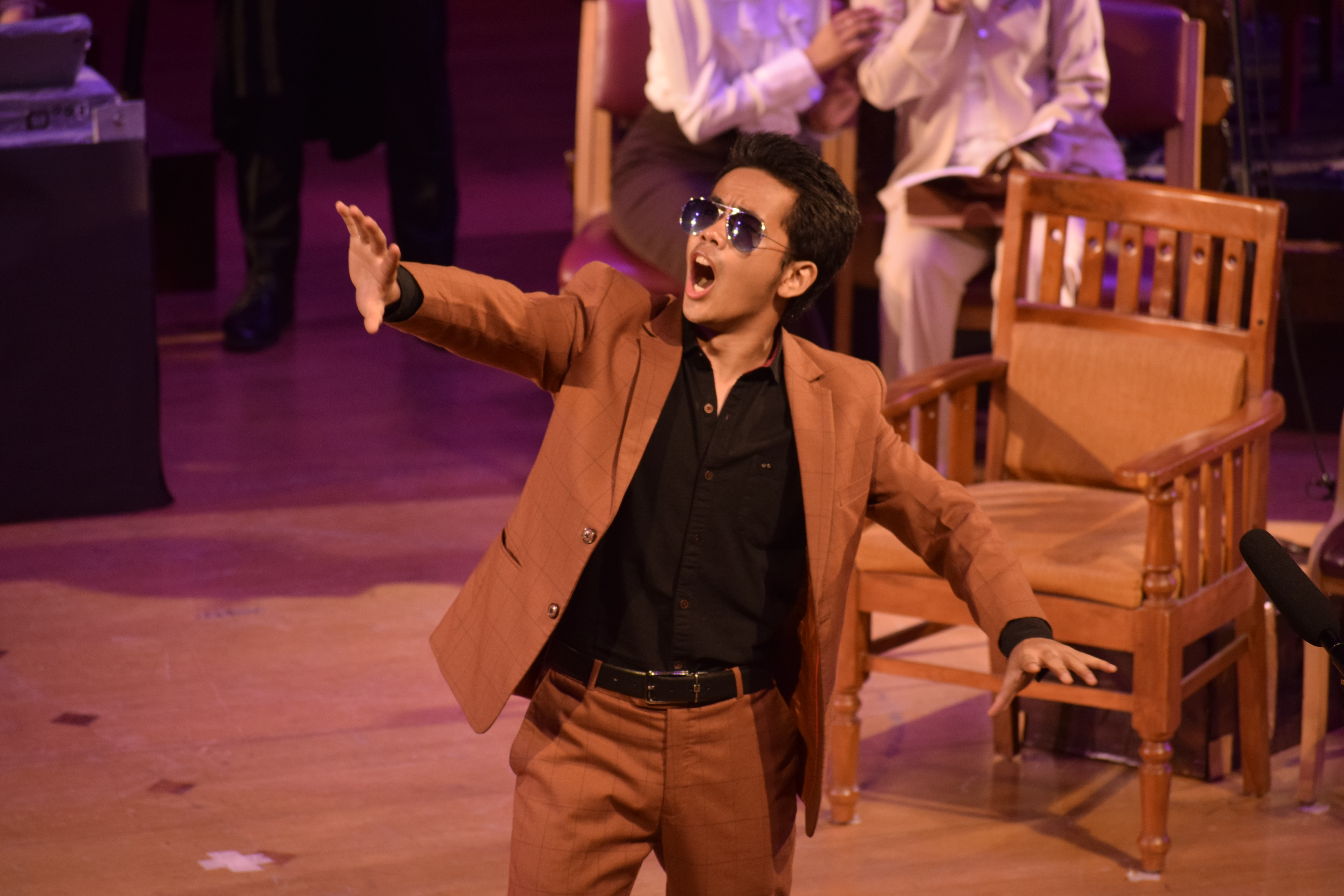
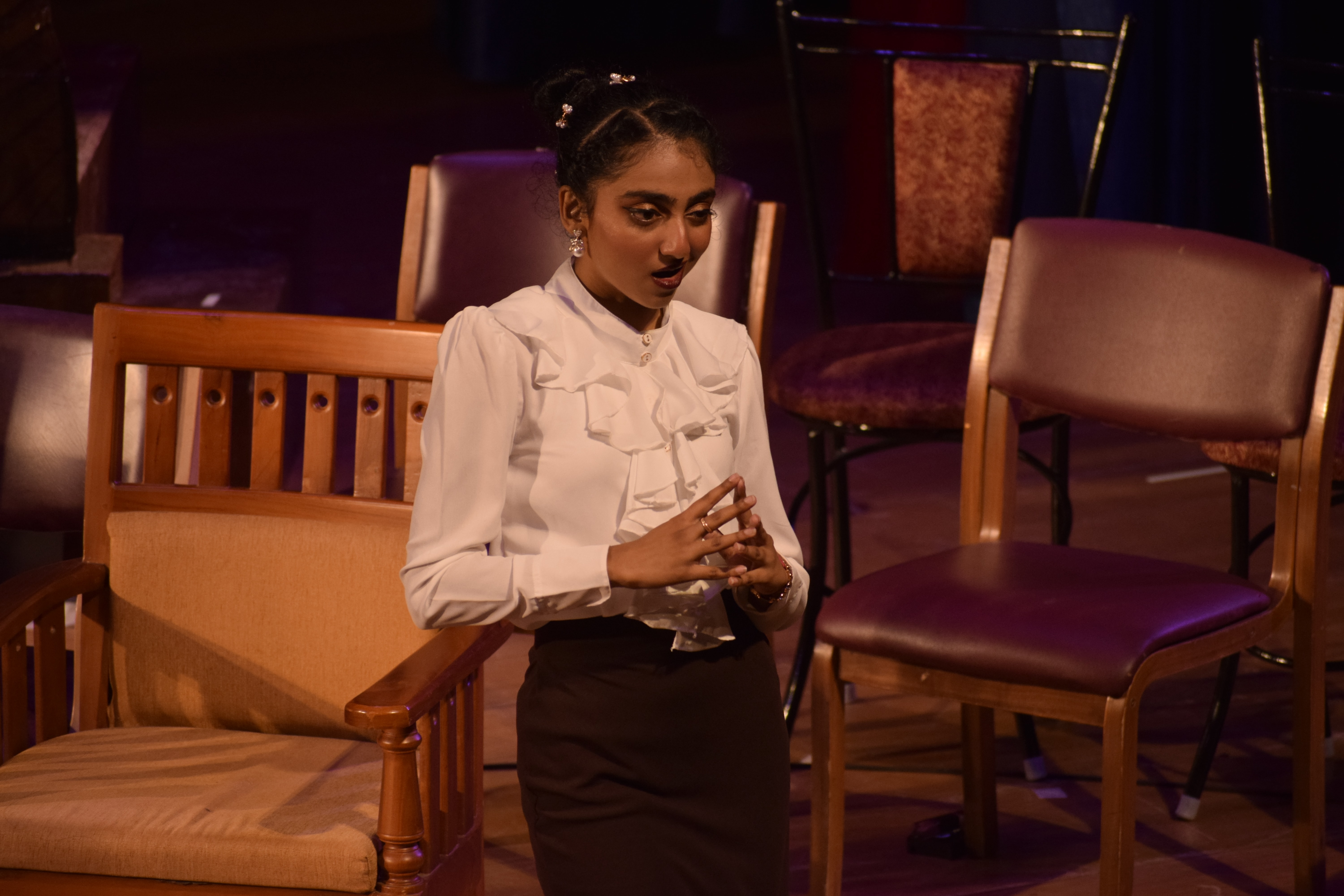
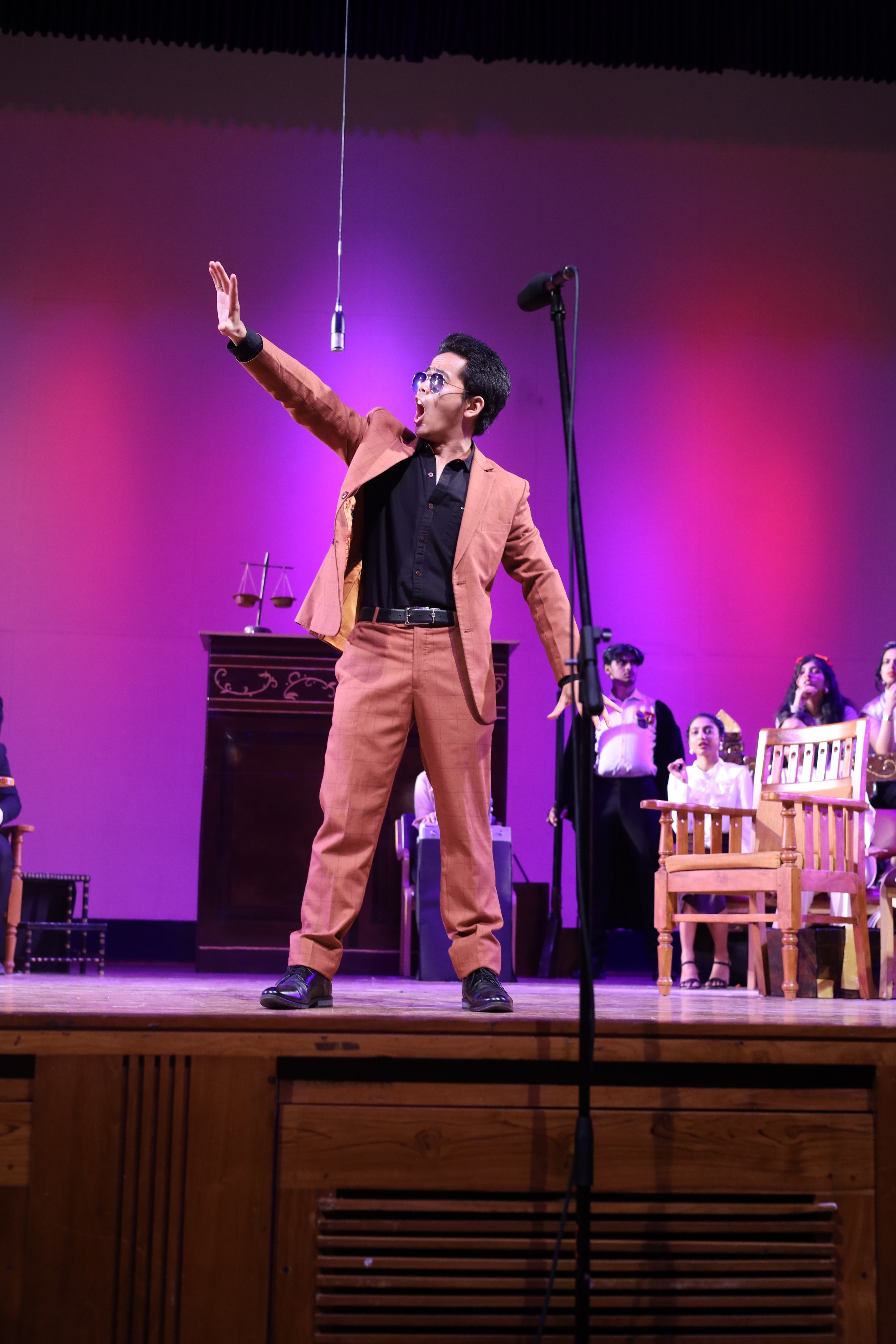
Angelina is suing Edwin for breach of promise — a real Victorian action, brought when a proposal of marriage was treated as a binding contract and breaking it entitled the injured party to money. Edwin’s defence is that feelings change, as the moon changes, and that no one can be expected to eat breakfast all day. He offers, as a compromise, to marry both Angelina and his current partner. The court considers this seriously for slightly longer than it should.
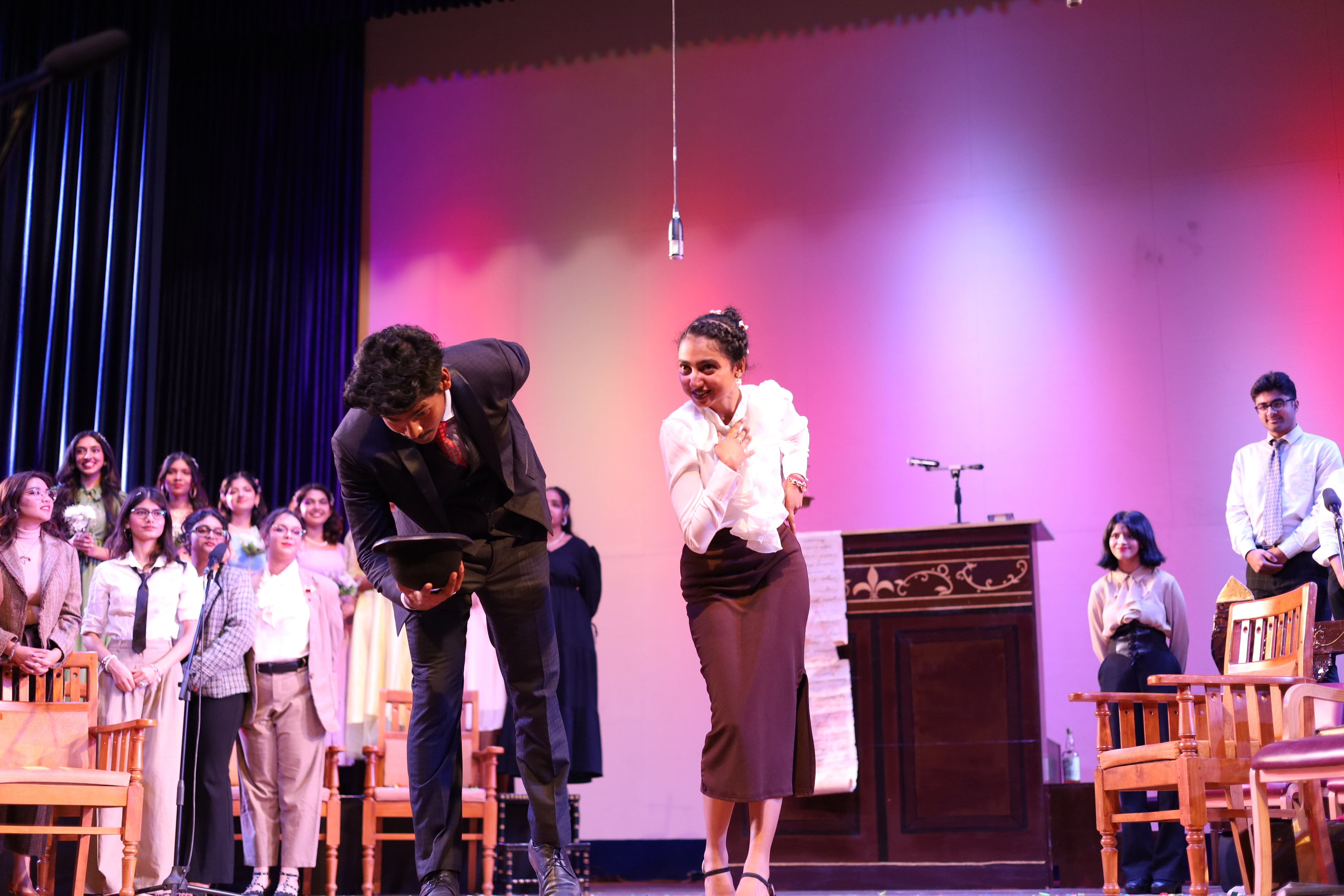
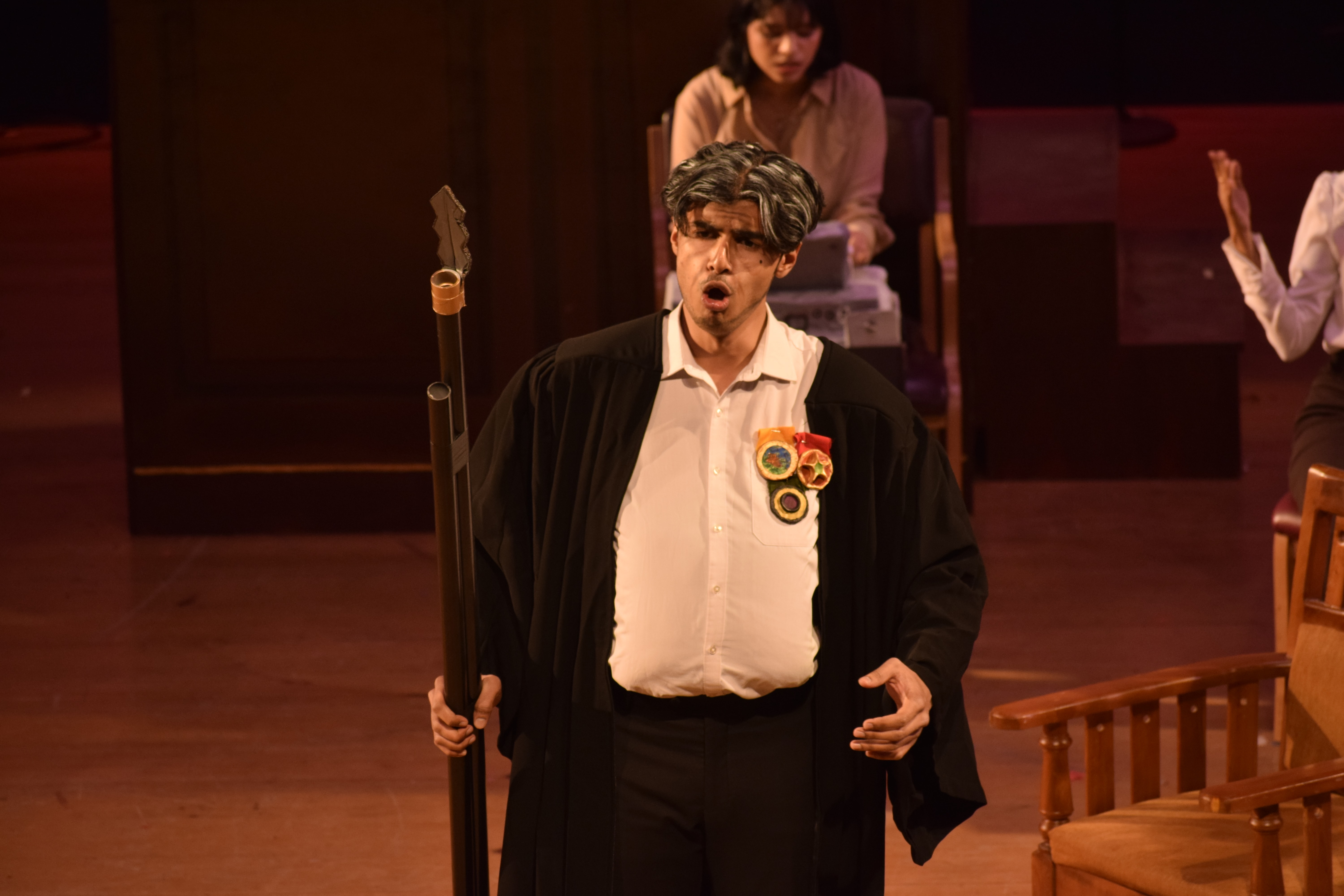
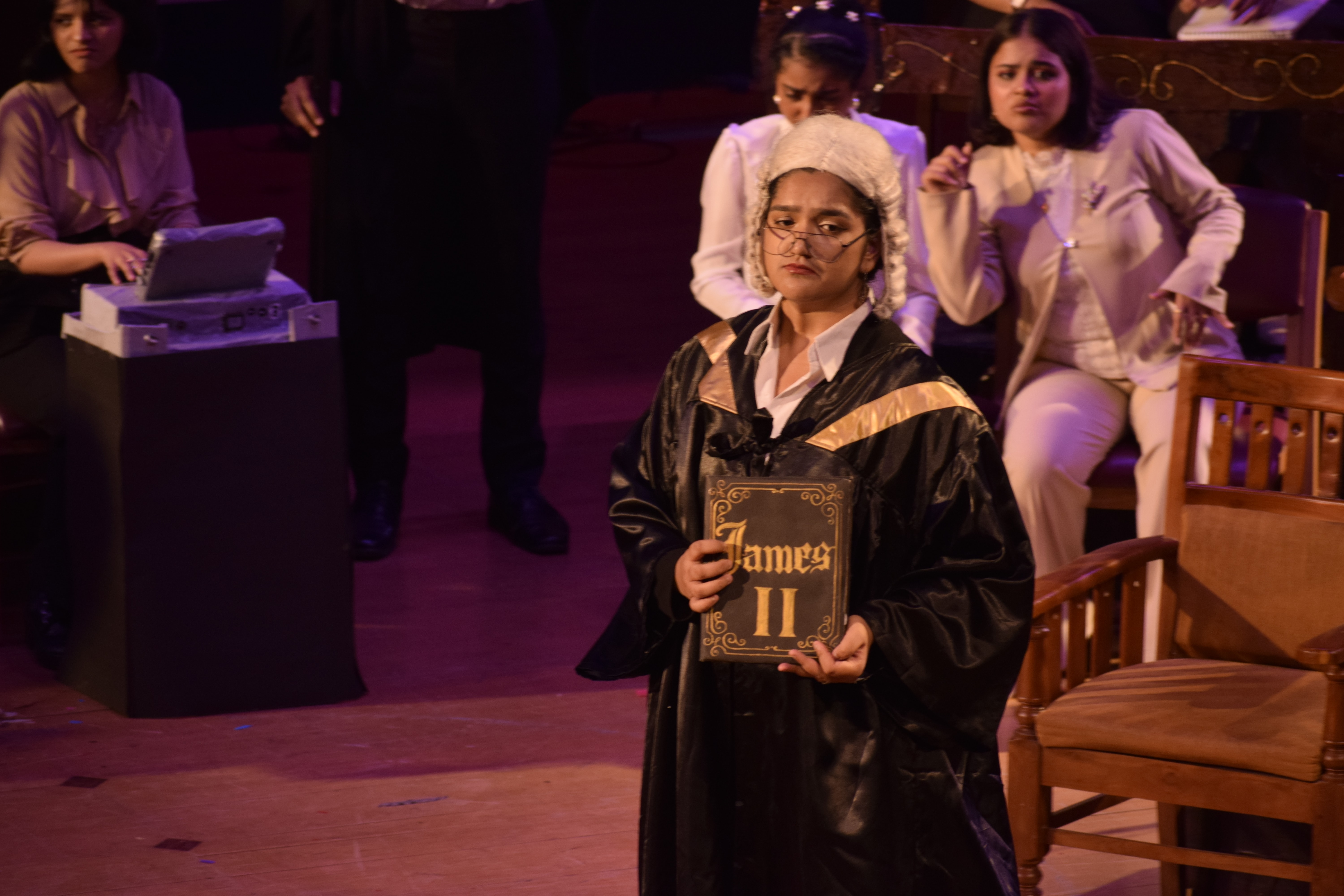
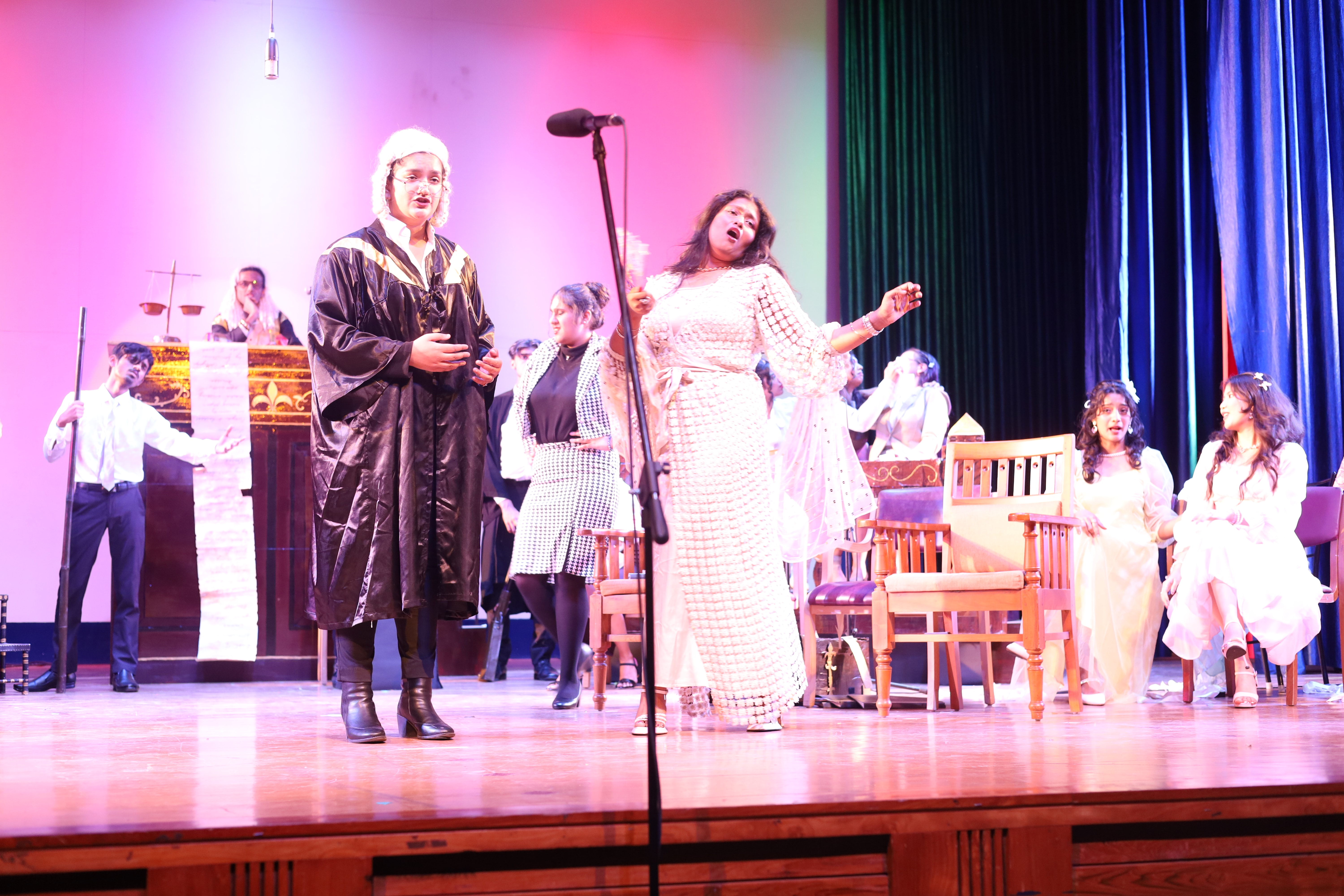
The jury is against him before he opens his mouth. The Usher instructs everyone to be free of bias and then instructs them, at some length, to sympathise with the beautiful plaintiff. The Judge arrives, is praised, agrees that he deserves the praise, and explains how he reached the bench by flattering the right people and marrying the right daughter.
The verdict, when it finally comes, is that the Judge will marry Angelina himself.
Gilbert wrote it in 1875 as a joke about the courts. It survives because the joke is not really about the courts.
Two characters who were not in the libretto
Here is where a student production earns the right to be called a production rather than a performance of a score.
We added two people to the cast list who do not exist in Gilbert’s text.
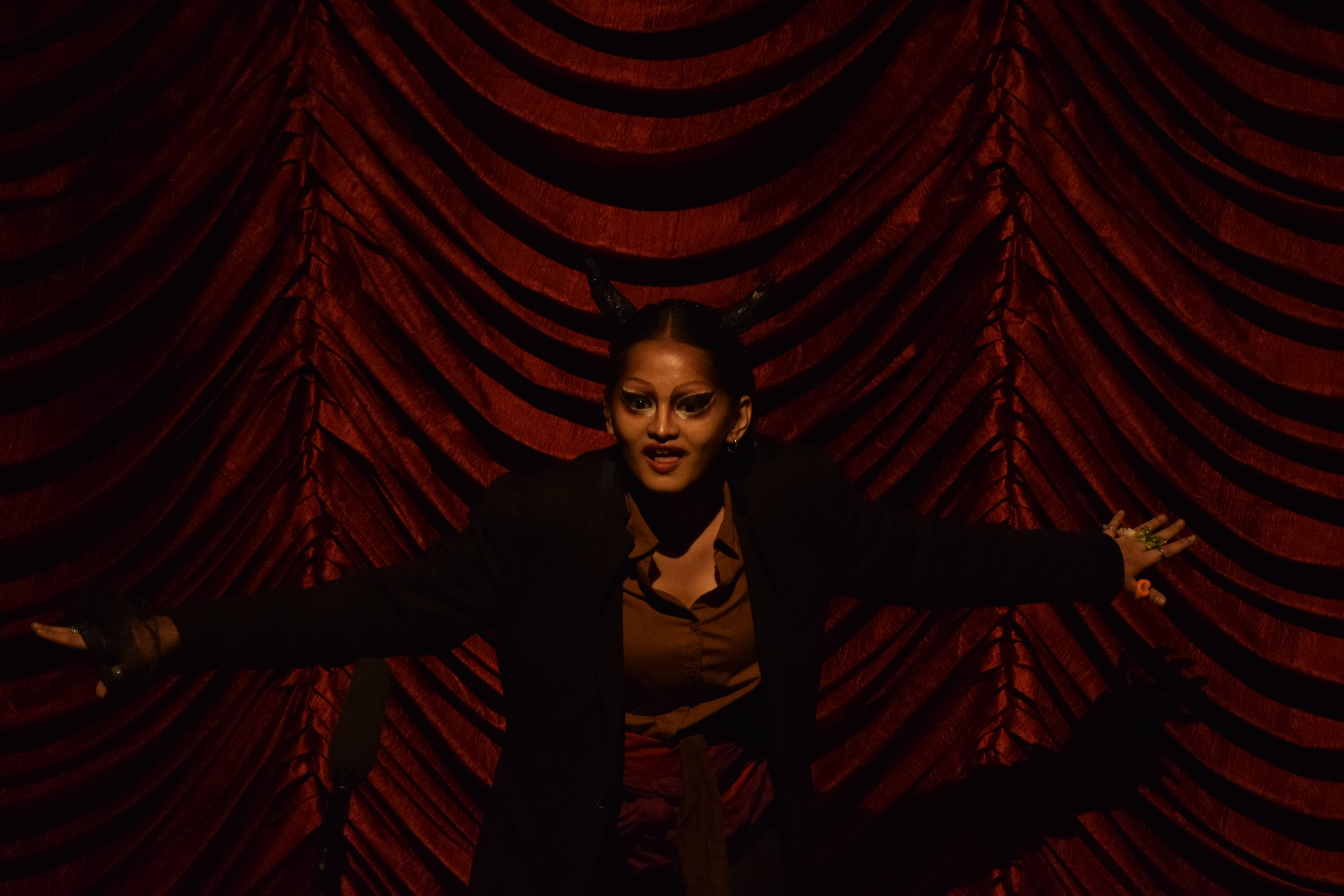
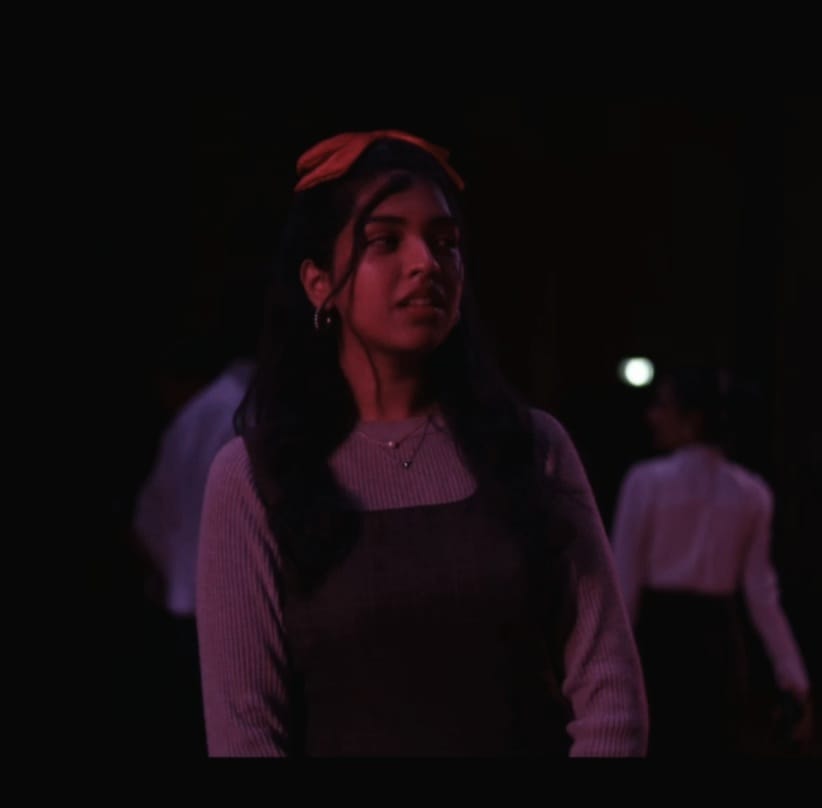
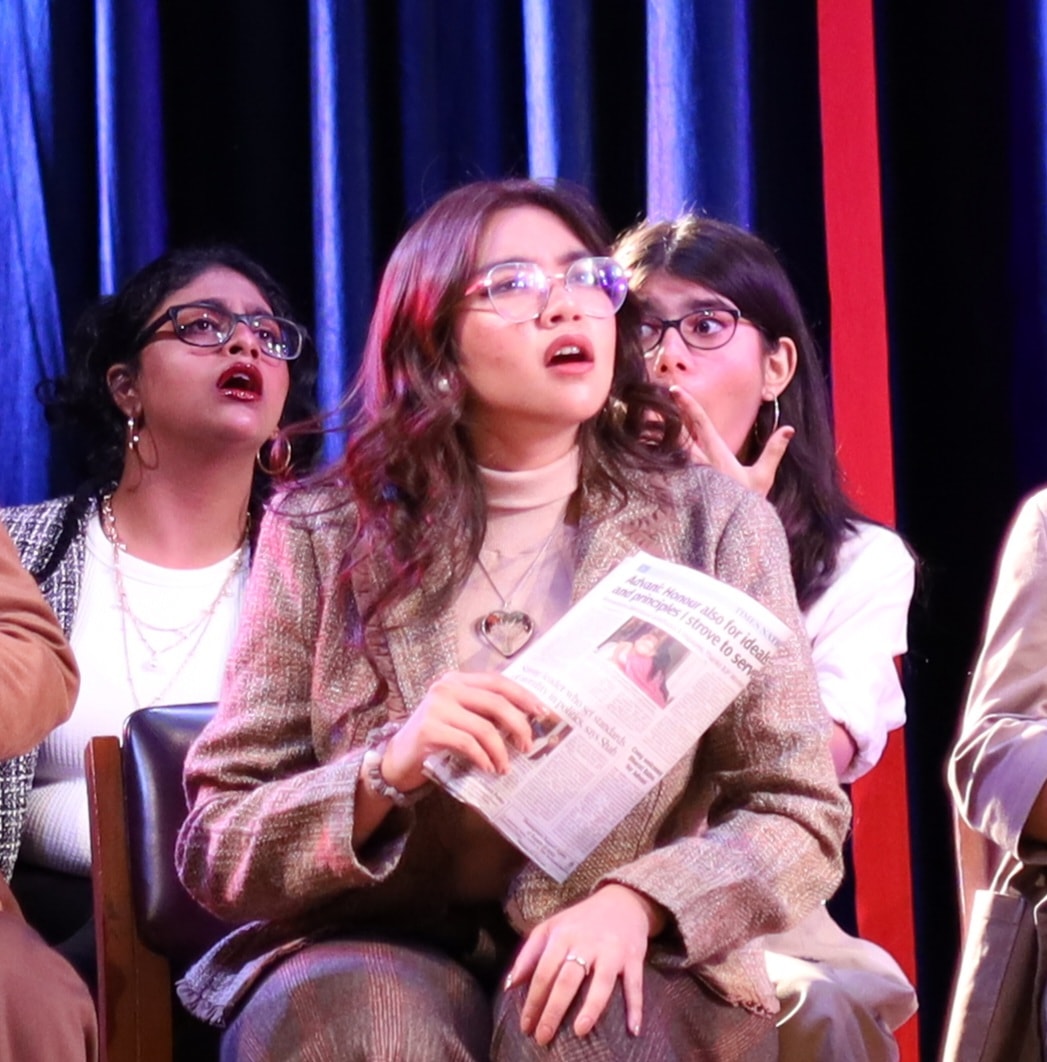
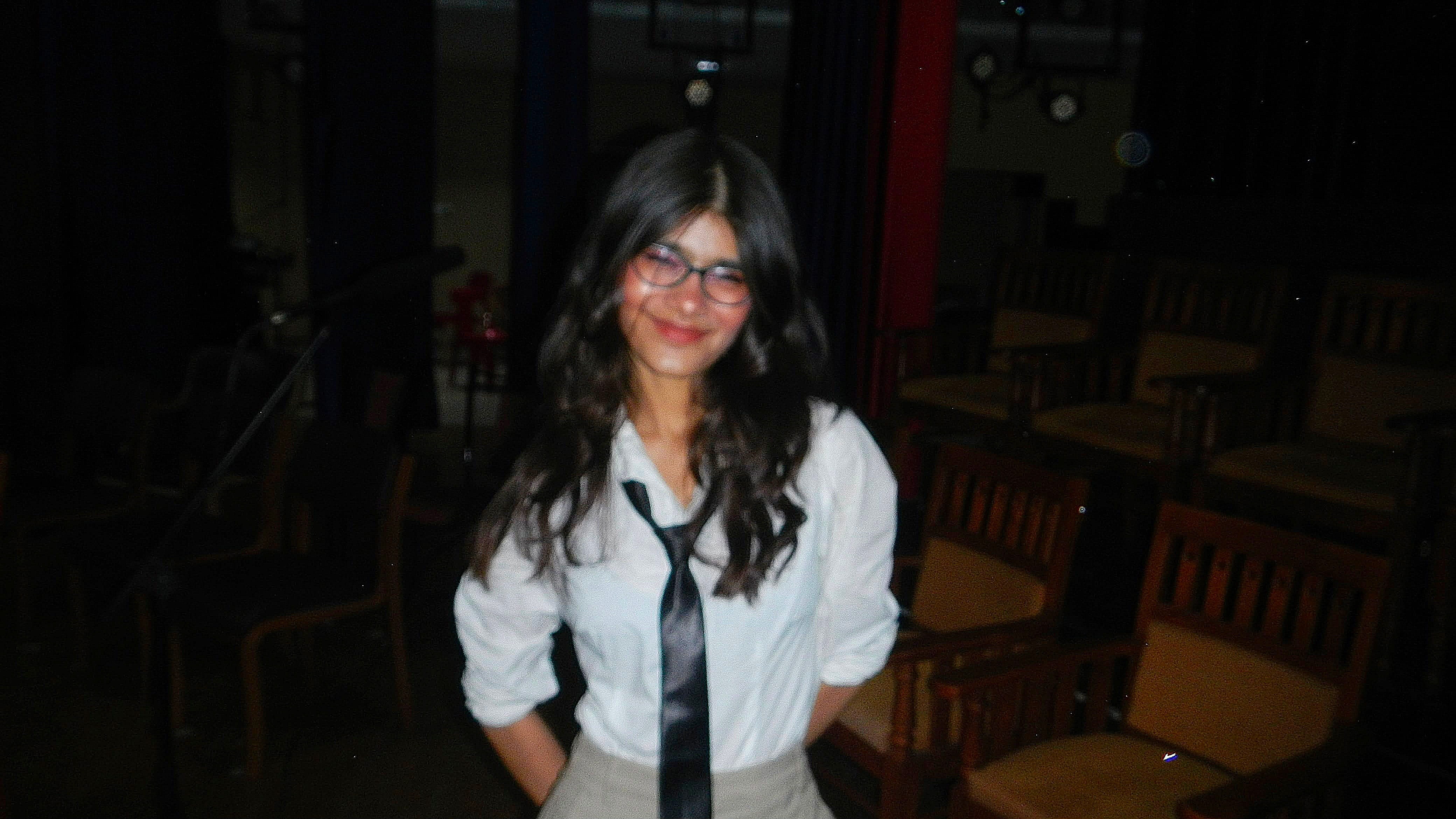
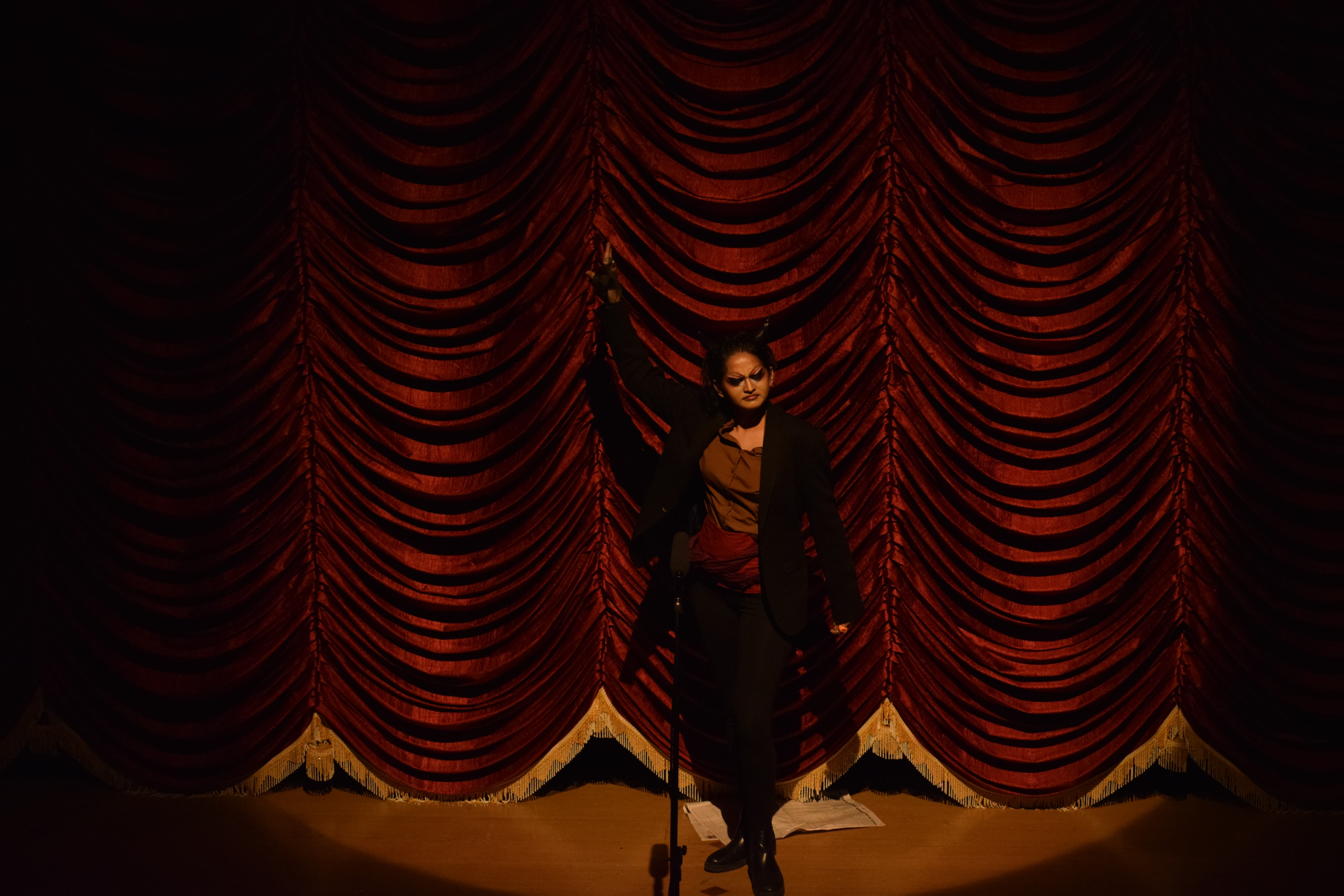
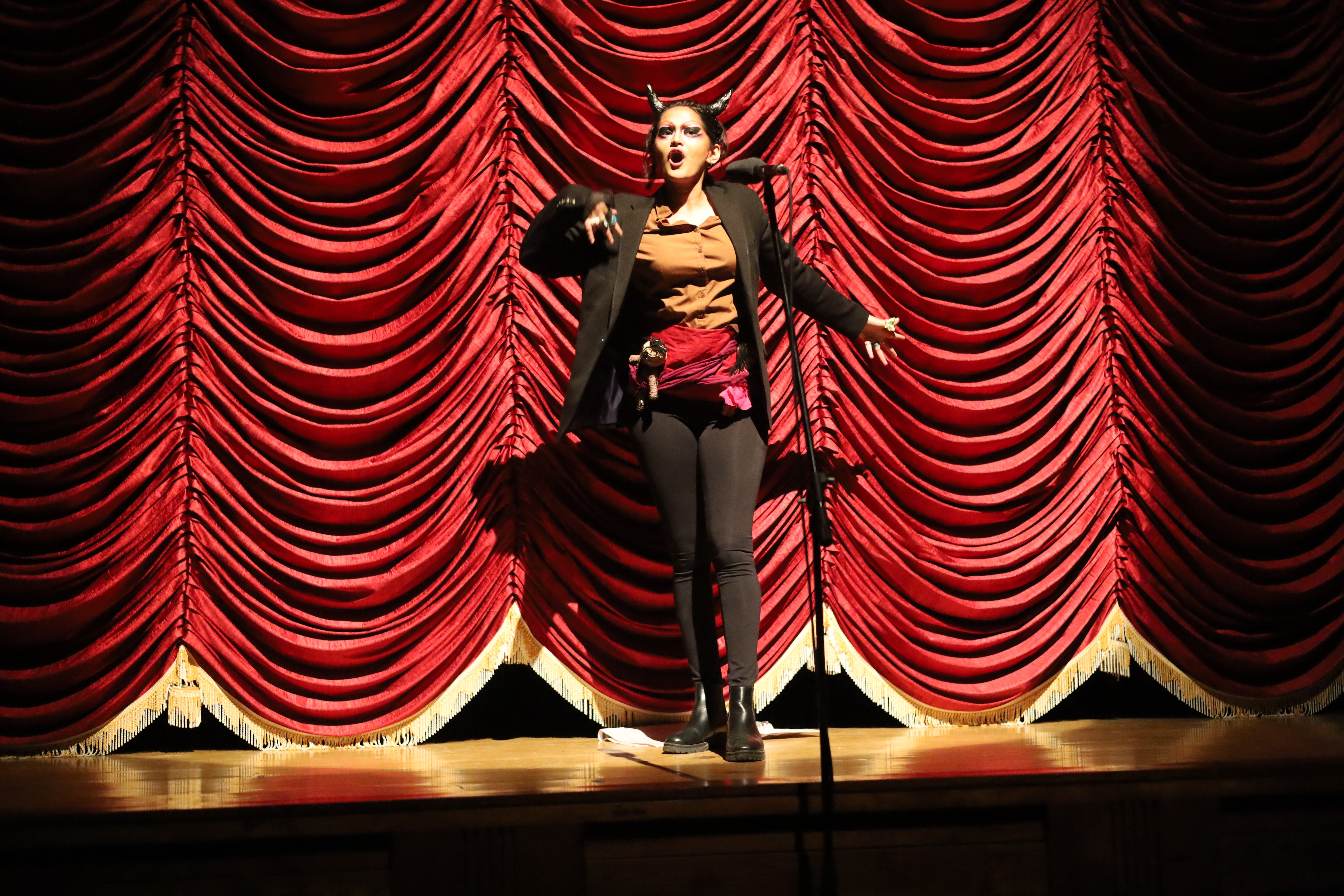
The first was a Demon, played by Trisha Purohit, then a first-year student of the Theatre department. It opened the evening. Before a note of the trial had been sung, it told the audience — in its own comic register, and from a position of obvious bad faith — what had happened between these two people before anybody thought of going to court.
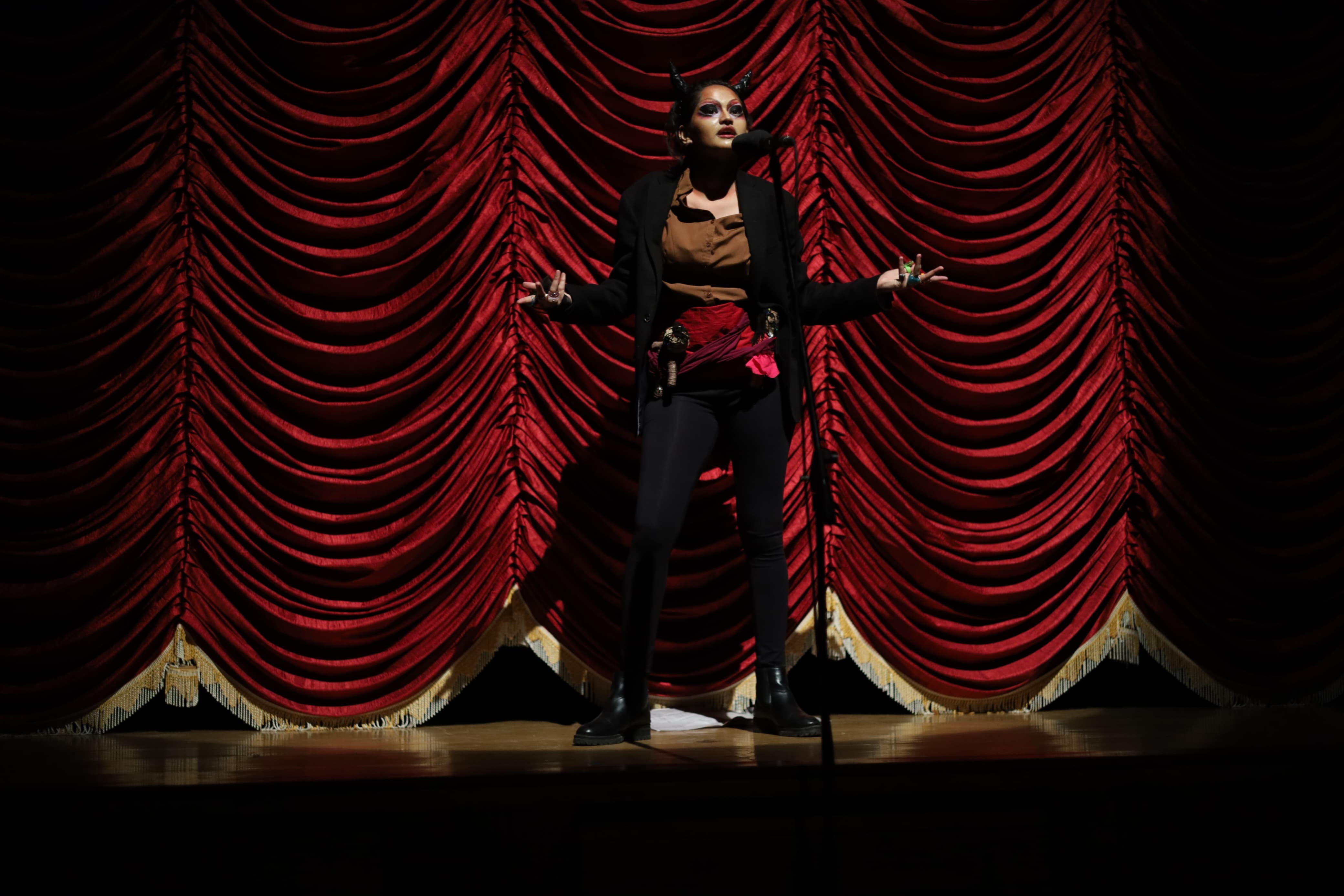
This solved a real problem. Most of the people in that hall had never seen an opera. They had a programme note, and programme notes are read in the dark by people who have already stopped reading. A character who arrives first and explains the situation while being funny about it is worth more than three paragraphs of synopsis, and it costs nothing but a minute.
The Demon’s second appearance was the reason it existed.
Near the end, it stopped the opera. The action froze, the courtroom held still, and the Demon spoke — offering the audience a way of seeing the previous forty minutes that was not simply that was amusing. Comedy used to arrive with a moral attached; that is what comedy was for, before it became a genre that only had to be funny. We wanted the audience leaving that hall thinking about something other than how loudly they had laughed.
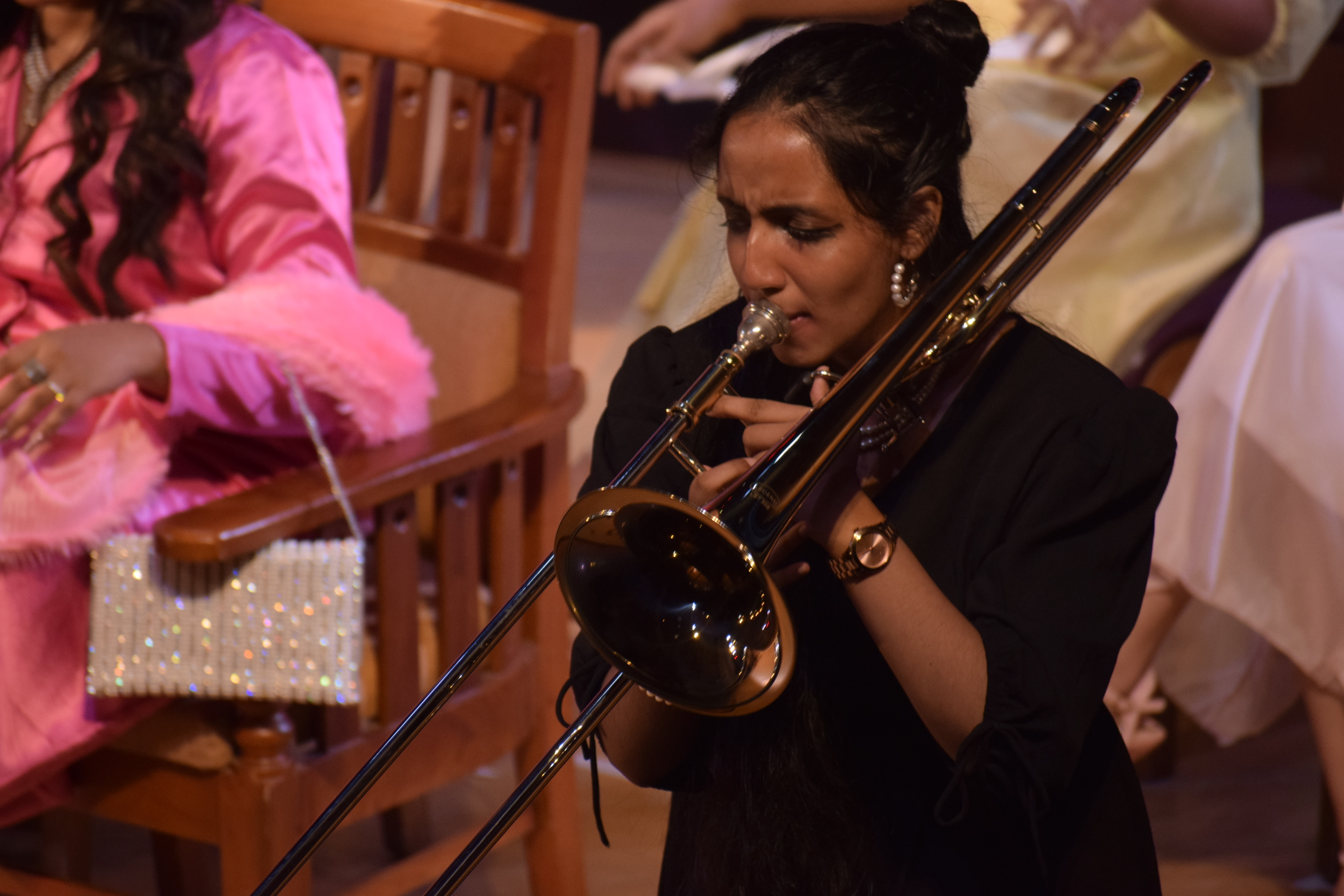
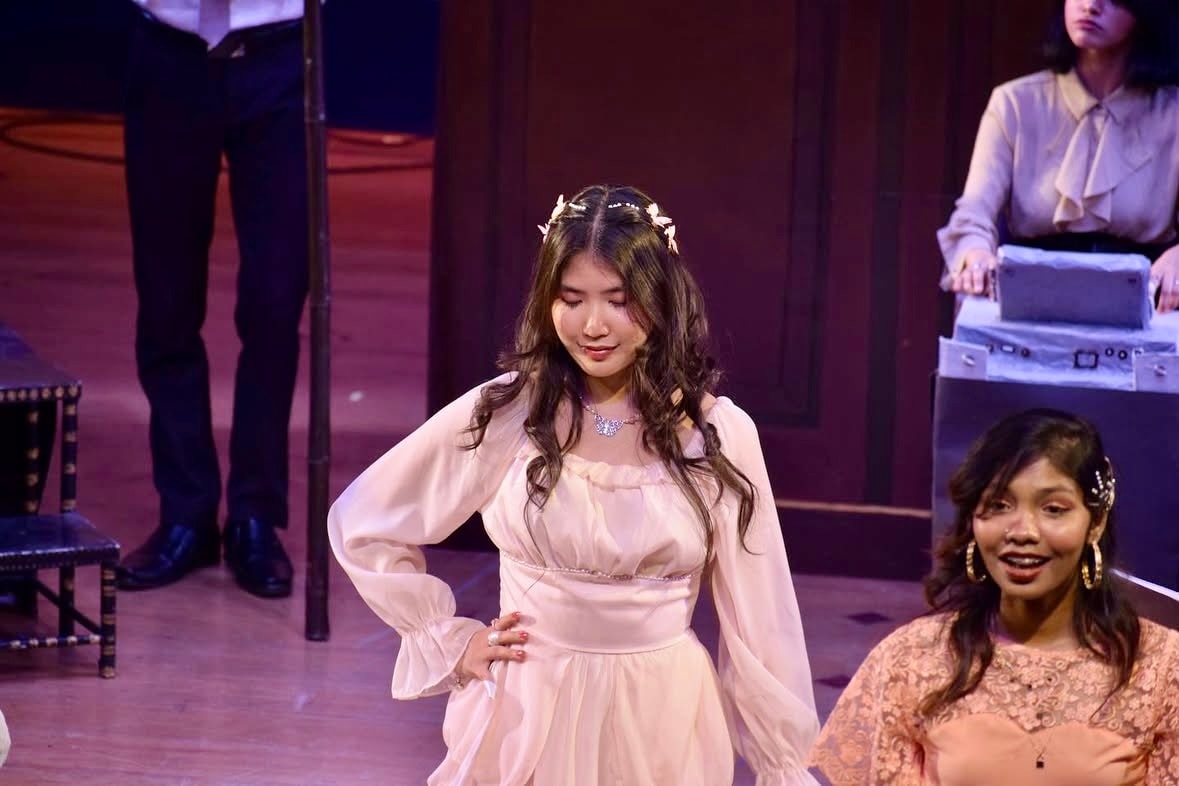
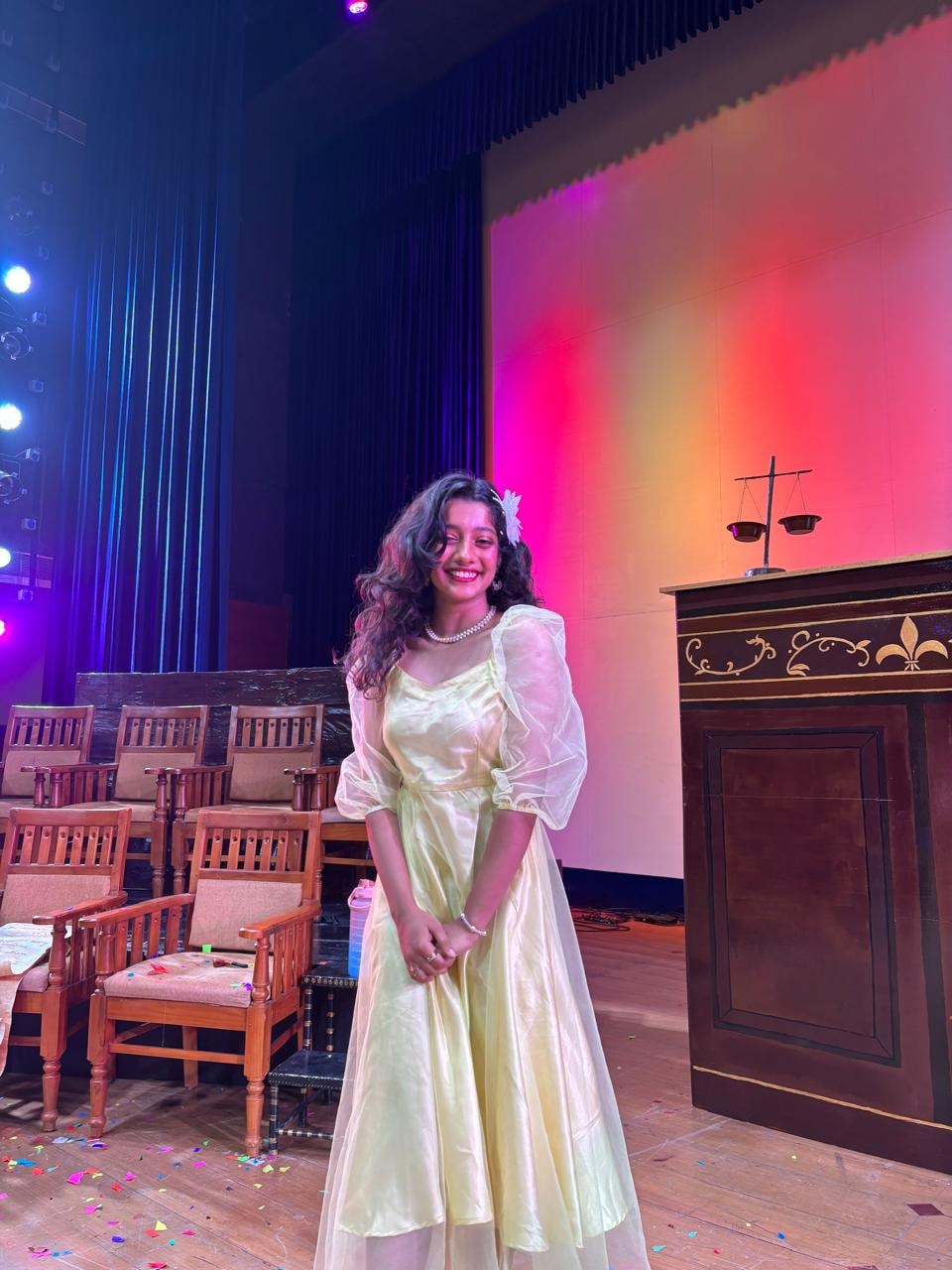
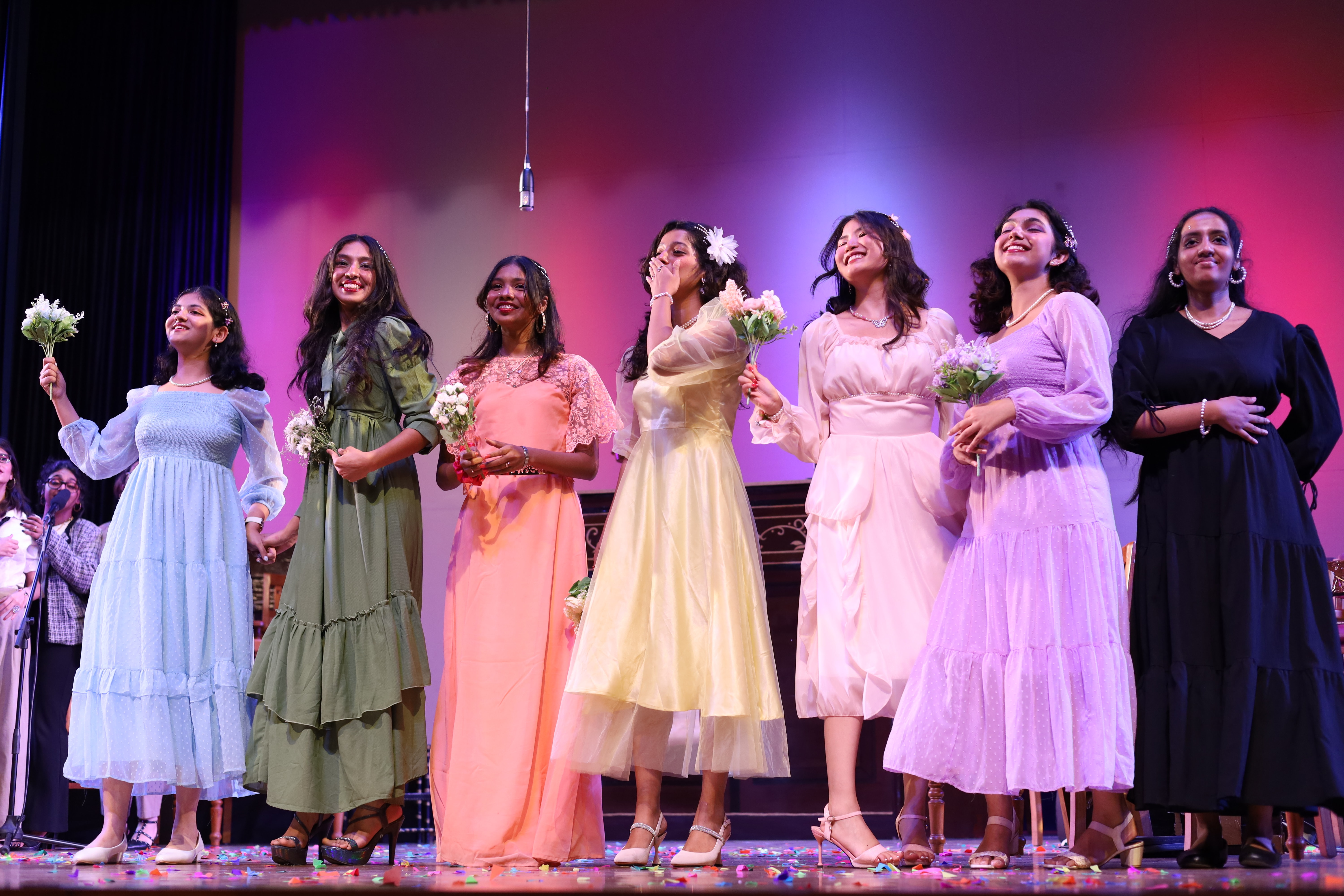
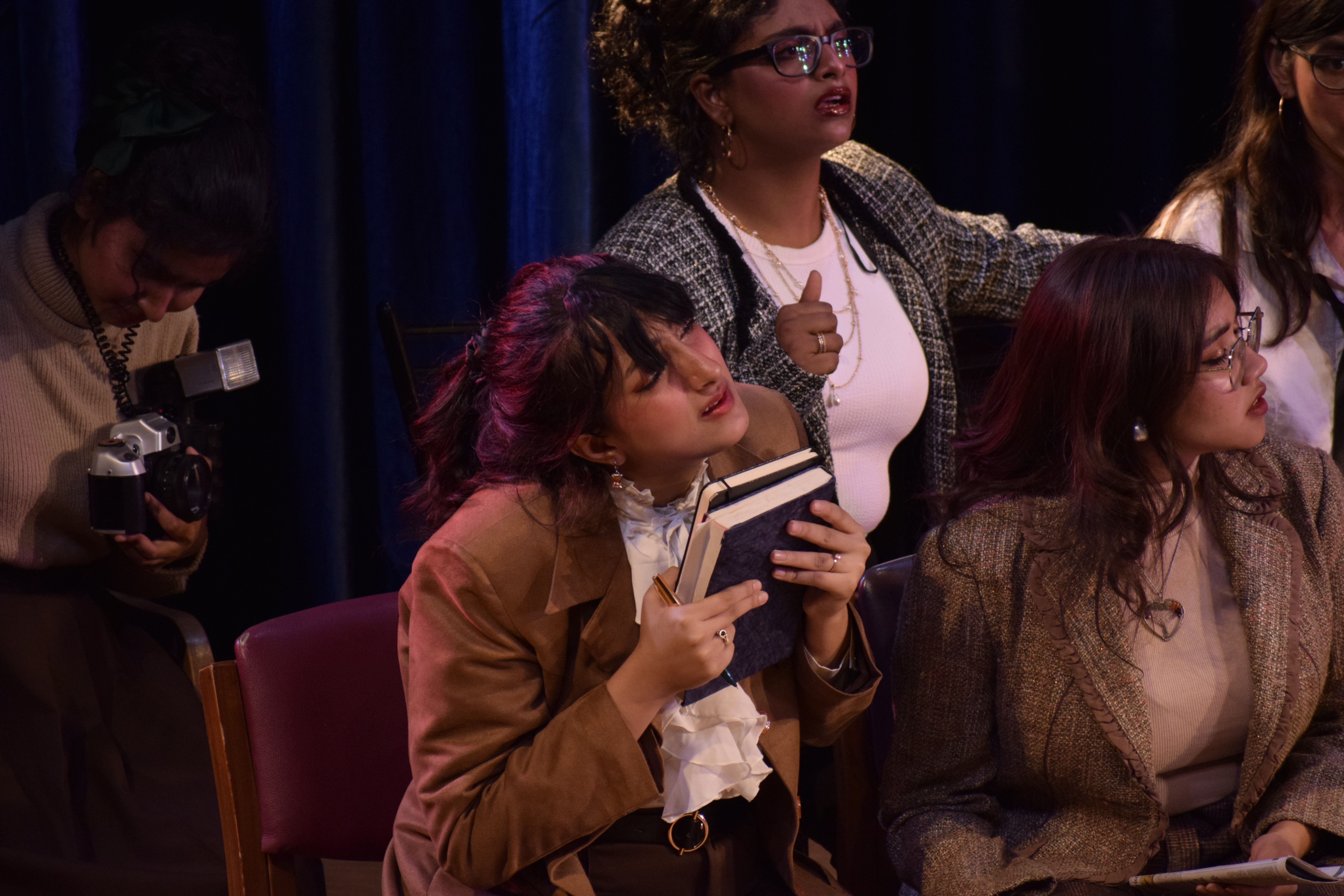
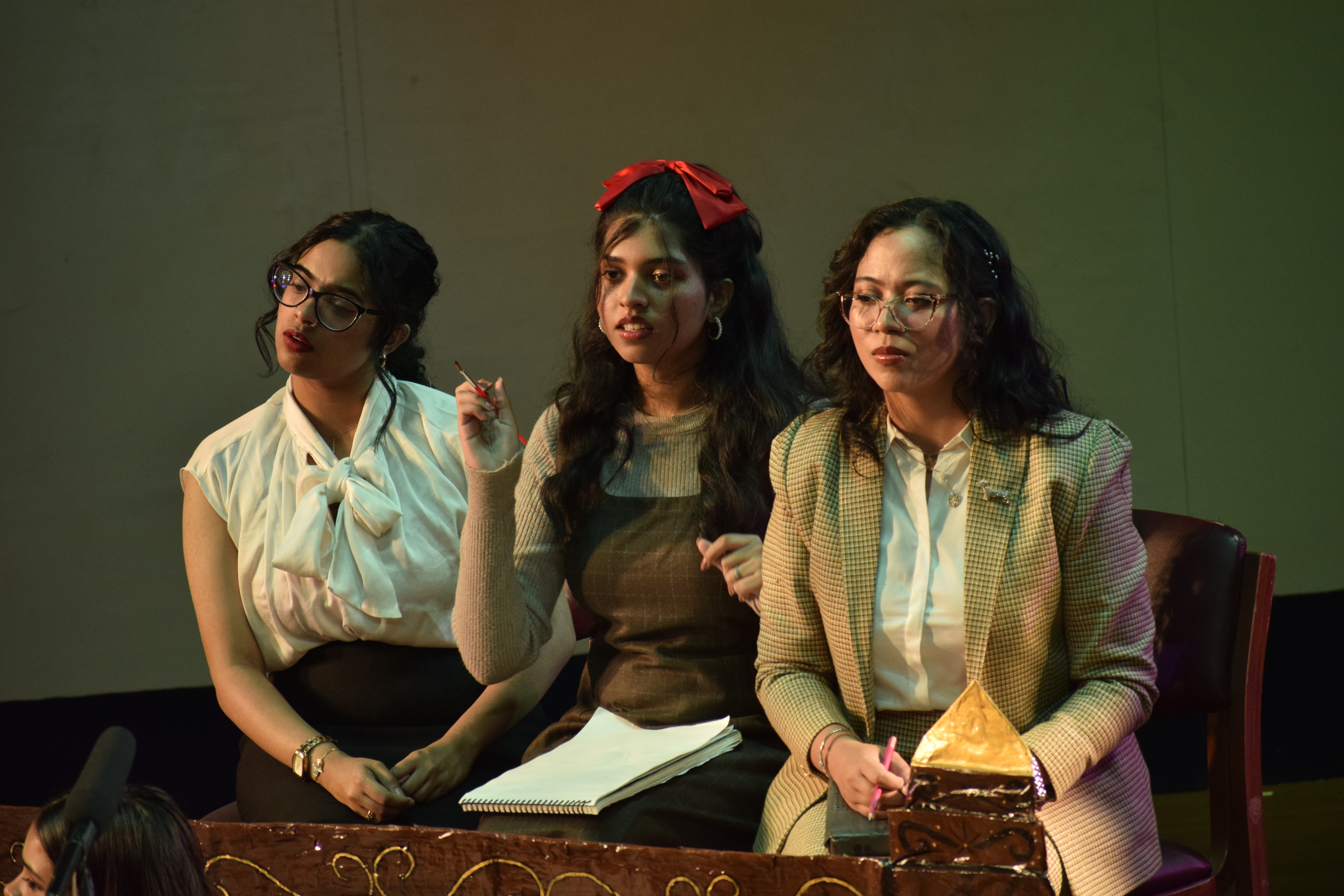
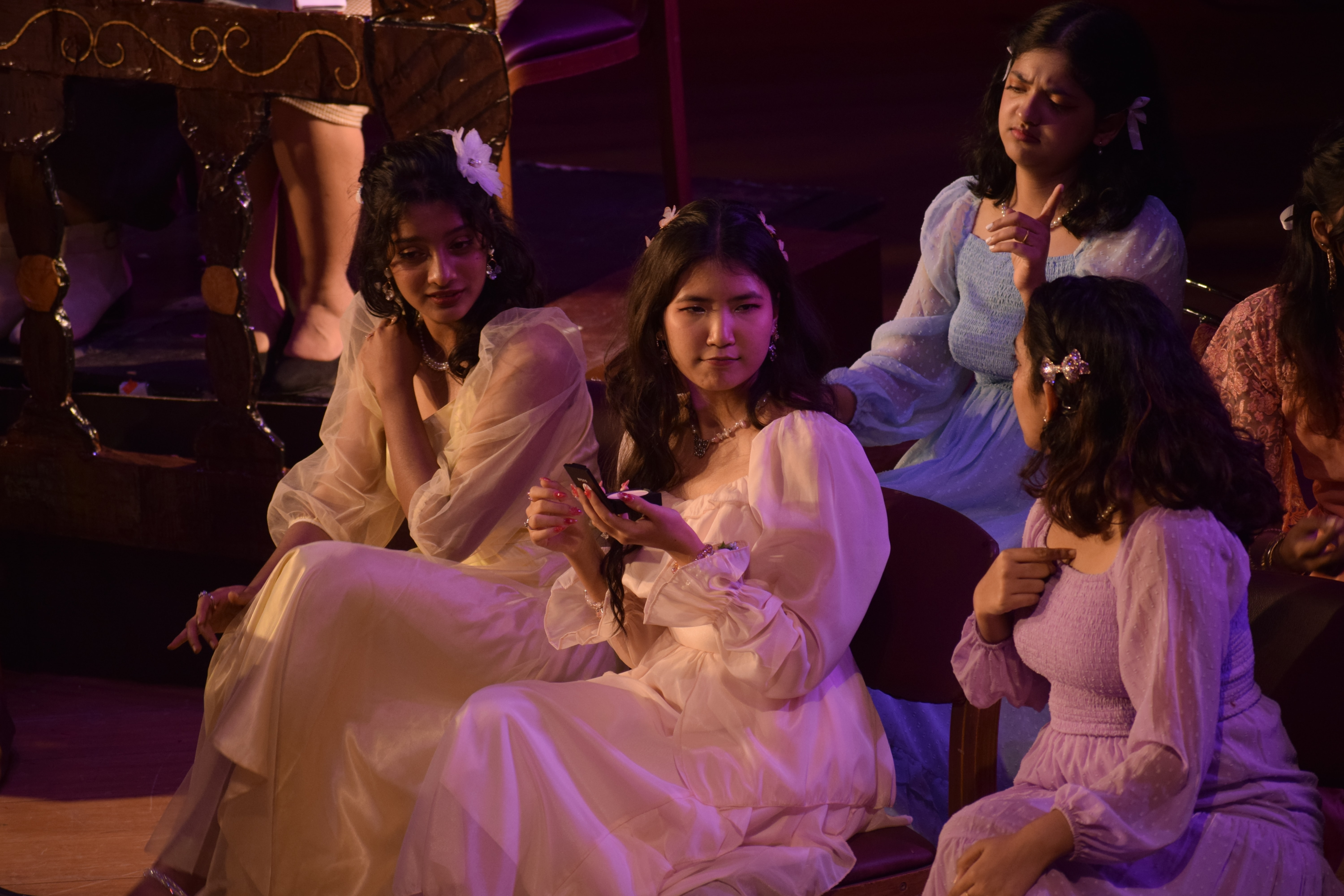
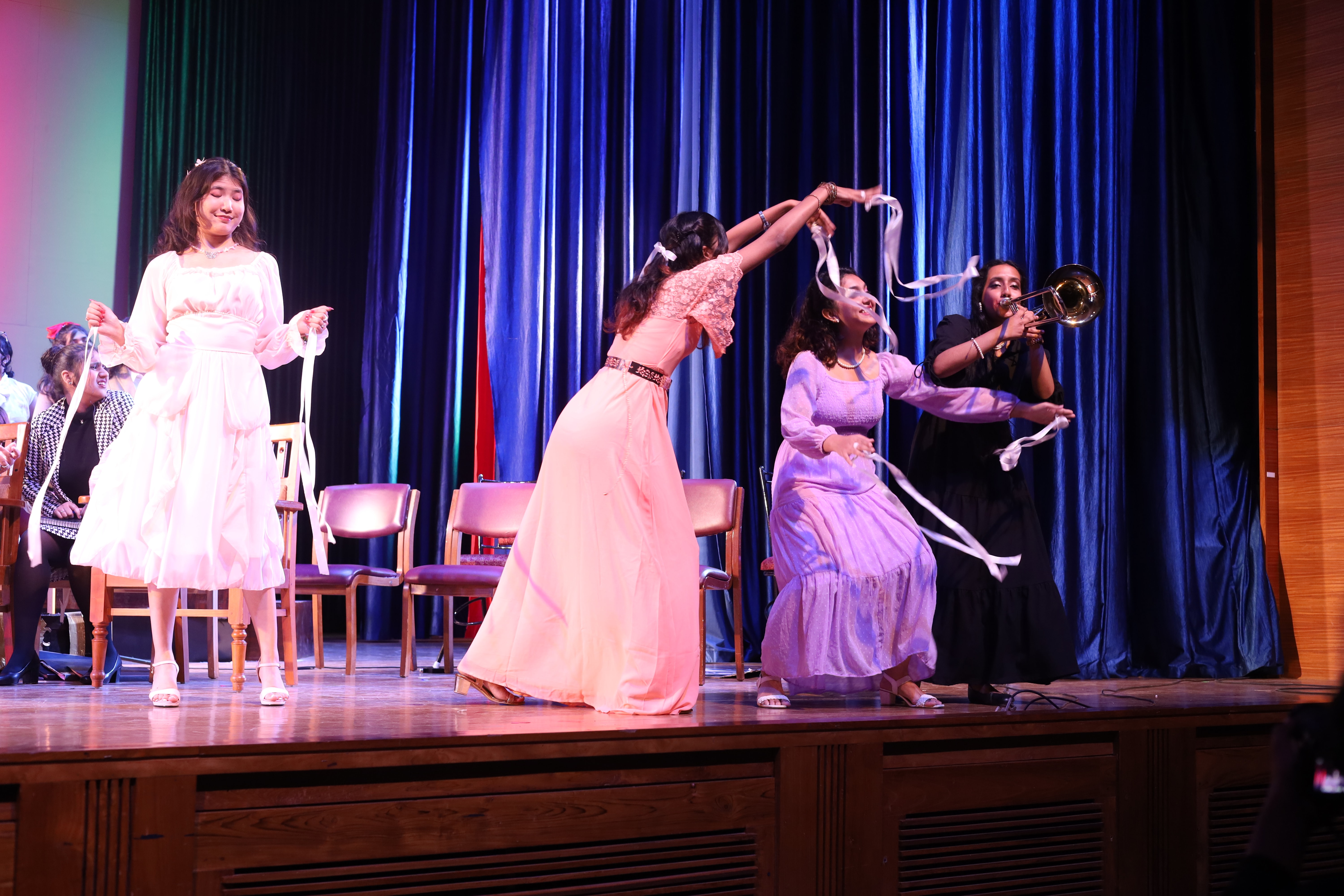
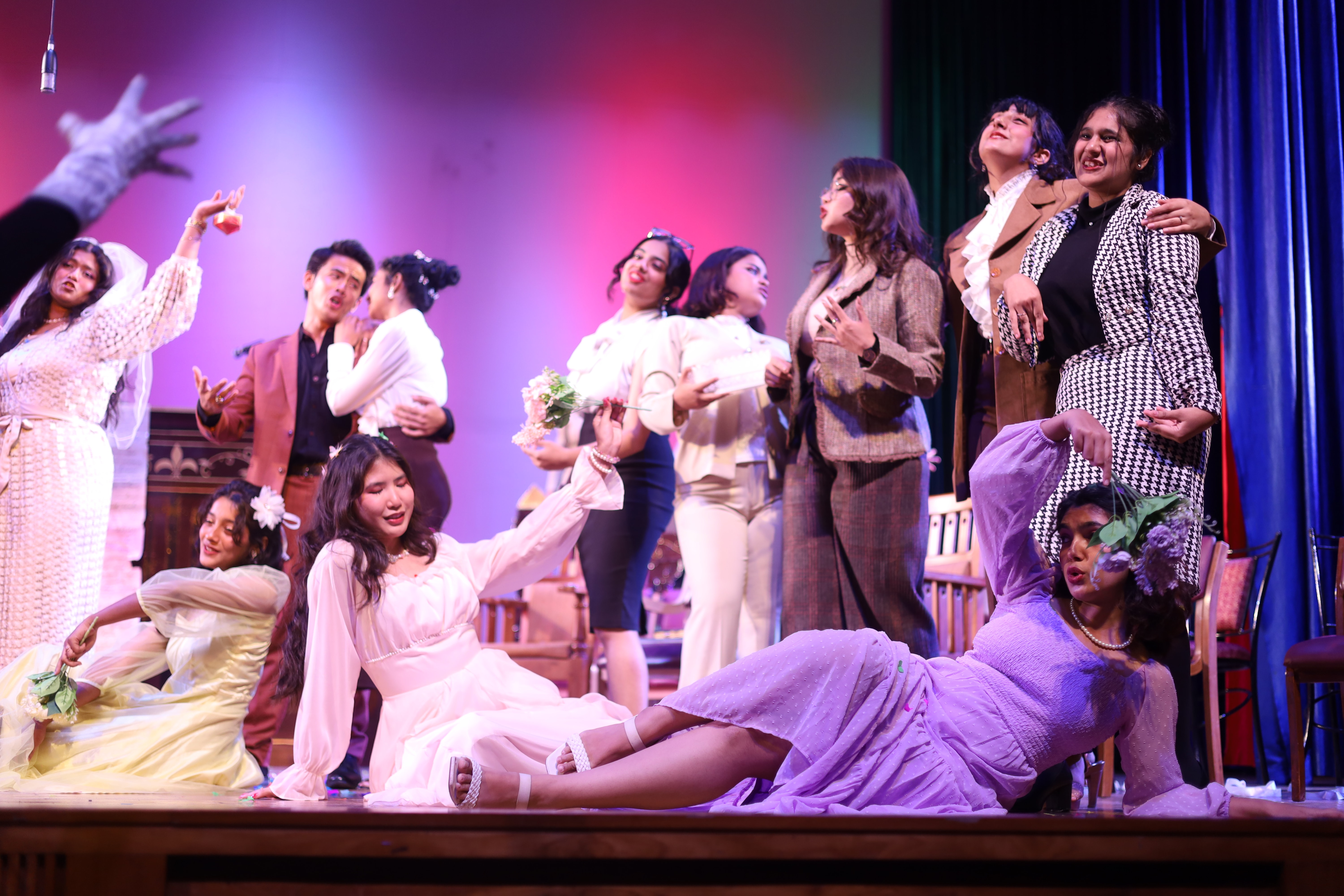
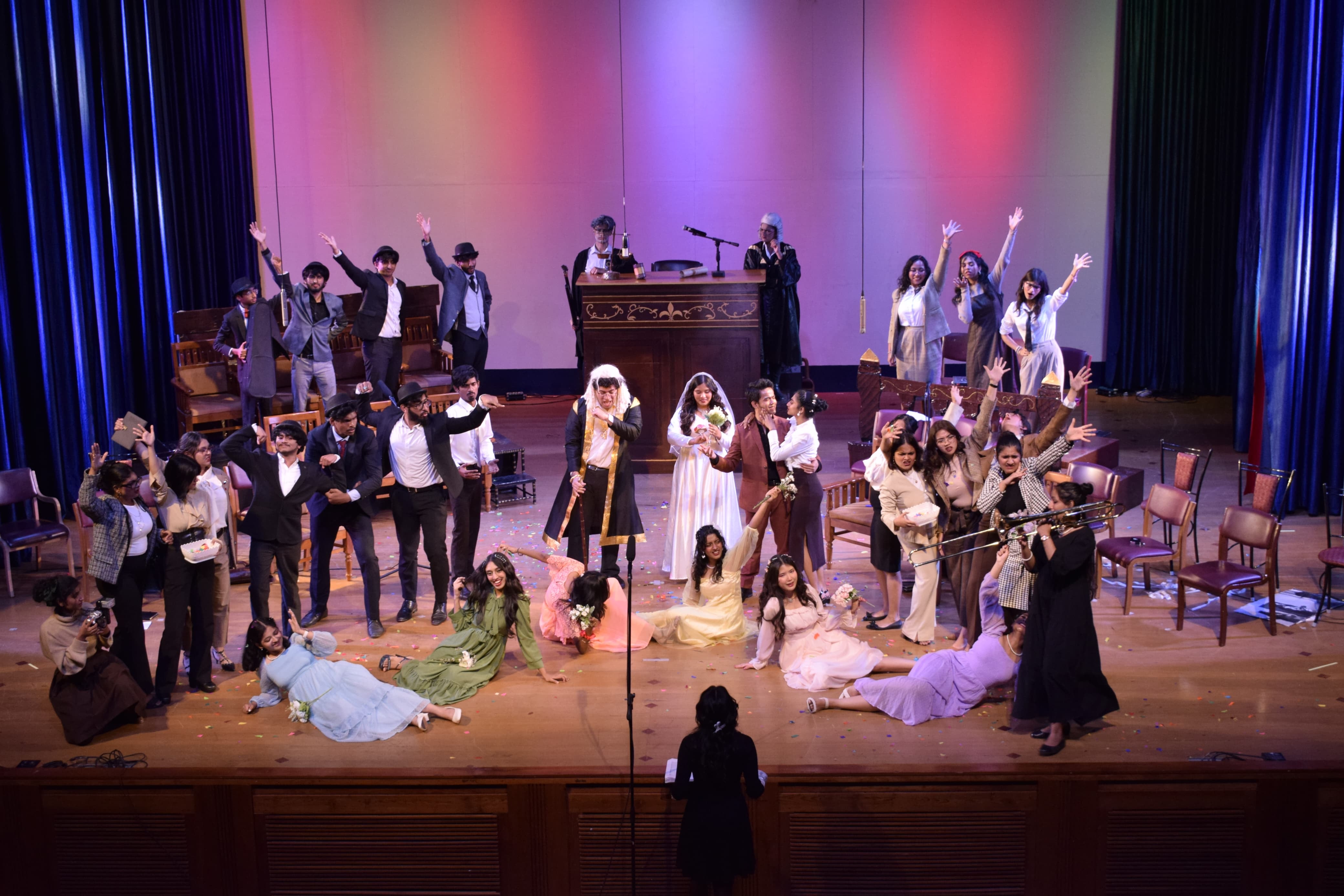
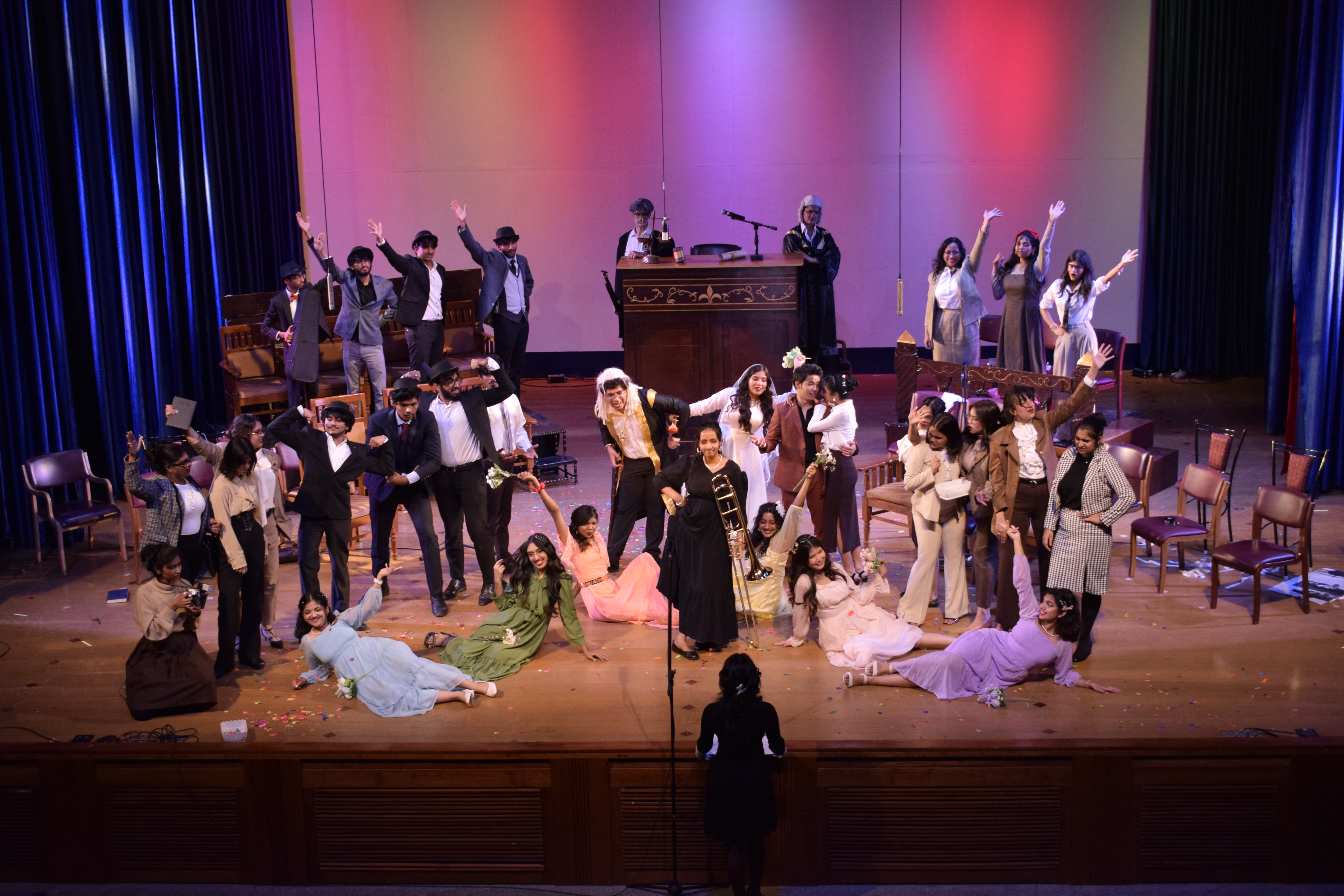
The second addition was a trombonist among the bridesmaids — a young woman who has come to court directly from a party, has not finished playing, and does not intend to stop merely because a trial is underway. Gladia Jagadeesh played her, and the joke worked because she committed to it entirely: she was not performing an interruption; she was genuinely mid-tune every time she was silenced.
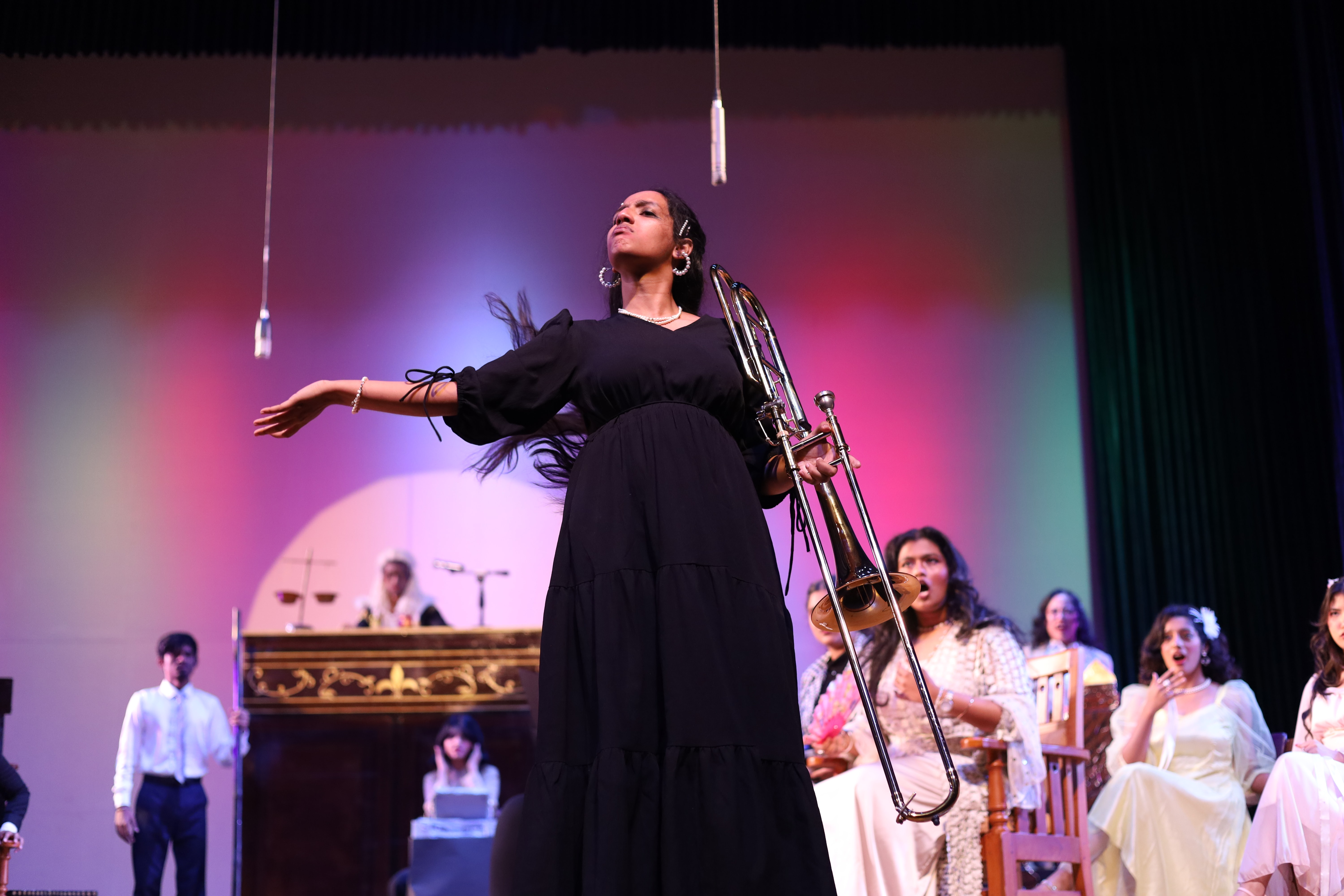
Both additions could have gone badly. Interpolated characters usually do — they announce the director rather than the work, and the audience spends the evening watching the concept instead of the opera. These did the opposite. Neither of them turned Trial by Jury into something else. They told it more clearly.
Two casts
We prepared the production twice over.
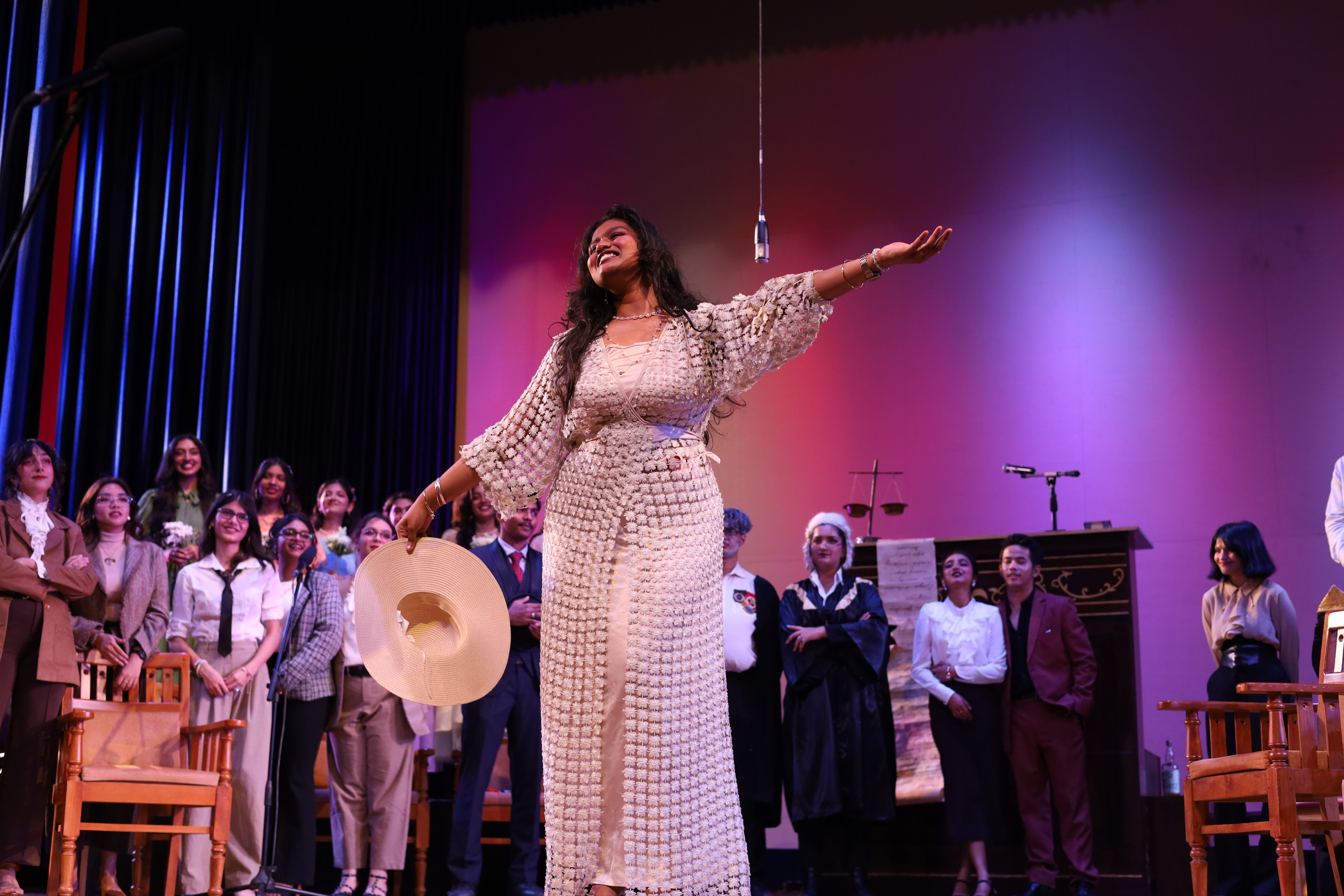
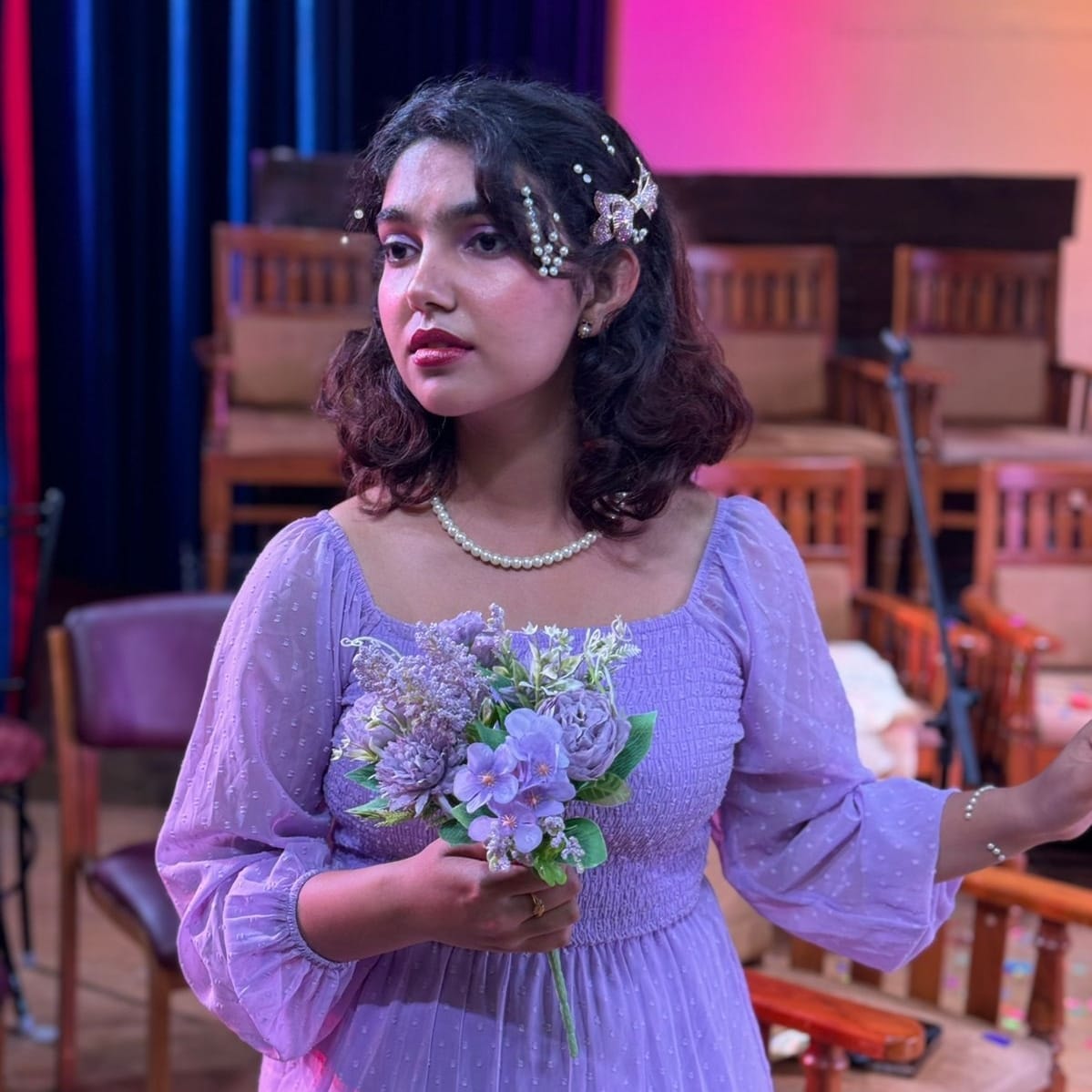
Angelina was sung by Yuti Harshavardhana and Hannah Verghese, on the first and second night respectively. The Judge was doubled as well — Dhī and Nikhilesh N.
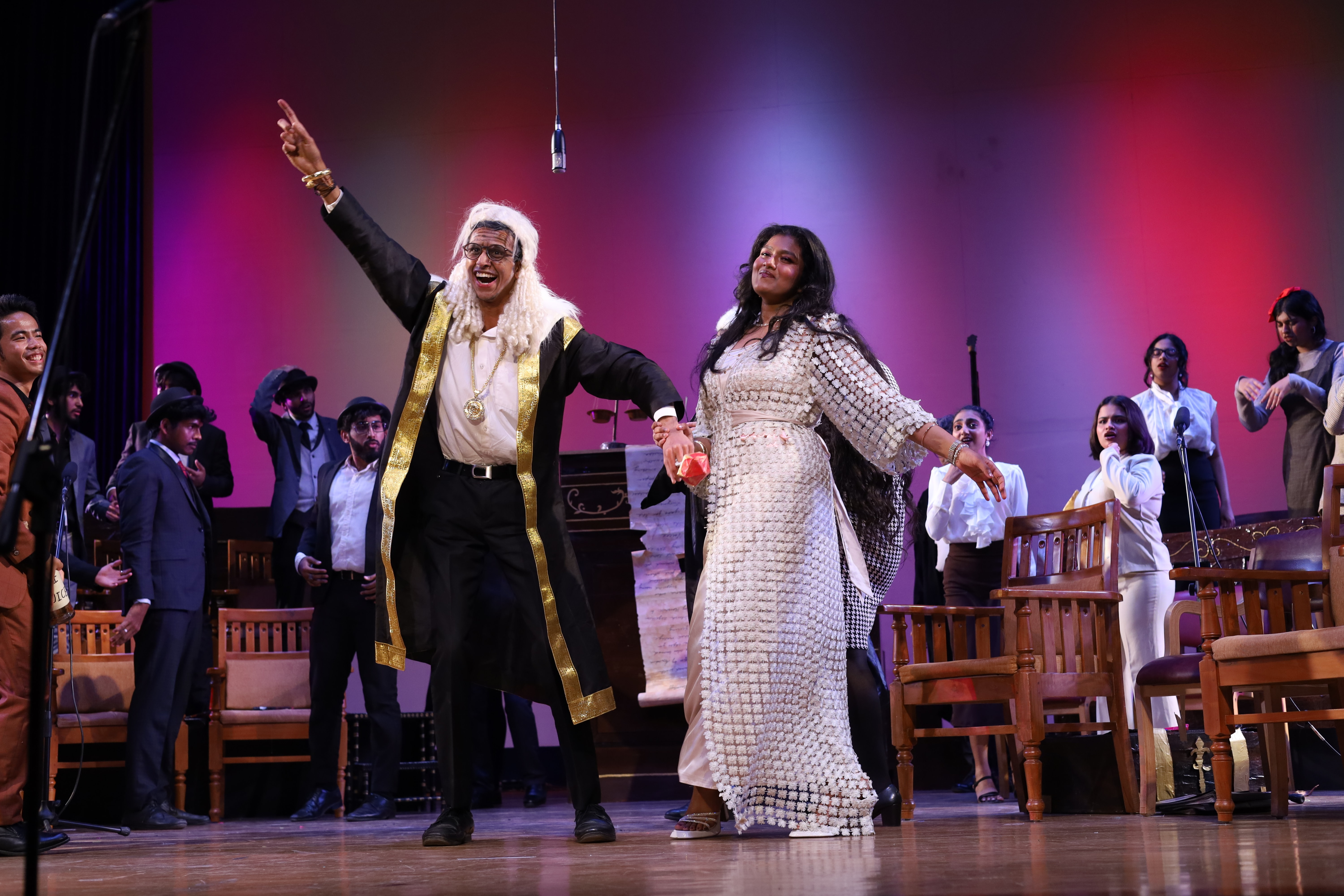
Double casting doubles the rehearsal load and halves the number of run-throughs each singer gets. It is the expensive option. It exists because two students who can sing the role should both sing the role, and because a production that can only happen with one specific person in it is not a production; it is a solo with support.
That decision paid for itself in the summer.
❦
The third performance
The university asked for it again.
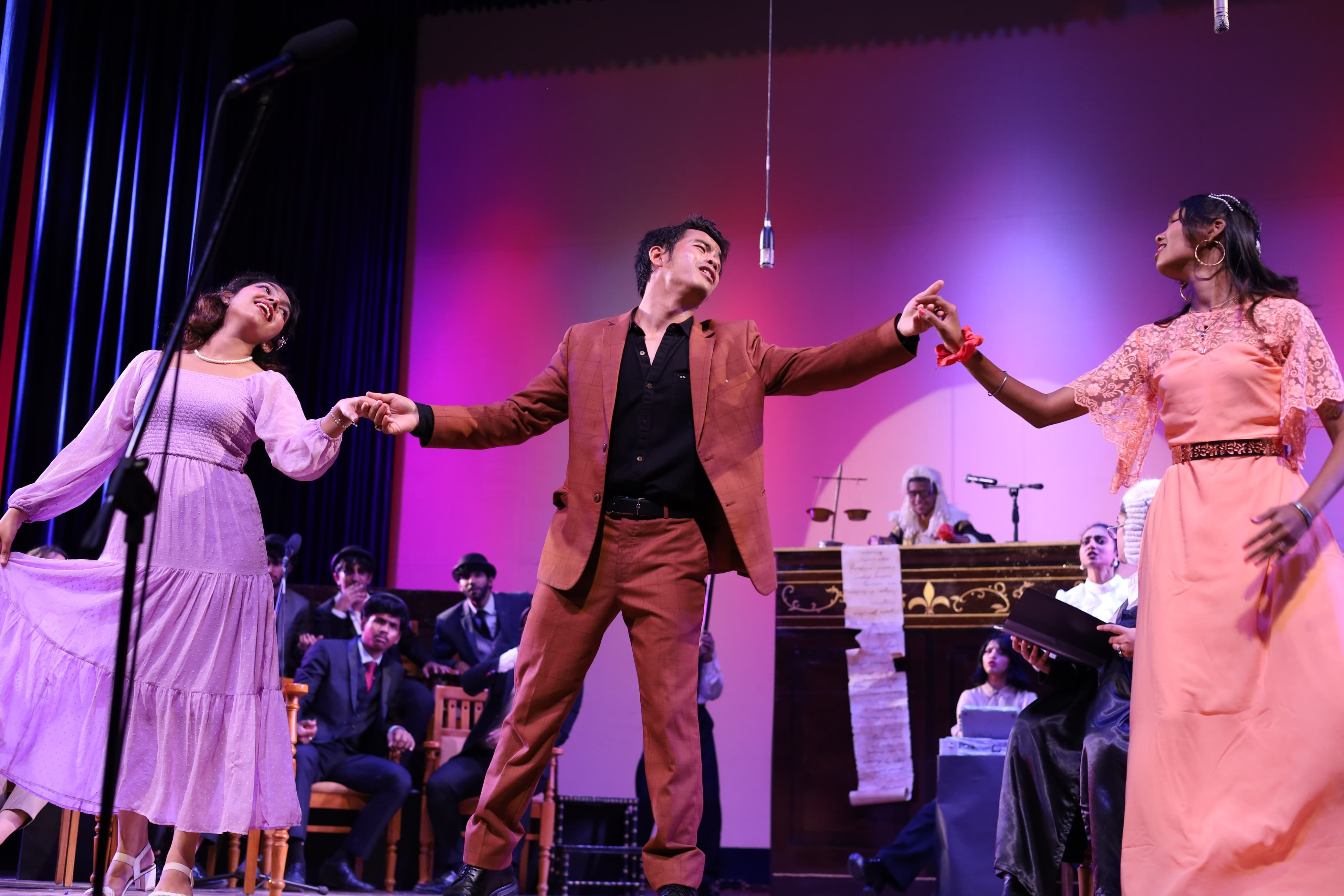
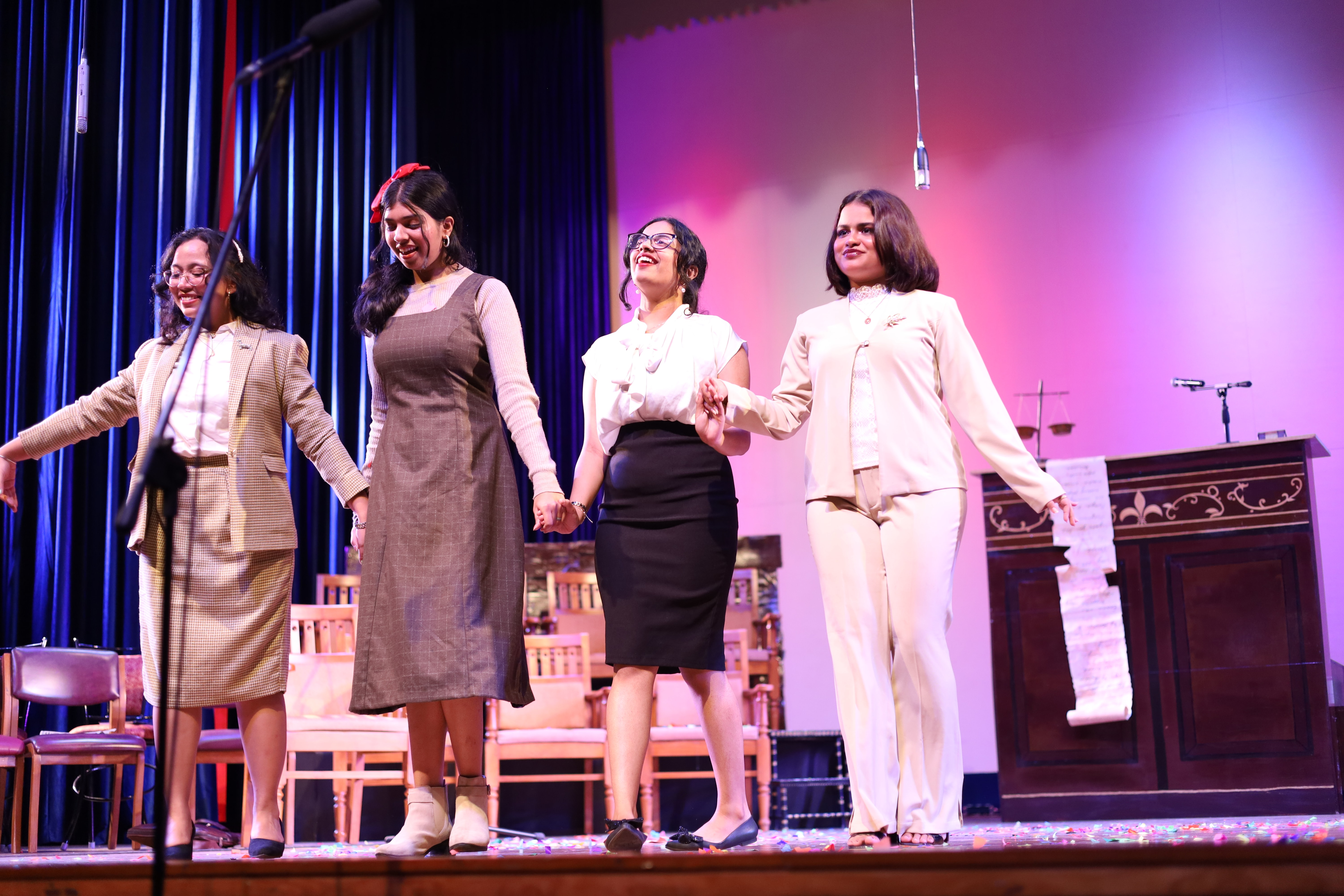
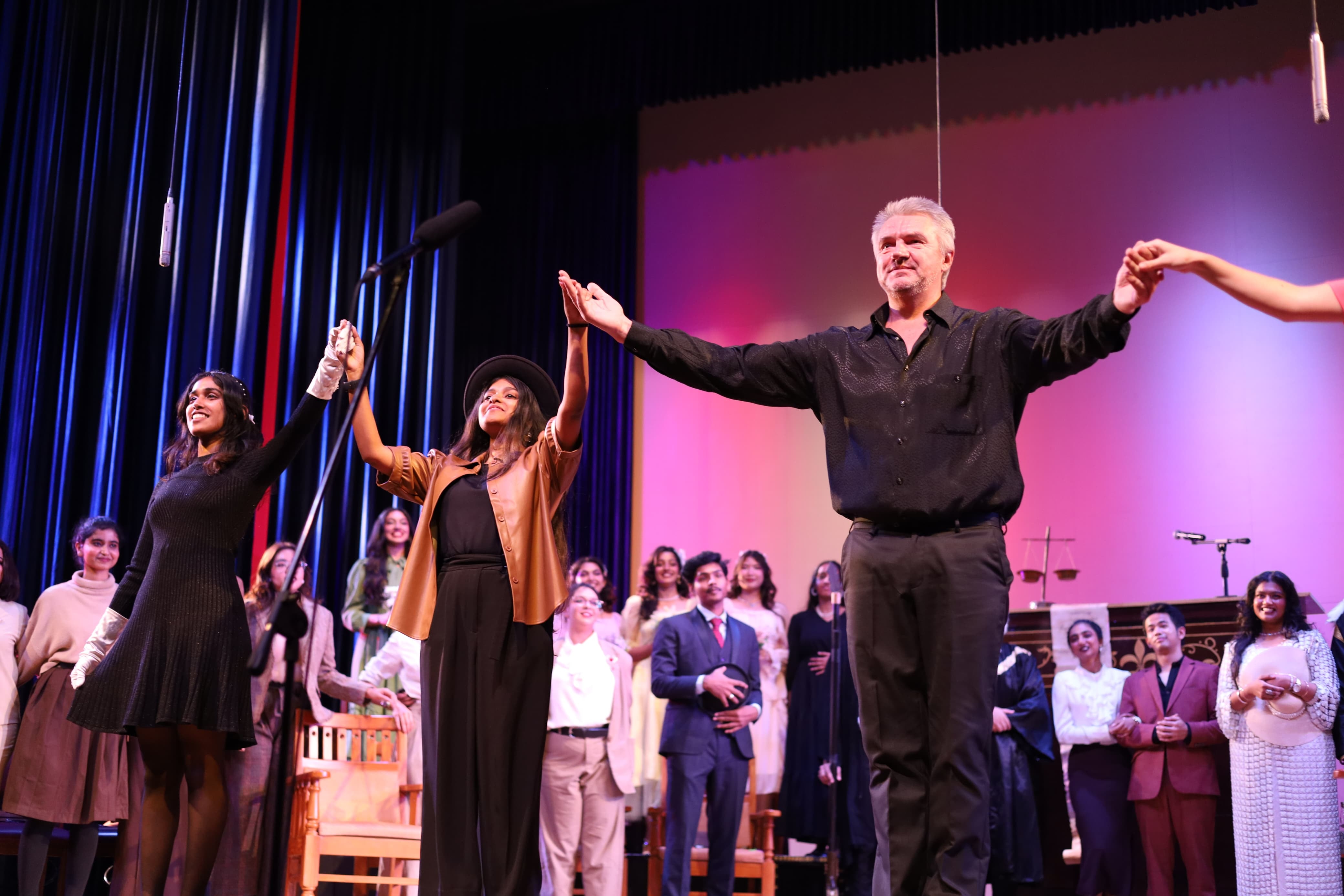
This time in the Main Auditorium — a hall of two thousand seats, four times the size of KE — and this time free, organised and hosted by the university. Same production, same staging, same conductor. The stalls filled.
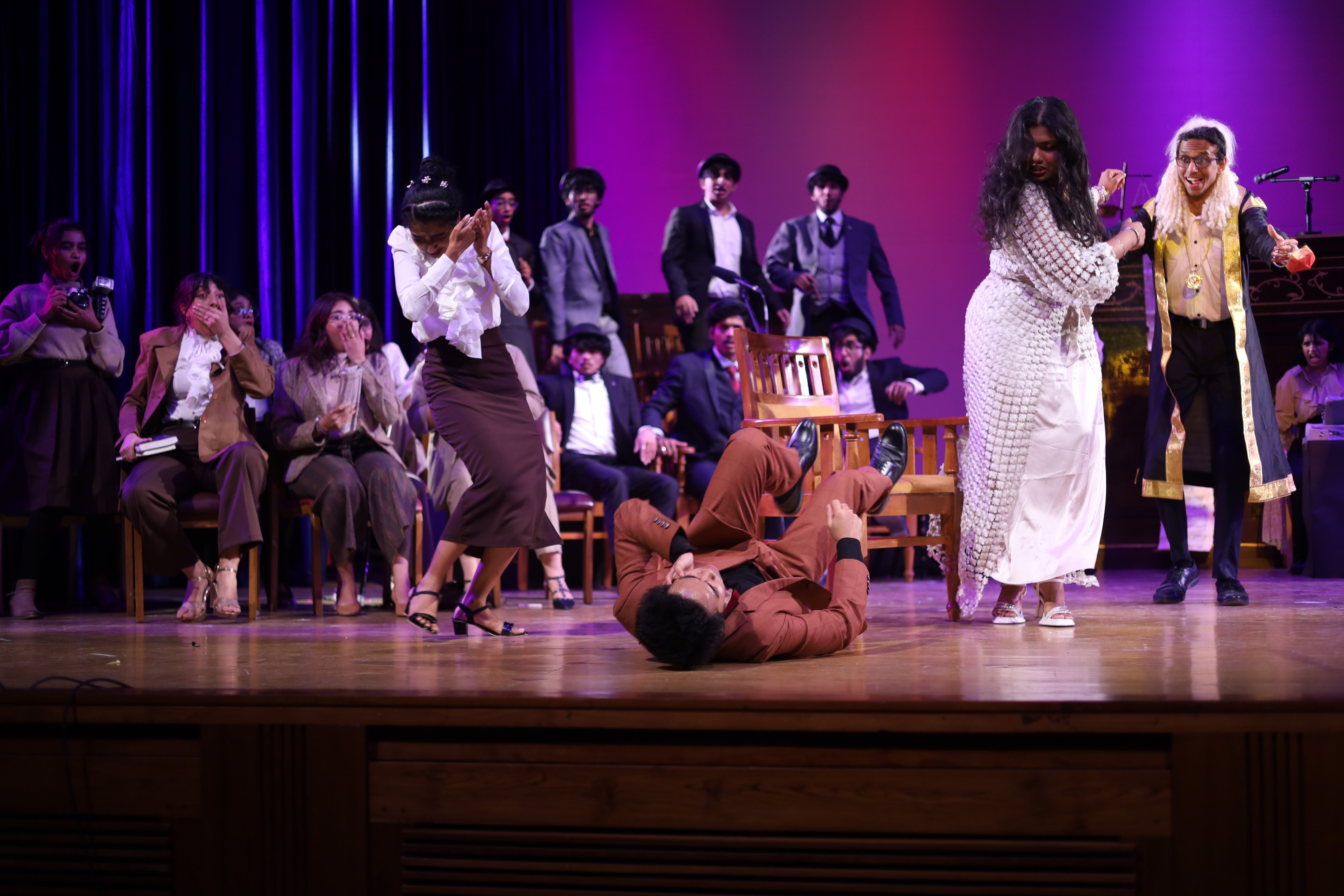
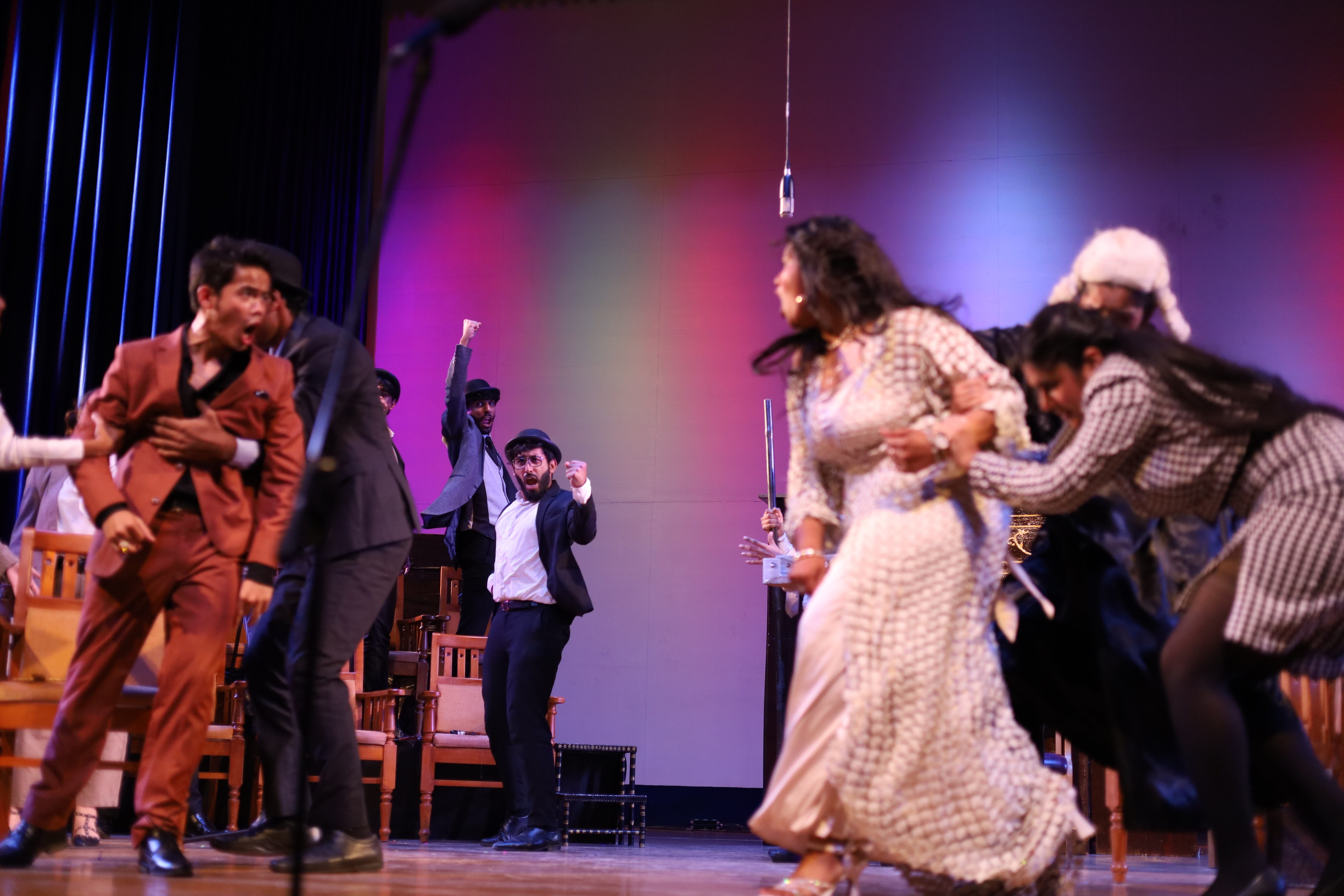
Our staging had given Angelina and Edwin a physical fight: at the height of her accusation, she goes for him, and what follows is less a fight than an undignified scuffle between two people who were recently engaged. It is one of the best moments in the show. At a rehearsal before that third performance, it went wrong, and Yuti Harshavardhana came out of it with a serious injury to her arm.
There was a second Angelina. The cover existed, had been prepared, and was in the building. Nobody would have had to explain anything to anyone.
She went on. Nobody in that hall could have told you which arm it was.
She went on. Nobody in that hall could have told you which arm it was.
Why there were tickets at all
There is an objection to be made here, and it should be made before somebody else makes it: this was a student production, and charging an audience to watch students is a decision that needs defending.
We were not trying to commercialise anything. The budget came back, and that is the whole of the financial story — there was never a version of this where the department made money.
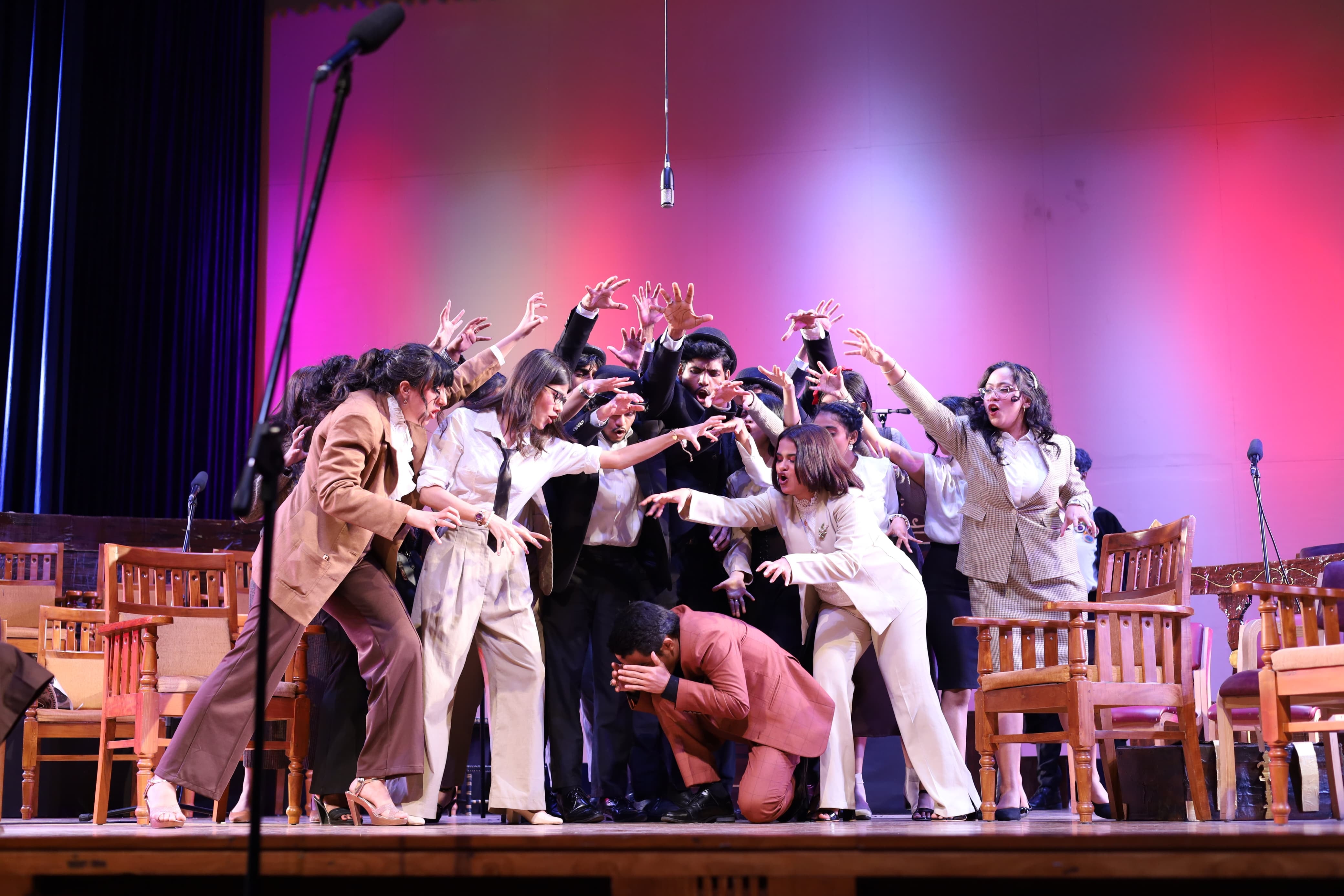
The tickets were there for a different reason. An audience invited for free is an audience doing you a favour; an audience that has paid has made a choice, and a choice registers on both sides of the footlights. The person in seat forty has spent an evening and a small amount of money to be there, and every singer on that stage knows it. Nothing sharpens a young performer’s sense of responsibility faster.
That is what a ticket is, before it is revenue. It is the audience voting.
❦
What it left behind
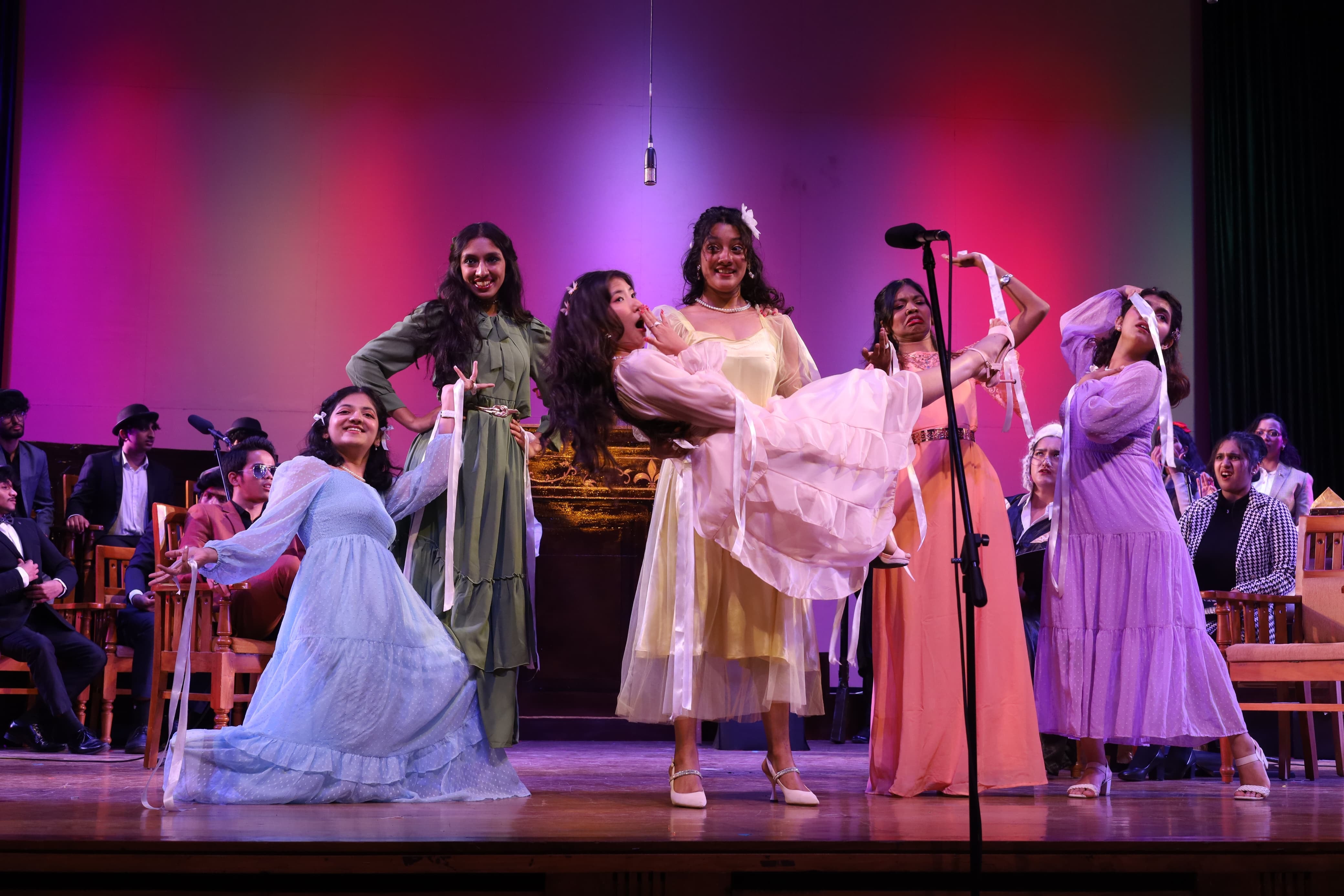
Trial by Jury was recorded in full, and the recording is worth watching for one specific reason: it shows what a first attempt looks like. Not a polished institutional showcase — an opera assembled out of an opera class, a theatre director who took on the entire visual world of the thing, a student conductor, two departments’ worth of collaboration, and a poster forwarded through several thousand phones.
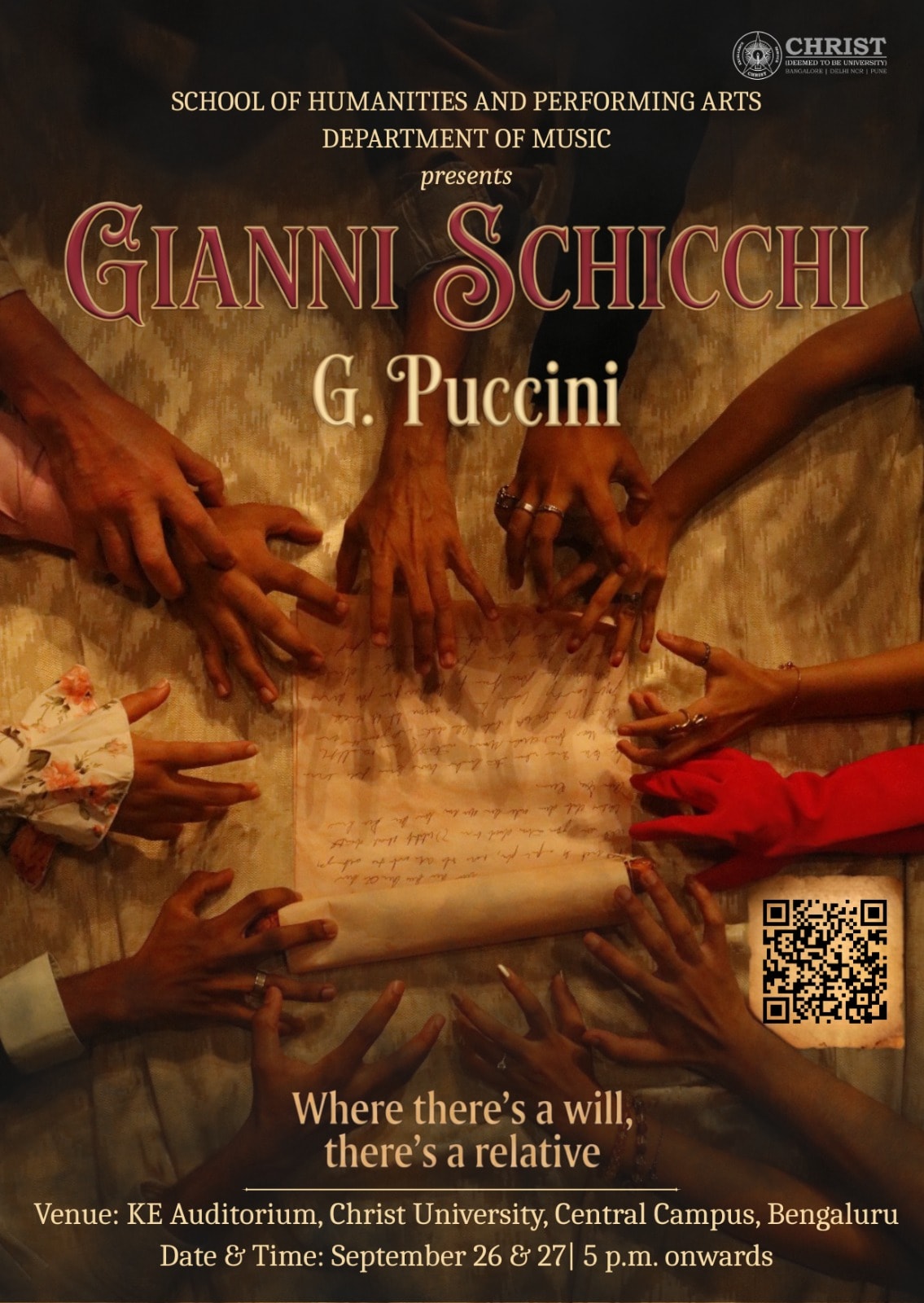
Everything staged since has been measured against it. Dido and Aeneas at BIC in January 2025. Gianni Schicchi this September, with an orchestra, a booking system, and a website that did not exist eighteen months ago.
The infrastructure has changed completely. What it was built to find out has not: whether anybody outside the rehearsal room will choose to be in the room.
In February 2024, before there was any infrastructure to make that easy, enough of them did.
❦